As an Amazon Associate, SturdyPaws earns from qualifying purchases. This article contains affiliate links; buying through them costs you nothing extra. Read our affiliate disclosure.
Bath time used to be a short wrestle. Now your old dog's back legs tremble on the wet tub floor, it cannot climb over the side, and you finish soaked, sore and worried you have hurt it. For a senior dog with arthritis or weak hindquarters, a slippery bath is one of the riskiest places in the house.
The good news is that most of the danger comes from a few things you can change: where you wash, what the dog stands on, how it gets in and out, and how long the whole thing takes. This guide works through them. It draws on bathing guidance from VCA Animal Hospitals and VCA's advice on arthritis and home set-up for mobility-compromised dogs. We have not tested the products below on our own dogs.
Key takeaways
- Bathe less, spot-clean more. Many old dogs only need a full bath occasionally; wipe paws and the rear in between.
- Footing first. A rubber mat in the tub or shower and a non-slip rug outside it prevent most slips.
- Do not make the dog climb. Use a walk-in shower, a ground-level tub outdoors in warm weather, or lift with a harness.
- Pour, do not spray. VCA suggests pouring water from a container, which many dogs find less frightening than a showerhead.
- Keep it short and warm. Have everything within reach, rinse thoroughly and dry the dog in a warm room.
Does your dog need a full bath?
Before planning a big bath, ask whether one is needed. Many older dogs mainly get dirty in a few places: muddy paws, a soiled rear end, or a smelly belly from lying in the same spot. Spot-cleaning those areas with a damp cloth or pet-safe wipes avoids standing the dog in a tub at all.
Regular brushing helps too. It removes dirt and loose hair, spreads natural oils and lets you check the skin for lumps, sores and pressure spots, which are more common in dogs that lie down a lot.
When a full bath is needed, the steps below make it safer.
Choose the right place
VCA's bathing guidance notes that the bathtub works well for dogs and that, on a warm day, you can bathe a dog in the yard using a plastic tub of warm water. For a senior dog, the best location is the one that needs the least climbing.
- A walk-in shower. If you have one with a low or no threshold, it is often ideal: the dog walks in, and you can kneel beside it.
- Outdoors in warm weather. A shallow tub or a gentle hose on a warm, still day avoids lifting entirely. Stand the dog on grass or a rubber mat, not slick paving.
- The bathtub. Workable if you can get the dog in safely. The high side is the main problem.
- A self-service pet wash. VCA mentions that some communities have pet wash facilities with tubs designed for bathing dogs comfortably. Some have raised tubs with ramps or steps; check before you go.
- Small dogs: the sink. VCA notes small dogs can be bathed in a sink, which saves your back.
Whatever you choose, VCA advises a comfortably warm area with warm water to hand and clean, dry towels within arm's reach.
Footing: the most important step
A wet tub floor is like ice to a dog with weak legs. Slipping and bracing strains sore joints and can cause a fall. Put a rubber bath mat, or several, on the floor of the tub or shower so the dog stands on grip from the moment it gets in.
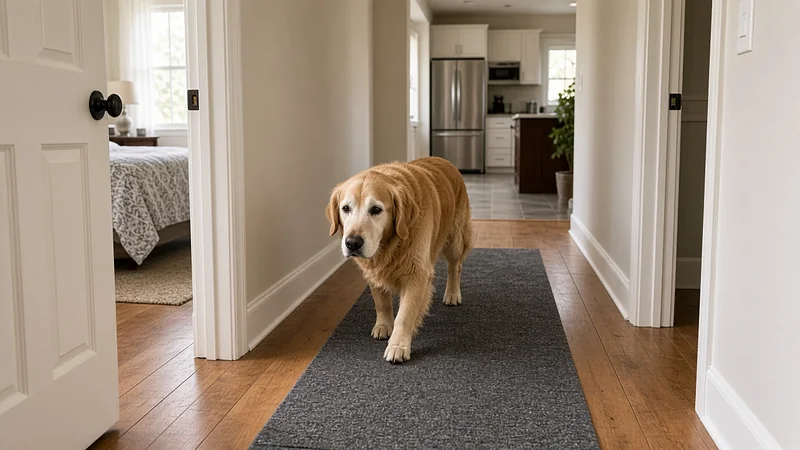
Outside the tub matters just as much. Wet paws on a tiled or vinyl bathroom floor are a common place for falls. Lay a rubber-backed, washable runner from the tub to the door, and keep a towel underfoot where the dog steps out.
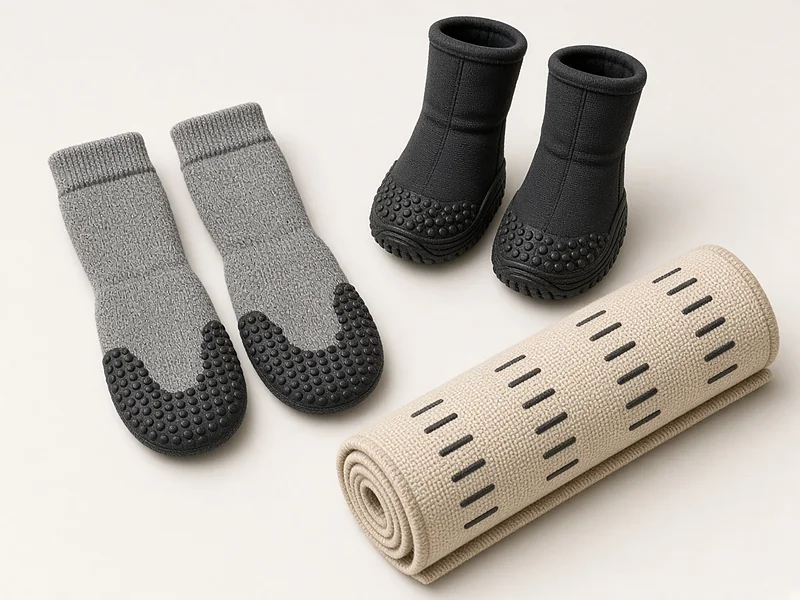
Kapaqua Rubber-Backed Custom-Length Runner Rug
22 in wide (other widths in the menu), custom length, 1/4 in low loop pile, rubber backing for hardwood, laminate, vinyl and tile; hand wash only per the current listing
Pros
- Cut to the exact length of your hallway or route, so there are fewer gaps
- Low 1/4 in pile is easy for dragging feet
- Rubber backing made for bare hard floors
Cons
- Not for use on carpet
- Current listing says hand wash only
- 22 in is narrow for a large dog that splays; check wider options
VCA's home advice for arthritic dogs recommends rugs with non-skid backing and keeping nails short to improve traction, which helps on wet floors too.
Getting in and out safely
Lifting a wet, wriggling dog over a tub edge is where many injuries happen, to dogs and owners. Options, from least to most effort:
Let the dog walk in
A walk-in shower or outdoor tub avoids lifting. Encourage the dog in with treats and keep your hand on its harness.
Use a step
For some dogs, a sturdy, non-slip step beside the tub breaks the climb into two smaller movements. Make sure it cannot slide on a wet floor.
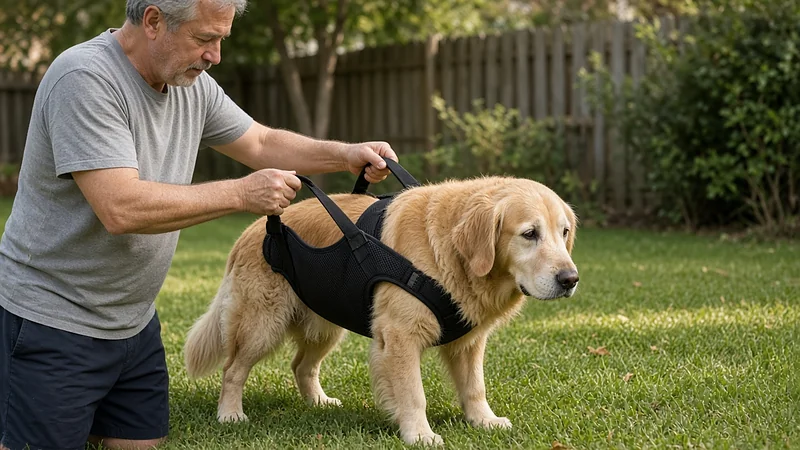
Lift with a harness
For dogs that cannot step in, a lifting harness gives you handles to hold instead of grabbing the belly. A full-body harness with front and rear handles lets you lift in a controlled way and support the dog while it stands in the tub. Most harnesses can get wet but take time to dry, so check the maker's care instructions; some owners keep a second one for bath days.
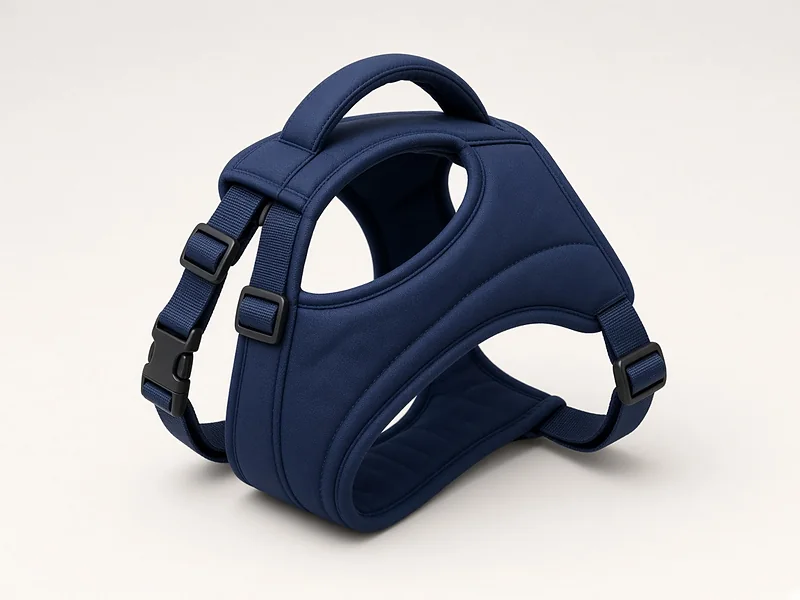
Help 'Em Up Harness
Two-piece full-body harness (front + hip lift), sizes for 10–225 lb, conventional and U-band (male) styles
Pros
- Lifts front, rear or both with separate handles
- Designed to be worn for long periods
- Male (U-band) and conventional versions
Cons
- Most expensive option here
- Sizing is fiddly; the maker suggests sizing the rear down for dogs with muscle loss
If the front legs are strong, a rear sling may be enough to support the back end while the dog stands in the bath.
GingerLead Dog Support Sling
Padded rear sling with integrated leash, male and female cuts, dogs up to 250 lb, made in USA
Pros
- Padded belly pad spreads the load
- Integrated leash for one-handed walking
- Widely used after orthopedic surgery
Cons
- Rear support only
- Slides on and off rather than staying on all day by default (optional stay-on straps)
| Product | Key specs | Link |
|---|---|---|
| Kapaqua Rubber-Backed Custom-Length Runner Rug | 22 in wide (other widths in the menu), custom length, 1/4 in low loop pile, rubber backing for hardwood, laminate, vinyl and tile; hand wash only per the current listing | Check price on Amazon (opens in a new tab) |
| Help 'Em Up Harness | Two-piece full-body harness (front + hip lift), sizes for 10–225 lb, conventional and U-band (male) styles | Check price on Amazon (opens in a new tab) |
| GingerLead Dog Support Sling | Padded rear sling with integrated leash, male and female cuts, dogs up to 250 lb, made in USA | Check price on Amazon (opens in a new tab) |
Specs are from manufacturer and retailer listings and can change between versions; check the listing before you buy. We don't show prices because they change often; the button shows the current price on Amazon.
For heavy dogs, use two people: one at the chest, one at the hips, lifting together. Bend your knees, keep the dog close and do not twist. Our guide to full-body lift harnesses explains the different designs.
During the bath
- Get everything ready first. Shampoo, a jug or cup, washcloth, towels and treats, all within reach, so you are never tempted to leave the dog standing alone.
- Check the water. Lukewarm, not hot. Test it on your wrist.
- Pour, do not spray. VCA notes that spraying water at a pet from a hose or showerhead can frighten it, and suggests pouring from a container instead. A handheld sprayer on a gentle setting, held close to the coat, is an alternative for dogs that tolerate it.
- Support the dog. Keep a hand on the harness or under the chest. If the dog tires, let it lie down on the mat; you can wash a lying dog.
- Use a dog shampoo. VCA advises using only pet shampoos and conditioners, since human products can irritate skin.
- Use a washcloth for the face. It avoids pouring water over the head and ears.
- Rinse thoroughly. VCA stresses rinsing thoroughly to remove all residue from the skin.
- Keep it short. An old dog that has been standing for twenty minutes will be tired and sore. If necessary, wash half the dog one day and the rest another.
Drying
Older dogs feel the cold more, and VCA's arthritis advice notes that cold, damp conditions may worsen stiffness. After bathing, VCA advises drying the dog with a towel and keeping it in a warm area until it is completely dry. Pat rather than rub sore areas. If you use a hairdryer, keep it on a cool or low setting and keep moving it, since a dog with stiff joints may not move away from heat that is too hot.
Let the dog rest on a warm, dry bed afterwards. Check the skin folds, armpits and between the toes are dry, as damp areas can become sore.
Medicated baths
If your vet has prescribed a medicated shampoo, timing matters: VCA's guidance on medicated shampoo says to work it in and leave it for the contact time your vet prescribes, often around ten minutes, before rinsing thoroughly. For a dog that cannot stand that long, ask your vet whether it can lie down on a mat during the contact time, or whether the treatment can be done in sections.
Professional help
If bathing at home is too hard, a groomer who is used to old dogs can help. Tell them about your dog's arthritis or weakness, ask how they handle older dogs and whether they use lifting tables or non-slip tubs, and ask for a short appointment. Some vet practices also offer bathing.
Common mistakes
- No mat in the tub. The first slip can make a dog fear baths for good.
- Lifting by the belly. It puts pressure on the abdomen and spine; use a harness or support the chest and hips.
- Water too hot or too cold. Lukewarm is kinder to old skin and joints.
- Leaving shampoo in the coat. Rinse until the water runs clear.
- Letting the dog air-dry in a cold room. Keep it warm until fully dry.
FAQ
How do I bathe a dog that cannot stand?
Let it lie on a rubber mat in a walk-in shower or a shallow tub, support it with a harness, pour lukewarm water over it and keep the bath short.
How often should a senior dog be bathed?
Only as often as needed. Many older dogs do well with occasional baths and spot-cleaning of paws and the rear in between.
How do I get my old dog into the bathtub?
Use a sturdy non-slip step, or lift with a harness that has chest and hip handles. Two people should lift a large dog.
Can I use baby wipes on my dog?
Choose products made for pets. VCA advises against human shampoos, which can irritate dogs' skin.
Should I blow-dry my senior dog?
Towel-dry first. If you use a dryer, keep it on a cool or low setting and keep it moving.
Prices change often, so we do not list them. Check the current price on Amazon.
Sources
- VCA Animal Hospitals, Get your pet bathing routine down.
- VCA Animal Hospitals, How to bathe dogs with medicated shampoo.
- VCA Animal Hospitals, Helping your dog with osteoarthritis.
- VCA Animal Hospitals, Creating a comfortable home for your mobility-compromised dog.
- Product specifications from the linked Amazon listings, checked 2 November 2026.