As an Amazon Associate, SturdyPaws earns from qualifying purchases. This article contains affiliate links; buying through them costs you nothing extra. Read our affiliate disclosure.
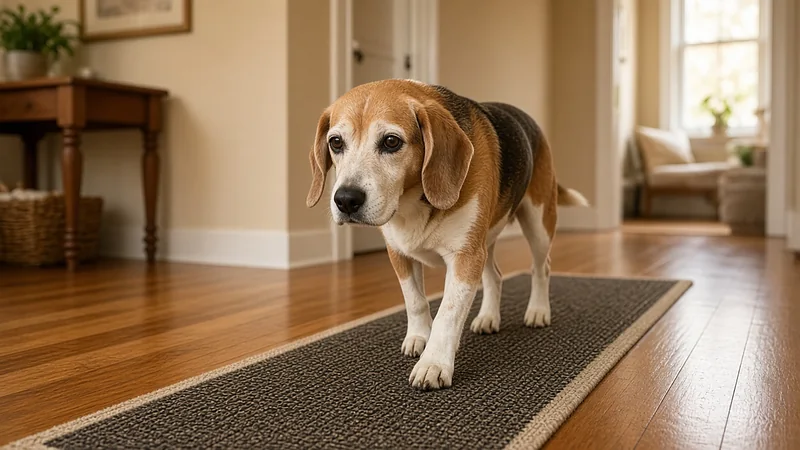
If your older dog splays on the kitchen floor or creeps along the hallway, runner rugs are usually the cheapest and fastest fix. They need no fitting, the dog does not have to wear anything, and they work the moment you lay them down. The catch is that the wrong rug can make things worse: one that slides, curls at the edge or catches toenails is a new hazard.
This guide explains what to look for in a runner for a senior dog and how to lay runners out so they actually help. It is research-based, drawing on veterinary guidance and product listings; we have not tested every rug.
Key takeaways
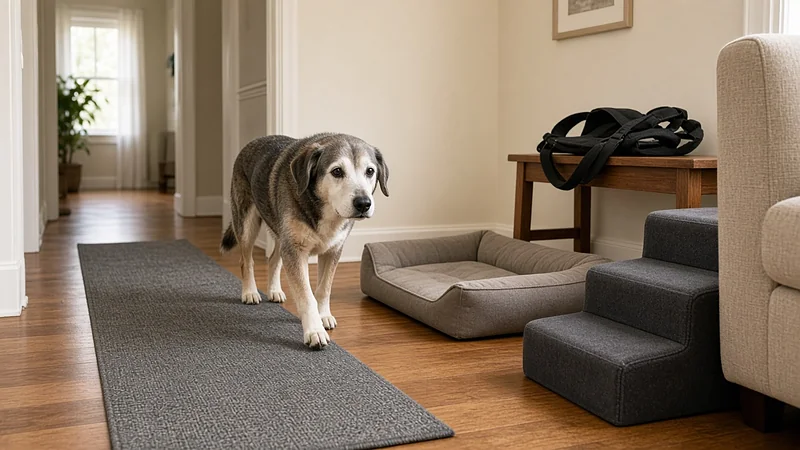
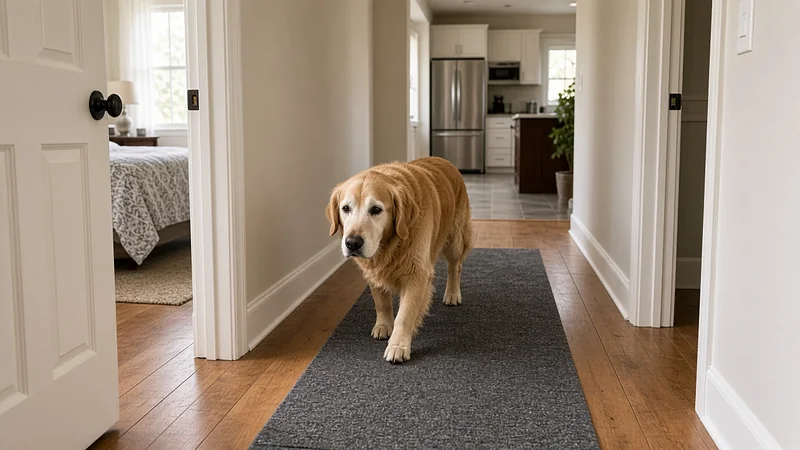
- Cover routes, not rooms. Lay runners end to end along the paths your dog uses: bed to water, sofa to door, the spot where it gets up.
- The backing matters most. Choose rubber or similar backing made for bare hard floors, or put a rug pad underneath.
- Low pile. Low loop or flat-weave surfaces give grip without catching dragging toes.
- Wide enough. A runner a big dog half-steps off creates a slip edge. Go wider for large dogs.
- Washable and flat. Older dogs have accidents; edges must lie flat.
Why hard floors are so hard for senior dogs
VCA Animal Hospitals describes dogs with mobility problems walking on hard floors "very cautiously... with a short stride and hunched back to guard against falling". That guarded posture leads to stiffness and soreness, and many dogs simply move less. Some stop coming into rooms with slippery floors altogether. A runner gives the paw pads something to grip, so the dog can walk normally again.
What to look for in a runner rug
Backing that grips bare floors
A rug that slides is more dangerous than bare floor. Look for rubber or similar backing made for hardwood, laminate, vinyl and tile. Test any rug by pushing it hard with your foot; if it moves, it will move under a scrambling dog. If you love a rug that has no backing, put a non-slip pad underneath.
Low pile or flat weave
Deep shag hides the floor and catches feet that drag. Low loop or flat-weave surfaces let the pads grip without snagging. Watch for loose, open loops that can catch toenails.
Flat, thin edges
Dogs with weak back legs often do not lift their feet fully. A thick or curling edge becomes a trip point. Bound edges that lie flat are best; tape down any edge that curls.
Width
Measure your hallway and your dog. A large dog that splays its legs needs a wider runner than a terrier. If the runner is narrow, the dog can catch a foot on the edge or step half on, half off.
Washability
Check the care label. Some runners can go in the machine; others are hand wash only. High dryer heat can damage rubber backing, so many need to air dry.
Safe for your floor
Some rubber and PVC backings can discolour certain floor finishes, especially if moisture is trapped. Check your flooring maker's guidance, lift runners regularly to clean and dry underneath, and wait until a newly refinished floor has fully cured before laying rugs.
Our picks
| Product | Key specs | Link |
|---|---|---|
| Kapaqua Rubber-Backed Custom-Length Runner Rug | 22 in wide (other widths in the menu), custom length, 1/4 in low loop pile, rubber backing for hardwood, laminate, vinyl and tile; hand wash only per the current listing | Check price on Amazon (opens in a new tab) |
| Rubber-backed washable runner rugs | Low-pile, non-slip backing, machine washable | Check price on Amazon (opens in a new tab) |
| Gorilla Grip Slip-Resistant Rug Pad | Non-adhesive open-grid pad, dual-sided grip, trim with scissors; 2x8 ft size and others | Check price on Amazon (opens in a new tab) |
Specs are from manufacturer and retailer listings and can change between versions; check the listing before you buy. We don't show prices because they change often; the button shows the current price on Amazon.
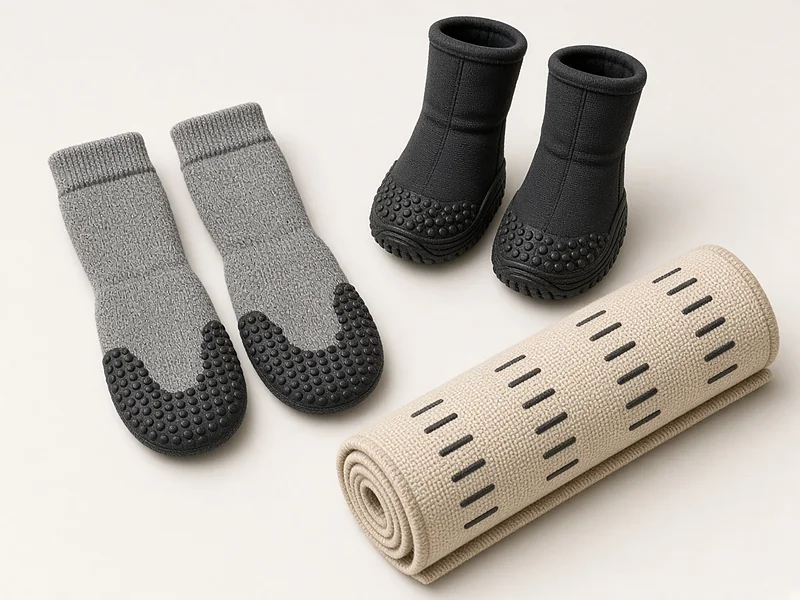
Kapaqua Rubber-Backed Custom-Length Runner Rug
22 in wide (other widths in the menu), custom length, 1/4 in low loop pile, rubber backing for hardwood, laminate, vinyl and tile; hand wash only per the current listing
Pros
- Cut to the exact length of your hallway or route, so there are fewer gaps
- Low 1/4 in pile is easy for dragging feet
- Rubber backing made for bare hard floors
Cons
- Not for use on carpet
- Current listing says hand wash only
- 22 in is narrow for a large dog that splays; check wider options
Kapaqua's runner is made to order in the length you choose, with a rubber backing for hard floors and a low 1/4 in loop pile. Custom length is the big advantage for a senior dog: you can cover a whole hallway in one piece with no gaps or overlapping edges. The listing says it is not for use on carpet, and the current listing says hand wash only, so it suits hallways better than spots with frequent accidents. At 22 in wide it suits small and medium dogs; check the size menu for wider options for a big dog.
Rubber-backed washable runner rugs
Low-pile, non-slip backing, machine washable
Pros
- Fixes the floor once for every dog in the house
- No fitting needed
Cons
- Need enough coverage on your dog's real routes
- Edges can curl; choose low pile and flat edges
Washable rubber-backed runners in standard sizes, such as 2 x 6 ft or 2.5 x 10 ft, are sold by many brands. They are the easy choice for kitchens and feeding areas, where you want to throw a rug in the machine. Read the care label and recent reviews about whether the backing survives washing, and retest grip after each wash.
Gorilla Grip Slip-Resistant Rug Pad
Non-adhesive open-grid pad, dual-sided grip, trim with scissors; 2x8 ft size and others
Pros
- Makes rugs you already own stay put
- Trims to fit any runner
- Open grid lets floors breathe
Cons
- Adds no traction on its own; it goes under a rug
- Check your floor maker’s guidance on pads
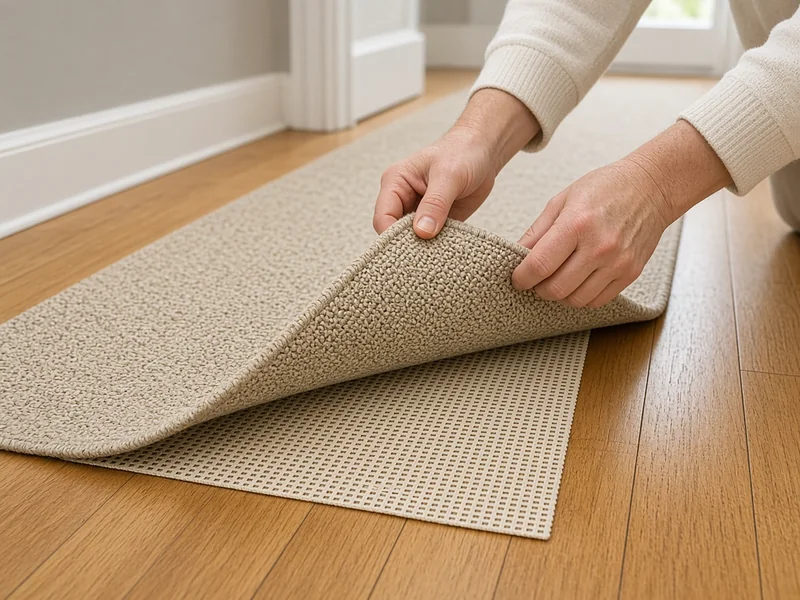
If you already own rugs that slide, a pad is cheaper than replacing them. The Gorilla Grip pad is a non-adhesive open-grid pad that grips both the rug and the floor, and trims with scissors to fit a runner. It adds no grip on its own, so it always goes under a rug.
How to lay out runners for a senior dog
- Watch your dog for a day. Note where it slips, where it hesitates and where it lies down and gets up.
- Map the routes. Bed to water bowl, bed to back door, sofa to kitchen, and any turn or doorway where it slips.
- Cover the get-up spots. The place a dog pushes up from is where it most needs grip. Put a rug beside and in front of its bed.
- Lay runners end to end. Butt them together with no gaps. A gap is a patch of bare floor exactly where the dog expects grip.
- Cover turns. Dogs often slip when turning, so cover corners and doorways generously.
- Check weekly. Flatten edges, re-tape corners and lift rugs to clean underneath.
Rugs are step one, not the whole fix
For most dogs, runners solve the worst slipping. If your dog still slips, add these:
- Trim nails. VCA says most dogs need a nail trim at least once a month. Long nails stop the toes gripping.
- Trim paw fur. Fur growing over the pads acts like a sock.
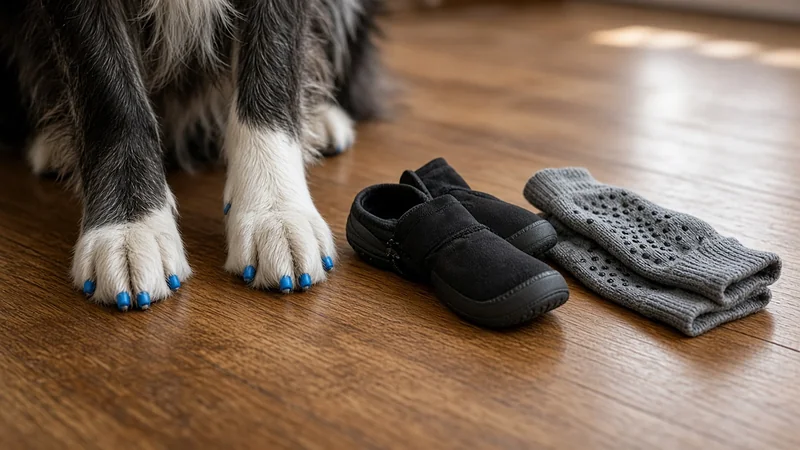
- Nail grips or boots. For dogs that slip on the floors you cannot cover. See toe grips vs dog boots vs grip socks.
- Support. If your dog's back legs are weak, a rear sling helps on the routes you cannot cover. See rear support harnesses for large senior dogs.
For the full plan, read How to stop a senior dog slipping on hardwood floors.
Runners vs foam mats vs yoga mats
| Option | Best for | Watch out for |
|---|---|---|
| Rubber-backed runner | Hallways and long routes | Width; washing can wear the backing |
| Rug pad under an existing rug | Rugs you already own | No grip on its own |
| Interlocking foam tiles | Recovery areas, corners | Nails can dig in; seams and edges must lie flat |
| Yoga or exercise mat | Quick fix beside the bed | Can slide on some floors; not washable in a machine |
Common mistakes
- Small scatter rugs. They slide and leave gaps. Use runners or larger rugs.
- Thick or shaggy rugs. They catch dragging feet.
- Ignoring the edges. A curled corner trips both dogs and people.
- Covering one room. If the route to the water bowl crosses bare floor, the dog still has to cross it.
Runners are one part of a wider setup. See our arthritis home modifications checklist.
Related reading: our guides to dog boots for slippery floors and home aids for hip dysplasia.
Related reading: our guides to foam mats versus rugs and paw wax versus traction products.
FAQ
What kind of rug is best for a dog slipping on hardwood?
A low-pile or flat-weave runner with a rubber or similar non-slip backing, laid along the routes your dog uses every day.
Are rubber-backed rugs safe for hardwood floors?
Many are sold for hardwood, but some backings can discolour certain finishes, especially when moisture is trapped. Check your floor maker's guidance and lift the rug regularly to clean and dry underneath.
How wide should a runner be for a large dog?
Wide enough that the dog's feet stay on the rug even when it splays. Measure your hallway and choose the widest runner that fits.
Do I still need nail grips if I have rugs?
Not always. Rugs fix most indoor slipping. Nail grips or boots help on floors you cannot cover.
Prices change often, so we do not list them. Check the current price on Amazon.
Sources
- VCA Animal Hospitals, Creating a Comfortable Home for Your Mobility Compromised Dog.
- VCA Animal Hospitals, Behavior Changes and Pain in Aging Dogs.
- Kapaqua and Gorilla Grip Amazon listings (specifications and care instructions, checked November 2026).