As an Amazon Associate, SturdyPaws earns from qualifying purchases. This article contains affiliate links; buying through them costs you nothing extra. Read our affiliate disclosure.
Arthritis changes how a dog moves through your home. Floors that were fine for years become slippery. The stairs become a risk. The sofa becomes a jump too far. Veterinary guidance on osteoarthritis is clear that simple changes at home can make daily life easier and more comfortable for affected dogs, alongside the treatment your vet prescribes.
This checklist goes room by room. It is based mainly on home-care guidance from VCA Animal Hospitals, and links to our product guides where a product helps. You will not need every item. Start with the places your dog struggles most.
Key takeaways
- Traction first. Non-slip rugs and runners on hard floors, short nails and trimmed paw fur.
- Control the stairs. Gates when you cannot supervise; a support harness when you can.
- Remove the jumps. Ramps or steps to furniture and the car.
- Upgrade the bed. Supportive, low entry, washable.
- Raise the bowls and keep your dog warm and dry.
- See it from your dog's level. Clear clutter and tight turns.
Start with a walk-through
VCA suggests looking at your home from your dog's viewpoint, literally: get down at its level and see what it has to walk around or over. Note sharp corners, clutter and narrow spaces that force sudden turns, which are hard on joints and can cause falls.
VCA also suggests filming your dog moving around the home and watching it back in slow motion. A shorter stride, or hunching through the shoulders or back, can show where your dog is struggling. Do this before you buy anything, so you spend on the problem areas.
Floors: the biggest win
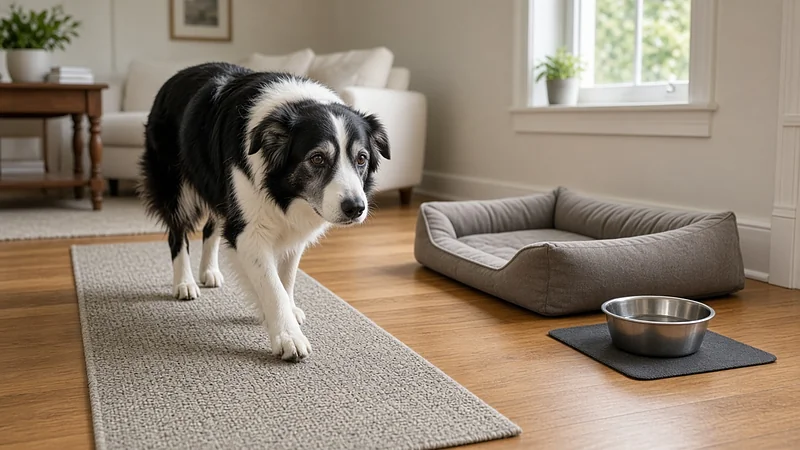
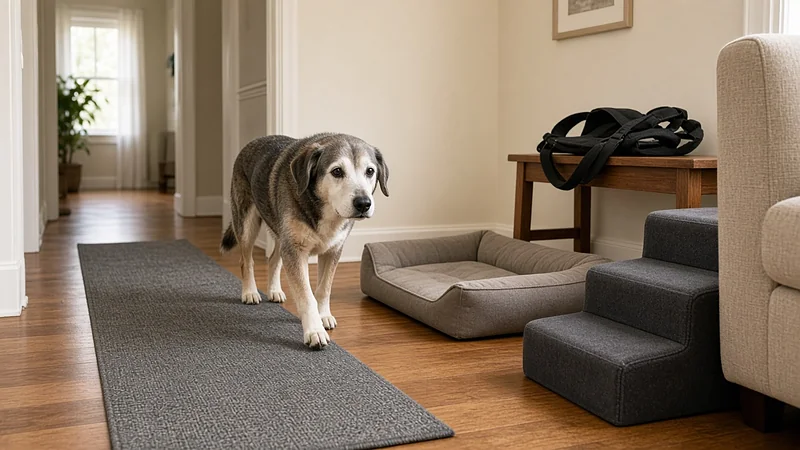
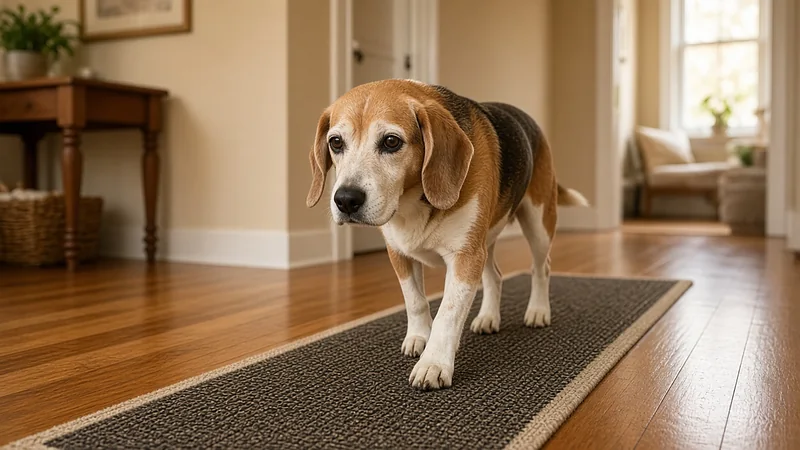
VCA notes that hardwood, laminate and tile are hard for dogs to walk on securely. Dogs that have fallen, or have mobility problems, often walk cautiously on them with a short stride and hunched back. That guarding posture leads to sore muscles and less activity, which makes stiffness worse.
- Lay non-slip rugs and runners where your dog spends the most time and along its main routes: bed to water, water to door. Make sure they have no raised corners or edges to trip on.
- Consider foam tiles for larger areas. VCA mentions interlocking foam floor tiles like those used for children's play areas, and yoga mats or non-skid rugs.
- Gate off slick rooms your dog does not need.
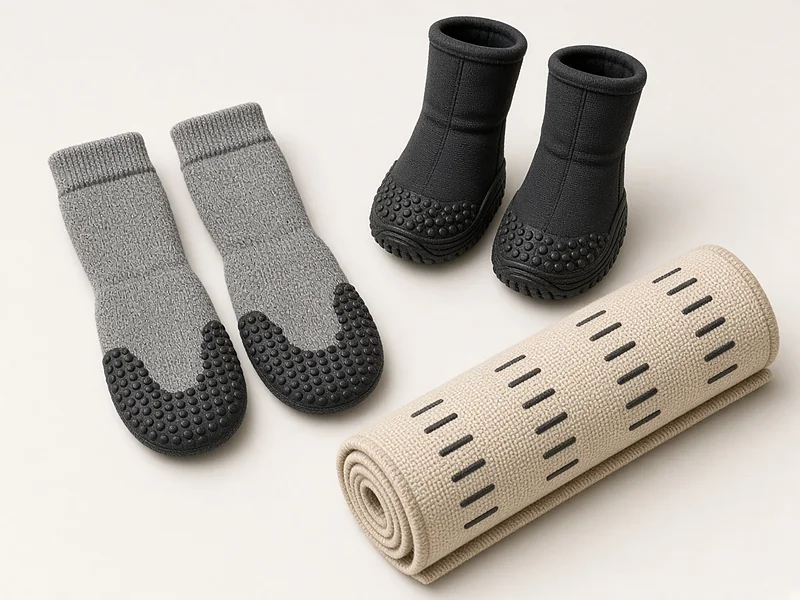
Kapaqua Rubber-Backed Custom-Length Runner Rug
22 in wide (other widths in the menu), custom length, 1/4 in low loop pile, rubber backing for hardwood, laminate, vinyl and tile; hand wash only per the current listing
Pros
- Cut to the exact length of your hallway or route, so there are fewer gaps
- Low 1/4 in pile is easy for dragging feet
- Rubber backing made for bare hard floors
Cons
- Not for use on carpet
- Current listing says hand wash only
- 22 in is narrow for a large dog that splays; check wider options
A rug pad under loose rugs stops them sliding:
Gorilla Grip Slip-Resistant Rug Pad
Non-adhesive open-grid pad, dual-sided grip, trim with scissors; 2x8 ft size and others
Pros
- Makes rugs you already own stay put
- Trims to fit any runner
- Open grid lets floors breathe
Cons
- Adds no traction on its own; it goes under a rug
- Check your floor maker’s guidance on pads
See non-slip runner rugs for hardwood and how to stop a senior dog slipping on hardwood.
Paws and nails
VCA advises keeping nails short to improve traction and reduce strain on joints, and says most dogs need a nail trim at least once a month. It also recommends trimming fur that grows between the toes. If nail trims stress your dog, ask your vet about training tips or medication to help.
For extra grip, VCA mentions nail caps, pad coverings and boots, and suggests discussing them with your vet or rehabilitation therapist first, because different options suit different dogs.
Dr. Buzby's ToeGrips
Rubber rings that slip over toenail tips; sized by nail; 20 per pack (16 weight-bearing nails plus 4 spares); last 1–3 months per the maker. Linked listing is Medium (the listing says Medium suits dogs with an ideal weight of 15–39 lb)
Pros
- Leaves paw pads free; nothing over the foot
- Developed by a veterinarian
Cons
- Fitting takes patience and correct sizing
- Can fall off or need replacing every 1–3 months
- Not suitable for every nail shape
Read our ToeGrips review and toe grips vs boots vs socks.
Stairs
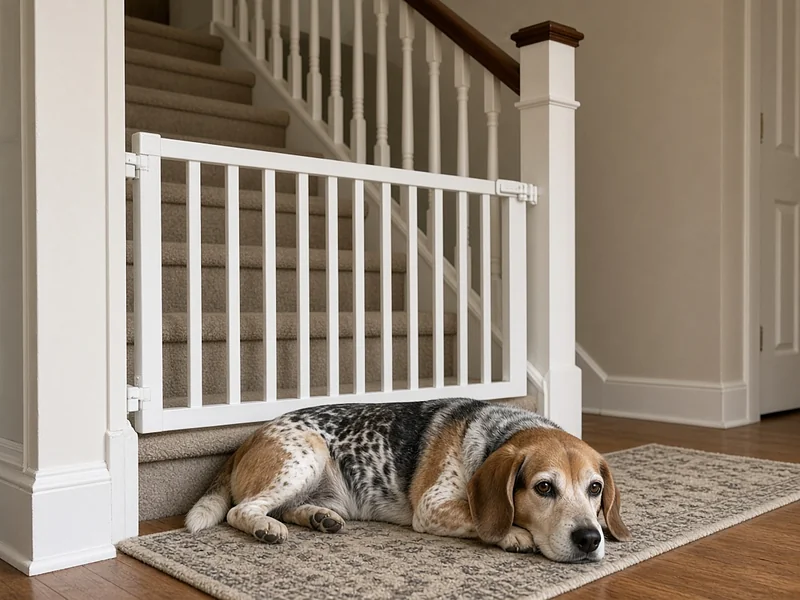
- Gate them when you are not there. VCA's osteoarthritis advice says it may be best to block stair access when no one can supervise, to reduce the risk of falls, and that a baby gate works well.
- Make stairs non-slip with a carpet runner or stick-down grip tape, as VCA suggests.
- Help on the stairs with a support harness that takes some of your dog's weight without straining your back.
- Ask your vet whether your dog should avoid unnecessary stairs altogether.
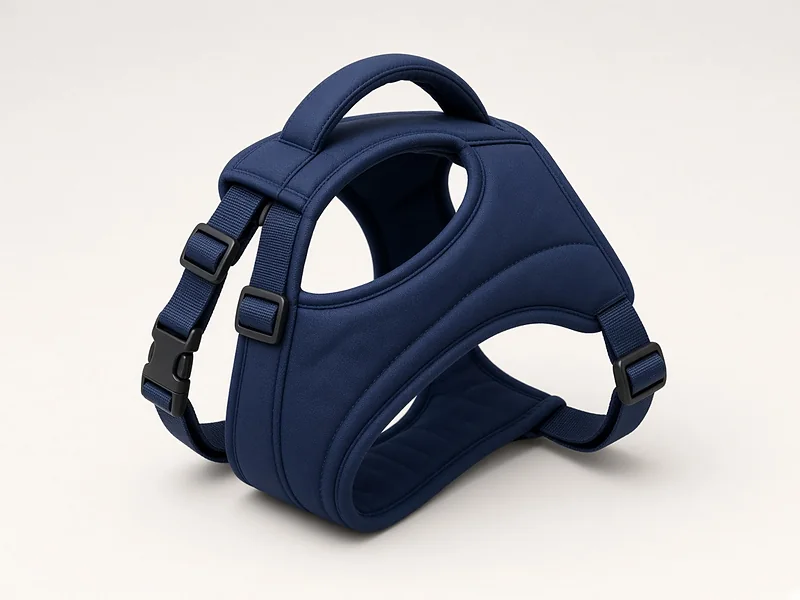
Help 'Em Up Harness
Two-piece full-body harness (front + hip lift), sizes for 10–225 lb, conventional and U-band (male) styles
Pros
- Lifts front, rear or both with separate handles
- Designed to be worn for long periods
- Male (U-band) and conventional versions
Cons
- Most expensive option here
- Sizing is fiddly; the maker suggests sizing the rear down for dogs with muscle loss
See rear support harnesses for large senior dogs and full-body lift harnesses.
Living room and furniture
- Stop the jumps. If your vet says it is fine for your dog to stay on the sofa or your bed, teach it to use pet steps or a ramp. VCA notes this takes some encouragement.
- Put a non-slip rug where your dog lands if it still jumps down.
- Pad sharp edges such as fireplace hearths and hard furniture corners. VCA suggests pool noodles.
- Clear walkways so your dog does not have to squeeze and twist.
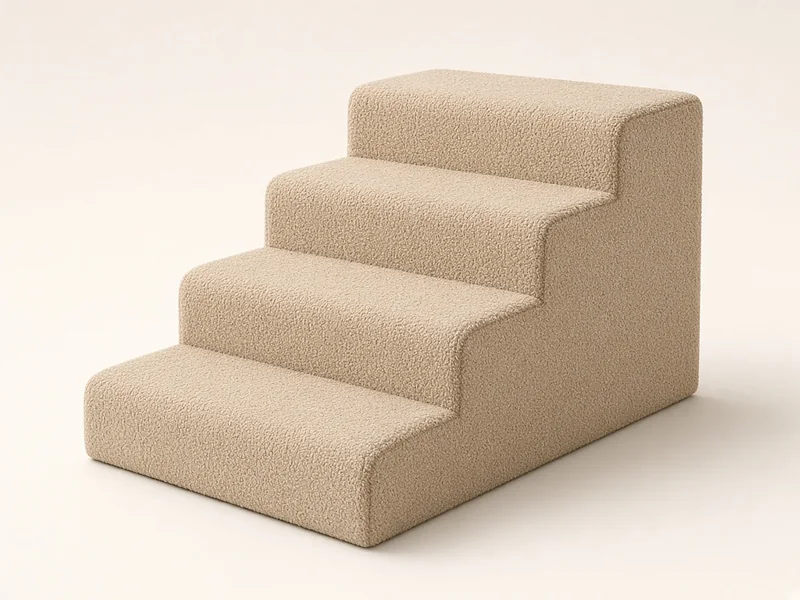
Gardner Pet 2-in-1 Foam Stairs and Ramp (3-step)
3-step foam stair that converts into a ramp; listed for couches 13–20 in; 35D high-density foam; removable TPU-lined waterproof cover, machine washable; rubber-dot non-slip base; 2-, 4- and 5-step versions also listed
Pros
- Converts between steps and a gentle ramp
- Soft foam, light to move
- Washable waterproof cover
Cons
- Foam can compress over time with heavier dogs
- Short ramp is steeper than a long wooden ramp
- Check the couch height against the version you buy
See dog ramps for couches, dog stairs for small seniors and ramp vs stairs.
Bedroom: where your dog sleeps
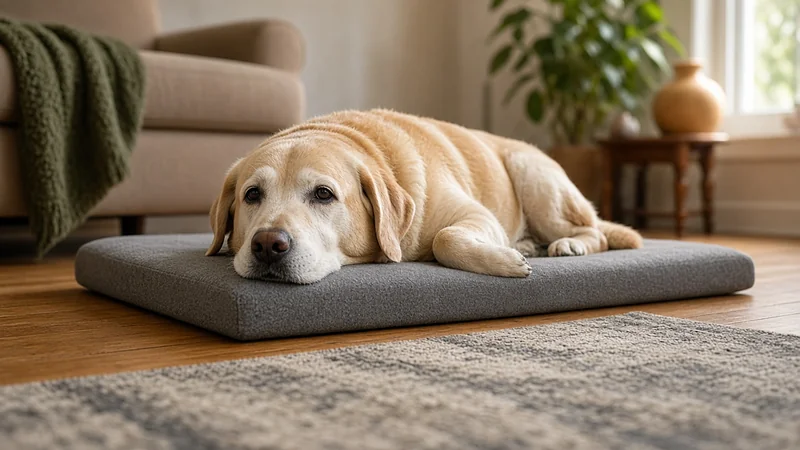
- Choose a supportive bed. VCA suggests an orthopedic or memory foam bed to reduce pressure on sore joints and improve sleep.
- Keep the entry low. VCA recommends beds dogs do not have to climb over or onto.
- Avoid heat-trapping bedding, especially in warm climates.
- Make it washable, because accidents become more common with reduced mobility.
- Keep it warm and dry. VCA notes that cold, damp conditions may worsen stiffness, and that outdoor living is generally not recommended for dogs with arthritis.
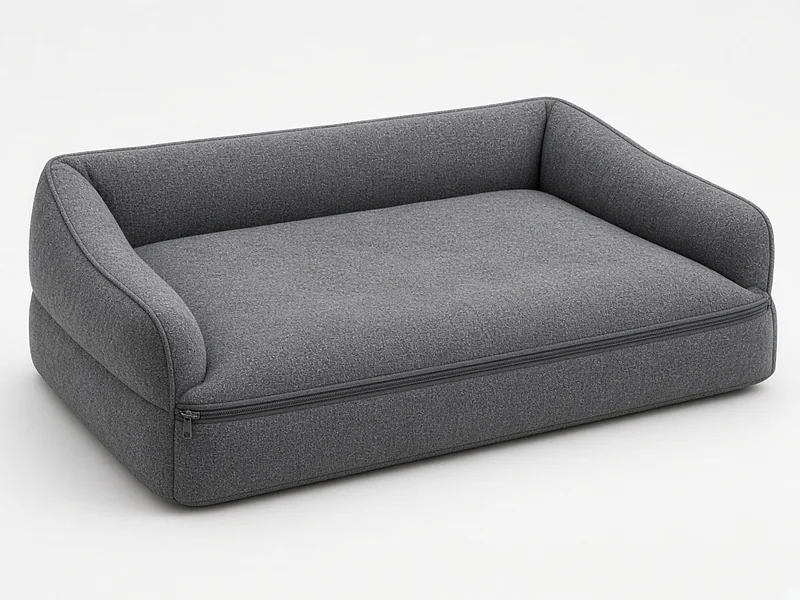
Brindle Waterproof Memory Foam Pet Bed
4 in total: 2 in memory foam over 2 in high-density support foam; waterproof inner encasement; removable machine-washable zip cover
Pros
- Waterproof inner encasement
- Low, flat profile
- Lower relative cost
Cons
- CertiPUR-US not stated on the pages we checked
- 4 in total is thin for large dogs
- No bolster
See orthopedic beds for arthritis, low-entry beds and orthopedic beds for small seniors.
Kitchen: food and water
VCA says raised food and water bowls can reduce strain on the neck and back, and that bowls between elbow and shoulder height are often most comfortable. Put bowls on a non-slip mat, so your dog is not bracing on a slick floor while it eats. Keep water close to where your dog rests, so a sore dog drinks enough.
Entrances and the yard
- Make outdoor steps non-slip, or better, VCA suggests, install a sturdy ramp with good traction that will not slip, and with sides so the dog cannot fall off.
- Give your dog time to get used to a new ramp, with treats and patience.
- Light paths for night toilet trips; older dogs may see less well in the dark.
- Keep a towel by the door so wet paws do not hit a slick floor.
The car
VCA's osteoarthritis advice says a ramp for getting in and out of vehicles reduces stress on the back and leg joints, and that most dogs learn to use ramps quickly. A stable back-seat surface helps on the ride. See SUV ramps, sedan steps and car hammocks for senior dogs.
Bathroom, laundry and other slick rooms
Bathrooms, laundry rooms and kitchens often have the slickest floors in the house, plus water on them. If your dog follows you everywhere, these are high-risk spots.
- Put a non-slip bath mat or rug where your dog usually waits for you.
- Wipe up spills promptly.
- Gate rooms your dog does not need to enter, as VCA suggests for rooms with slick floors.
- If you bathe your dog at home, use a rubber mat in the tub or shower and lift, rather than letting it jump in or out.
Daily routine changes
Home changes work best alongside small changes to your routine.
- Shorter, more frequent walks are often easier on sore joints than one long walk. Ask your vet what level of exercise suits your dog.
- Warm up gently. Many arthritic dogs are stiffest after rest. Give your dog a few minutes to move around before asking it to climb steps or get in the car.
- Keep weight in check. Extra weight puts more load on painful joints. Your vet can help you set a target.
- Plan night-time toilet trips. A clear, lit, non-slip route to the door helps.
- Keep things where they are. Moving the bed or bowls can confuse an older dog, especially if its sight or memory is changing.
A budget-first order
If you cannot do everything at once, this order tackles the most common problems first:
- Trim nails and paw fur. This costs little or nothing.
- Put runners or rugs on your dog's main route.
- Gate the stairs.
- Upgrade the bed.
- Add steps or a ramp to the furniture your dog uses most.
- Add a car ramp and a support harness when trips or stairs become hard.
Our senior dog mobility aids starter kit explains what to buy first in more detail.
Printable checklist
| Area | Change | Priority |
|---|---|---|
| Floors | Non-slip runners on main routes; no curled edges | High |
| Paws | Monthly nail trim; trim fur between toes | High |
| Stairs | Gate when unsupervised; grip tape or runner | High |
| Bed | Supportive, low entry, washable, warm spot | High |
| Furniture | Ramp or steps; rug on landing spot | Medium |
| Bowls | Raise to elbow–shoulder height; non-slip mat | Medium |
| Hazards | Pad corners; clear clutter and tight turns | Medium |
| Outside | Ramp with traction and sides; path lighting | Medium |
| Car | Ramp or steps; stable seat cover; crash-tested restraint | Medium |
Watch for changes
VCA's guidance on aging dogs notes that pain often shows up as behavior changes: reluctance to climb stairs or jump, restlessness, irritability or sleeping more. If your dog avoids a part of the home it used to use, that is a clue. Tell your vet, and adjust your setup as your dog's needs change.
Two related guides: which stair gate is safe at the top vs the bottom of stairs, and ramps for porch and deck steps.
Related reading: our guides to help with steep indoor stairs and home aids for hip dysplasia.
Related reading: our guides to raised dog bowls for joint pain and memory foam, egg-crate and bolster beds.
FAQ
How can I make my house safer for a dog with arthritis?
Start with traction: non-slip rugs on hard floors, short nails and trimmed paw fur. Then gate stairs when you cannot supervise, add ramps to furniture and the car, and provide a supportive, low-entry bed.
Should a dog with arthritis use stairs?
Ask your vet. VCA suggests blocking stairs with a baby gate when no one can supervise, and helping your dog with a support harness when needed.
Do raised bowls help arthritic dogs?
VCA says raised bowls can reduce strain on the neck and back, with bowls between elbow and shoulder height often most comfortable.
What flooring is best for old dogs?
Surfaces with grip. If you have hardwood, laminate or tile, non-slip rugs, runners or foam tiles on your dog's main routes help.
Is cold weather bad for dogs with arthritis?
VCA notes that cold, damp conditions may worsen stiffness. Keep your dog warm and dry, and indoors.
Prices change often, so we do not list them. Check the current price on Amazon.
Sources
- VCA Animal Hospitals, Helping your dog with osteoarthritis.
- VCA Animal Hospitals, Creating a comfortable home for your mobility-compromised dog.
- VCA Animal Hospitals, Behavior changes and pain in aging dogs.
- American Kennel Club, Dog stairs and ramps.
- Product specifications from the linked Amazon listings, checked 2 November 2026.