As an Amazon Associate, SturdyPaws earns from qualifying purchases. This article contains affiliate links; buying through them costs you nothing extra. Read our affiliate disclosure.
After surgery or with a wound, your dog needs to be kept from licking and chewing at it. VCA Animal Hospitals explains that licking is natural for dogs but can seriously delay healing and result in infection or injury. The usual answer is a cone, but a rigid plastic cone can be hard on an older dog: it bumps into furniture, catches on doorways, makes lying down awkward and can make a stiff dog reluctant to move at all.
VCA lists soft fabric cones, donut-shaped collars and recovery suits as alternatives to ask your vet about. This guide explains what each one protects, how to fit them safely and how to set up your home so a senior dog can rest comfortably while healing. We have not tested these products ourselves and do not publish ratings or prices.
Key takeaways
- Ask your vet which option suits the wound. A cone, donut and suit protect different parts of the body.
- Two-finger check. VCA says you should be able to fit two fingers between a collar and the dog's neck.
- Not too tight. Wounds need oxygen to heal, so VCA says suits and wraps should not be too tight.
- Supervise early. Watch your dog for the first few hours, VCA advises, so it does not get a paw stuck.
- Keep it on until healed, and offer a shallow dish if your dog struggles to eat.
Why senior dogs struggle with rigid cones
VCA notes that some dogs are distressed by an Elizabethan collar, whether rigid plastic or fabric, because they have trouble eating or drinking, bump into walls and furniture because of limited vision, or are bothered by the way sounds are amplified by the collar.
For an older dog, the problems add up. A stiff dog that already struggles to lie down has to work around a hard cone. A dog with poor eyesight or cognitive decline may be more disoriented with its view restricted. And a dog that is wary of moving may simply stay put, which is not ideal when it should be getting up for short, controlled toilet trips.
The three main alternatives
Recovery suits
VCA describes a recovery suit as a snug suit, similar to a baby onesie, with loops for a collar and a flap that can be snapped up to let your dog urinate on walks. Suits cover the body, so they suit wounds on the chest, belly, flanks and back, such as spays or lump removals. They do not protect the head or lower legs.
The Suitical suit is cotton and lycra with elastic at the neck, tail and legs, a snap closure and a clip-up system for toilet breaks. The medium fits a back length of 21.7–27.2 in. It is machine washable.
Suitical Recovery Suit (Medium)
Cotton and lycra body suit with elastic at neck, tail and legs, snap closure, clip-up system for toilet breaks, inner pocket for ice packs or pads; Medium fits a back length of 21.7–27.2 in; machine washable
Pros
- No cone: full vision and normal eating
- Clip-up flap for toilet trips
- Machine washable and reusable
Cons
- Does not protect head, face or lower legs
- Must be removed and refitted for some dogs' toileting
- Sized by back length; measure carefully
Inflatable donut collars
A donut collar is an inflated ring worn around the neck. It stops the dog turning its head far enough to reach many body areas, without blocking its side vision. The KONG Cloud is a plush inflatable collar with a washable cover; the medium fits a 10–13 in neck.
Donuts work less well for wounds the dog can reach easily, such as the paws or tail, and some flexible dogs can still reach their flanks. Ask your vet whether one is enough for your dog's wound.
KONG Cloud Inflatable Collar (Medium)
Plush, inflatable donut-style e-collar; machine-washable fabric cover; Medium fits a 10–13 in neck
Pros
- Does not block side vision
- Soft to lie on
- Machine-washable cover
Cons
- Long-necked or flexible dogs may still reach some areas
- Can be punctured
- Limited protection for paws and tail
Soft cones
A soft cone keeps the cone shape but uses padded fabric instead of plastic, so it bends around furniture and is easier to lie down in. The Comfy Cone is foam-backed padded nylon, water resistant, with removable plastic stays to add structure and hook-and-loop closures with three sizing strips. It can be folded back for meals.
All Four Paws Comfy Cone (Small-Long)
Soft cone of foam-backed padded nylon, water resistant, reflective binding, hook-and-loop closure with 3 sizing strips, neck loops for the dog's collar, removable plastic stays; can fold back for eating
Pros
- Cone-style coverage, softer than plastic
- Removable stays to stiffen it if needed
- Folds back for meals
Cons
- Still limits side vision
- Determined dogs may fold it to reach a wound
- Sized by chart; measure neck and nose length
| Product | Key specs | Link |
|---|---|---|
| Suitical Recovery Suit (Medium) | Cotton and lycra body suit with elastic at neck, tail and legs, snap closure, clip-up system for toilet breaks, inner pocket for ice packs or pads; Medium fits a back length of 21.7–27.2 in; machine washable | Check price on Amazon (opens in a new tab) |
| KONG Cloud Inflatable Collar (Medium) | Plush, inflatable donut-style e-collar; machine-washable fabric cover; Medium fits a 10–13 in neck | Check price on Amazon (opens in a new tab) |
| All Four Paws Comfy Cone (Small-Long) | Soft cone of foam-backed padded nylon, water resistant, reflective binding, hook-and-loop closure with 3 sizing strips, neck loops for the dog's collar, removable plastic stays; can fold back for eating | Check price on Amazon (opens in a new tab) |
Specs are from manufacturer and retailer listings and can change between versions; check the listing before you buy. We don't show prices because they change often; the button shows the current price on Amazon.
Which protects what
| Wound location | Options to ask about |
|---|---|
| Belly, chest, flank (e.g. spay, lump removal) | Recovery suit, donut, soft cone |
| Back or hips | Recovery suit, soft cone |
| Front or back legs, paws | Cone (soft or rigid); bandage per your vet |
| Face, eyes, ears | Cone; a donut or suit will not stop scratching |
| Knee surgery (e.g. TPLO) | Ask your vet; often a cone. See our TPLO home checklist |
VCA also mentions that, depending on the wound location, a T-shirt may give enough cover, and that there are bandages made for paws and joints, though a determined dog may work them off. Ask your vet before relying on any of these.
How to measure
Each style is sized differently, so measure before you order and use the maker's own chart:
- Donut collars are sized by neck circumference. KONG lists the medium Cloud for a 10–13 in neck.
- Recovery suits are sized by back length, from the base of the neck to the base of the tail. Suitical lists the medium for 21.7–27.2 in.
- Soft cones are usually sized by neck and by the distance from the collar to the tip of the nose, because the cone must reach past the nose.
Measure with your dog standing if it can do so comfortably; if it is sore, ask the vet team to measure before discharge. Older dogs that have lost muscle may fall between sizes, so check fit again after a few days.
Fitting safely
- Collars: VCA says to make sure you can fit two fingers comfortably between the collar and your dog's neck, so it does not restrict breathing or swallowing.
- Suits and wraps: VCA notes that wounds need oxygen to heal, so suits and wraps should not be too tight. Its alternatives page suggests you should be able to fit two crossed fingers between the collar and your pet's body.
- Length: a cone should reach past the nose so the dog cannot reach the wound. Measure as the maker's chart directs.
- Eating: VCA says your dog should be able to reach its food and water dishes.
The first few hours
VCA advises supervising your dog for the first few hours to make sure it does not injure itself trying to remove the collar, for example by getting a paw stuck. Older dogs may be groggy after anaesthetic, so let your dog settle in a quiet, flat area with a supportive bed, and stay nearby.
VCA's cone guidance says the collar must be worn until the wound has fully healed, and that it is generally not advisable to take it off because it can be hard to put back correctly. Your vet may say you can remove it for periods when you can supervise closely.
Eating, drinking and going outside
VCA says a properly fitted collar should let your dog eat and drink normally, but if your dog usually eats from a deep bowl and refuses with the cone on, try a shallow dish or plate. Raising the bowl a little can also help a stiff dog that finds bending its neck with a cone awkward.
VCA also warns that a dog wearing a collar outdoors is at greater risk of becoming entangled in plants or bushes, so keep your dog on a leash on outdoor toilet trips. If your dog needs help with steps or getting up, a rear sling or support harness lets you help without leaning over the cone.
Home setup for a senior dog in a cone
- Clear the path. VCA suggests removing small objects that could be knocked off tables or shelves by the cone.
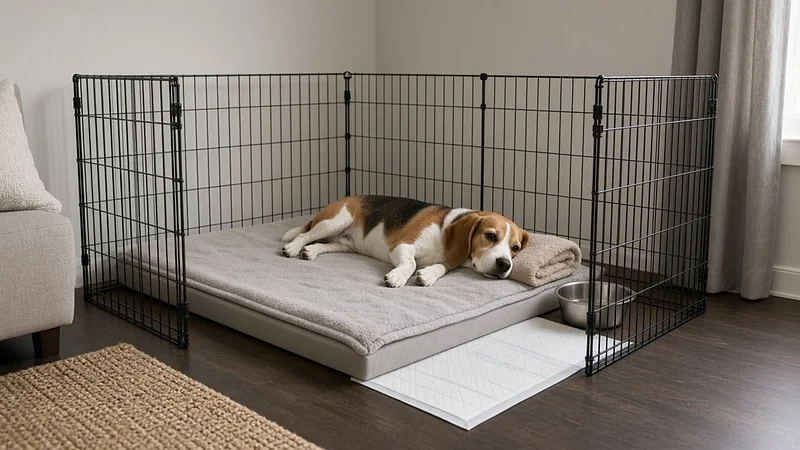
- Wide, low bed. A flat, open-front bed with room to turn means less bumping. See our crate rest setup guide for confined rest.
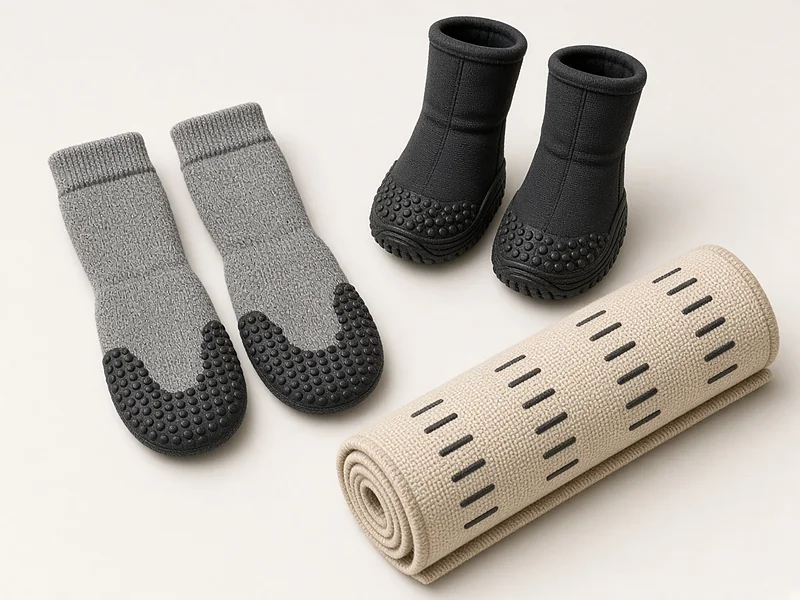
- Grip underfoot. A groggy dog in a cone needs rugs or runners on slippery floors.
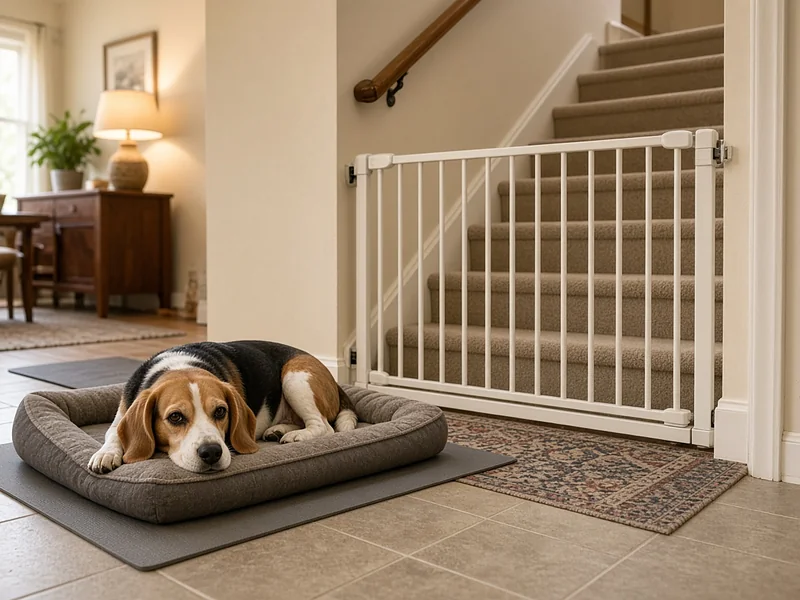
- Gate the stairs. Limited vision plus stairs is a risky mix.
- Crate size. If your dog is crated, check it can turn around and lie down with the cone on.
Recovery suits and toileting
A recovery suit needs a little planning. Unclip or roll up the back flap before toilet trips, and check the suit is clean and dry afterwards. If your dog leaks urine, a suit can stay damp, so check often and ask your vet about alternatives; our guide to diapers and belly bands covers skin care for leaky dogs.
When the alternatives are not enough
Some dogs will lick or chew through anything. VCA notes that some dogs benefit from a few days of a sedative medication to help them adjust to wearing a cone. If your dog keeps getting to the wound, call your vet; it may need a rigid cone, a different style or medical help.
FAQ
Are soft cones as good as plastic cones?
For many dogs they are enough, but a determined dog can fold a soft cone. Ask your vet.
Can my dog sleep in a cone?
Yes. VCA says the collar must be worn until the wound has fully healed.
Is a recovery suit better than a cone?
For belly or body wounds, a suit may be more comfortable. It does not protect legs, paws or the head.
How tight should a cone be?
VCA says you should be able to fit two fingers between the collar and the neck.
My dog won't eat with the cone on. What can I do?
VCA suggests a shallow dish or plate. If you must remove it, supervise and replace it straight after the meal.
Prices change often, so we do not list them. Check the current price on Amazon.
Sources
- VCA Animal Hospitals, Elizabethan collars in dogs.
- VCA Animal Hospitals, Alternatives to the Elizabethan collar.
- Product specifications from the linked Amazon listings, checked 2 November 2026.