As an Amazon Associate, SturdyPaws earns from qualifying purchases. This article contains affiliate links; buying through them costs you nothing extra. Read our affiliate disclosure.
Most dogs come home from TPLO surgery a day or two after the operation, sleepy, bandaged and on new medicines. Many owners realise on the drive home that the house is not ready: the floors are slippery, the dog's favourite spot is on the sofa, there is no way to stop him licking the wound and nobody has thought about how to get 35 kilograms of Labrador out of the back of the car.
This checklist is for the days before surgery. It covers what to buy, what to set up and what to plan, room by room, so the first eight weeks go as smoothly as possible. It is built from discharge guides published by two veterinary practices (Crestwood Veterinary Centre in Edmonton and Veterinary Orthopedic Services in Salt Lake City) and the American College of Veterinary Surgeons. It is not a substitute for your own surgeon's instructions, which come first wherever they differ. If you want the stairs and ramps side of recovery, including when to reintroduce stairs, our separate TPLO stairs and ramps guide covers that in detail; this page deliberately does not repeat it.
Key takeaways
- Decide where your dog will live for eight weeks before surgery day. A crate, a pen or one gated room on the ground floor.
- Cover every slippery floor on the routes your dog will walk. Both discharge guides single out slick floors.
- Licking is the complication you can prevent. Have a cone or alternative ready and fitted before the dog comes home.
- Plan for a short leash and a belly sling on every trip outside. No off-leash yard time for eight weeks.
- Buy less than you think. A pen, rugs, a flat bed, a sling and a cone cover most needs.
Why the setup matters so much after TPLO
TPLO (tibial plateau leveling osteotomy) changes the angle of the top of the shin bone so the knee stays stable without the torn cranial cruciate ligament. The surgeon cuts the bone and holds it in its new position with a plate and screws. That bone then has to heal, which is why the first eight weeks are the critical window. Crestwood's home recovery booklet describes the first eight weeks as the critical healing period, and both practices tie the end of strict restrictions to the follow-up X-rays at around eight weeks.
The risks during that window are mostly mechanical. Crestwood warns that overextending the knee, or slipping and falling, could compromise the repair and delay healing, and that a dog who slips is also more likely to injure the opposite knee. The American College of Veterinary Surgeons notes that dogs with a cruciate rupture in one knee often go on to have problems in the other: it puts the figure at 40 to 60 percent. In other words, much of what you buy is about stopping sudden, uncontrolled movement: jumping, scrambling, skidding and bolting.
Checklist 1: The recovery zone
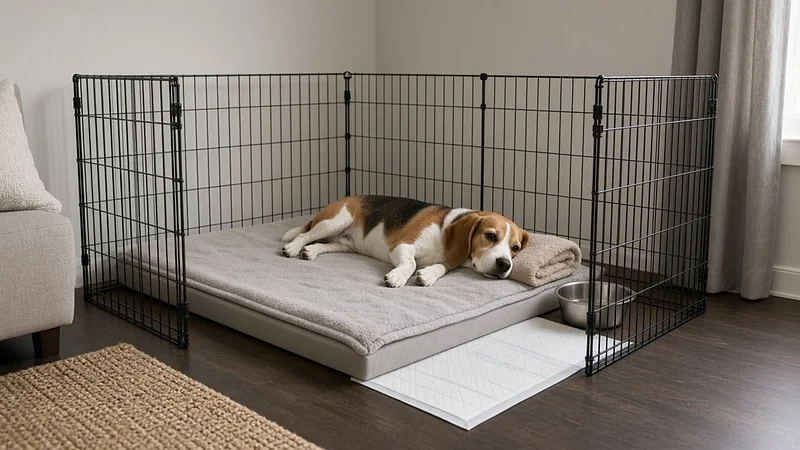
Crestwood asks owners to decide before the dog comes home where it will be confined, and lists three options: a crate large enough to stand up and turn around in, a gated-off area such as a kitchen or living room, or a single room, preferably on the main level with as few stairs as possible.
Crate, pen or room?
A crate is the most restrictive and suits dogs that are already crate-trained and calm. A pen gives more space to shift position, which many large dogs appreciate, while still stopping them from pacing or running to the door. A gated room is the least restrictive and works for older, quieter dogs, but only if the floor is fully covered and there is no furniture to jump on.
For a medium or large dog that is not crate-trained, an exercise pen is often the easiest compromise. The taller version matters: a dog that can stand on its hind legs and lean on a short pen panel is doing exactly the knee extension you want to avoid.
MidWest 48-Inch Exercise Pen (Single Door)
Eight 24 x 48 in panels, 16 sq ft area, step-through door with slide-bolt latch and Paw Block
Pros
- Step-through door for you
- Tall sides for larger dogs
- Can attach to a crate
Cons
- Heavy to move
- Door threshold still needs care with a weak dog
- Open top
Where to put it
- On the ground floor, close to the door you will use for toilet trips, so the walk out is short.
- Somewhere your dog can see the family. Isolated dogs often whine, pace and try to escape.
- Away from the front window if your dog reacts to passers-by. A barking lunge on a healing knee is exactly what you are trying to avoid.
- With room around it for you to sit beside the dog to do massage and range-of-motion exercises if your vet prescribes them.
What goes inside
- A flat, firm bed with a low edge (see checklist 3).
- A non-tip water bowl. A dog that has to stretch or scramble to reach water is moving more than needed.
- A washable rug or mat under everything, so the floor of the pen itself is not slick.
- One or two safe chew or lick toys for calm entertainment. Check with your vet about food-based toys if your dog is on a weight plan.
Checklist 2: Floors and routes
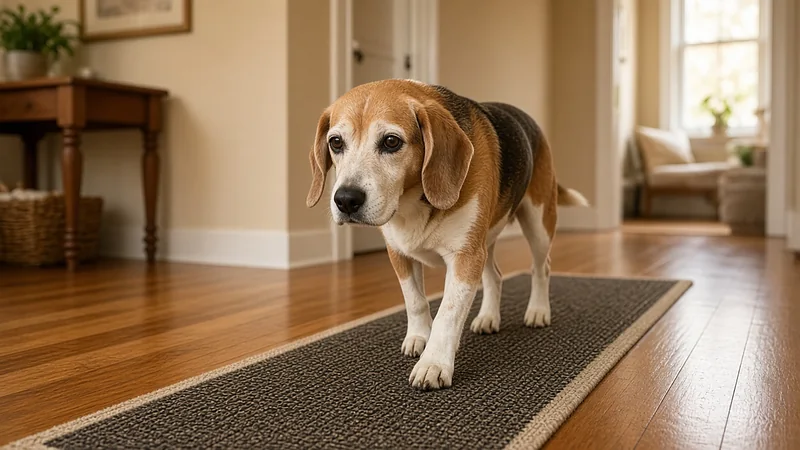
Both discharge guides single out flooring. Crestwood suggests throw rugs with rubber backing or yoga mats over hardwood, tile and linoleum. Veterinary Orthopedic Services is blunter: slippery floors should be avoided at all times for eight weeks.
Walk the routes your dog will actually use and cover each one:
- From the recovery zone to the outside door.
- Any step or threshold at that door.
- The car route if you will drive to rechecks and physiotherapy.
- Anywhere the dog will be fed or examined.
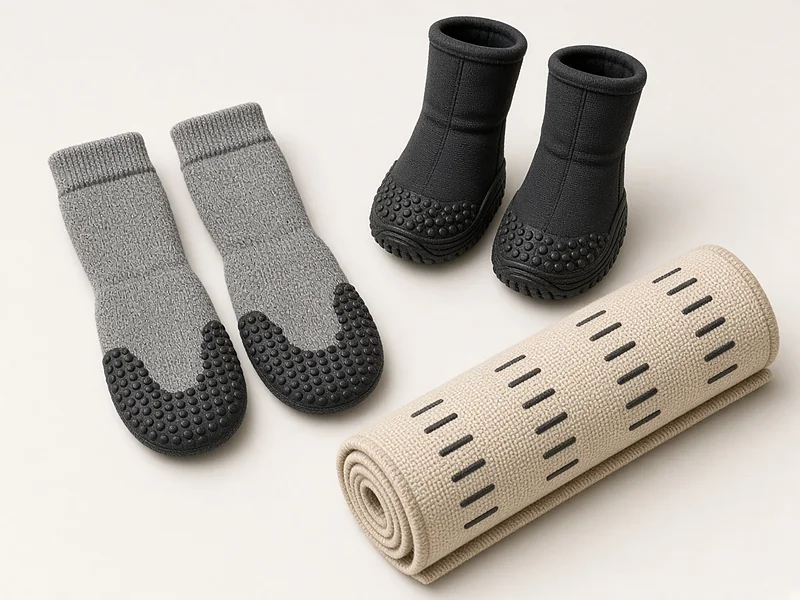
Rubber-backed runners are the simplest option for long hallways. On a smooth floor, a rug pad underneath adds grip and stops the edges curling into a trip hazard. Our runner rugs guide and the comparison of foam mats and rugs go into the options.
Kapaqua Rubber-Backed Custom-Length Runner Rug
22 in wide (other widths in the menu), custom length, 1/4 in low loop pile, rubber backing for hardwood, laminate, vinyl and tile; hand wash only per the current listing
Pros
- Cut to the exact length of your hallway or route, so there are fewer gaps
- Low 1/4 in pile is easy for dragging feet
- Rubber backing made for bare hard floors
Cons
- Not for use on carpet
- Current listing says hand wash only
- 22 in is narrow for a large dog that splays; check wider options
Gorilla Grip Slip-Resistant Rug Pad
Non-adhesive open-grid pad, dual-sided grip, trim with scissors; 2x8 ft size and others
Pros
- Makes rugs you already own stay put
- Trims to fit any runner
- Open grid lets floors breathe
Cons
- Adds no traction on its own; it goes under a rug
- Check your floor maker’s guidance on pads
Fur between the paw pads and long nails both reduce grip. If your dog is due a nail trim, ask whether the clinic can do it while your dog is under anaesthetic or sedated for surgery, rather than wrestling with the feet afterwards.
Checklist 3: A bed that is easy to get on and off
A post-surgical dog needs to lie down and stand up many times a day without twisting or scrambling. That favours a flat, firm mattress-style bed with no high bolster to climb over. Deep, squashy beds and tall bolsters make the dog push hard with the hind legs to get out. Raised cots and anything on furniture are off the list entirely, because of Crestwood's "no jumping on or off the bed" and "no jumping on or off the couch" rules.
A waterproof liner is worth having. Some dogs have accidents in the first few days, especially with sedation and new medication, and a bed that cannot be wiped clean quickly becomes a problem.
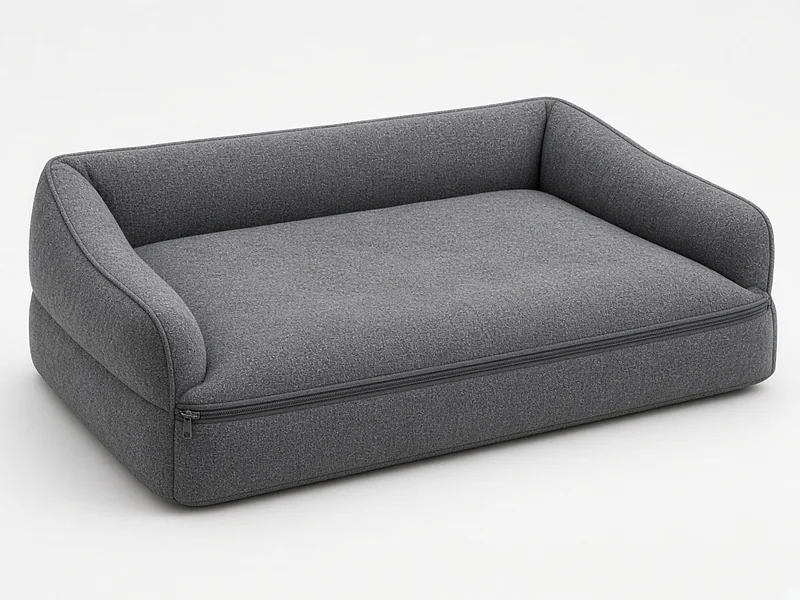
Dogbed4less Orthopedic Gel Memory Foam Dog Bed
4 in single solid gel-infused memory foam pad, 3.2 lb density; waterproof internal zip liner plus washable external cover (Amazon listings add a bonus second cover); 7 sizes from 35x20 to 55x47 in
Pros
- Stated foam density published (3.2 lb), which few brands do
- Liner plus a spare cover suits frequent washing
- Flat, low mattress is easy to step onto; large sizes available
Cons
- No bolster
- 4 in may be thin for the heaviest giant breeds
- Only the inner liner is waterproof, not the outer cover
If your dog already has an orthopedic bed with a bolster, it is often enough to flip it so the open side faces the pen door, or to remove the bolster cushion for a few weeks.
Checklist 4: Stopping licking
Crestwood calls infection from licking the most common complication after TPLO and points out that it is totally preventable. Veterinary Orthopedic Services is equally firm: licking is never OK. Licking introduces bacteria and can open the incision, and an infection that reaches the bone can delay healing badly.
- Have the cone your clinic supplies, or a soft alternative your surgeon approves, fitted and tested before the first night.
- Practise eating and drinking in the cone at home. Some dogs need a wider or shallower bowl while wearing one.
- Check the incision daily against the normal and abnormal signs in your discharge sheet. Crestwood suggests clinics may accept photos of the incision to decide whether a recheck is needed.
- Do not apply anything to the incision unless your surgeon told you to. Instructions differ: one of our two sources uses an antibiotic ointment, the other a temporary bandage that is removed after 8 to 12 hours.
Checklist 5: Toilet trips and walking support
Veterinary Orthopedic Services is clear that for eight weeks a dog goes outside on a leash only, every time, whatever the time of day or weather. There is no dog door and no letting the dog out into the yard. Retractable leashes are out. Crestwood asks for a short leash with the dog very close to your body, toilet-only walks for the first few days and a sling under the belly when needed, particularly on slippery surfaces.
What to have by the door:
- A fixed-length, short leash and a well-fitting harness or collar.
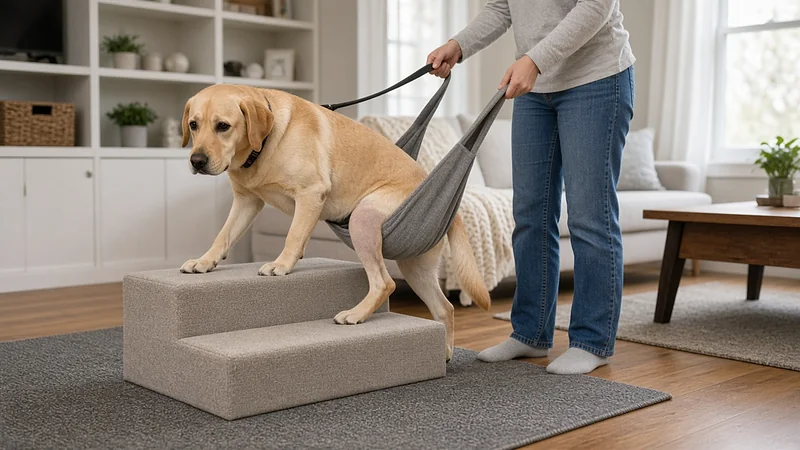
- A belly sling. Many clinics send one home. A bath towel folded lengthways works in an emergency, but a purpose-made rear sling with handles is easier on your back, especially with a large dog.
- A headlamp or torch for night trips, so you can see slippery patches and the dog's footing.
- Paper towels or wipes for wet paws, since wet pads skid more on hard floors.
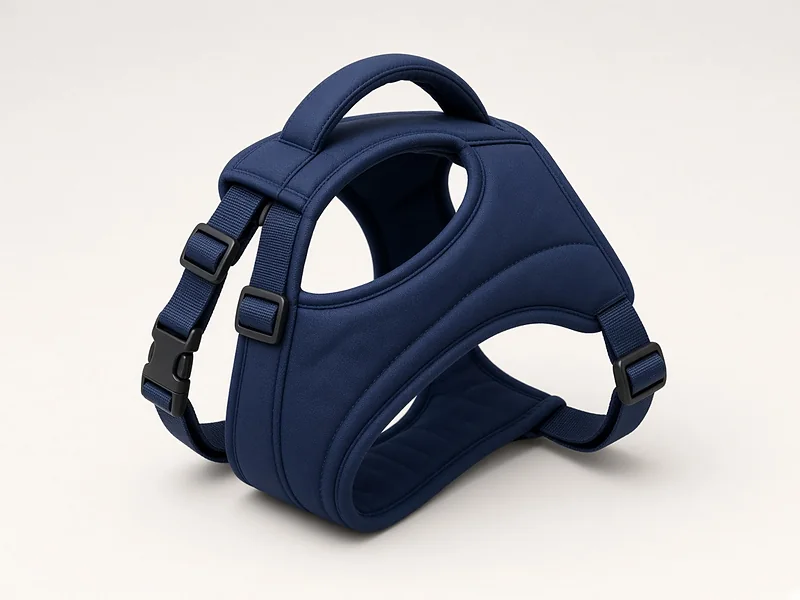
GingerLead Dog Support Sling
Padded rear sling with integrated leash, male and female cuts, dogs up to 250 lb, made in USA
Pros
- Padded belly pad spreads the load
- Integrated leash for one-handed walking
- Widely used after orthopedic surgery
Cons
- Rear support only
- Slides on and off rather than staying on all day by default (optional stay-on straps)
The GingerLead's built-in leash is convenient, but some rehabilitation vets prefer the leash to be held separately from the sling so you can control the front end and the back end independently. Ask your surgeon or rehab therapist which they prefer. If your dog is weak at both ends, our guide to rear support harnesses compares other designs.
Checklist 6: Ice, heat and the exercise kit
Many TPLO discharge plans include cold therapy in the first days. Veterinary Orthopedic Services asks owners to ice the knee for 10 minutes on each side, three times a day for three days. Crestwood suggests gel ice packs, frozen popcorn kernels or crushed ice wrapped in a towel, and asks owners to check that the skin feels cool rather than cold afterwards. Its plan moves to heat therapy later, so follow your own clinic's timing.
- Two reusable gel packs, so one is always frozen.
- Thin towels to wrap them. Never put ice straight on the skin.
- A timer on your phone for icing and for medication doses.
- A notebook or app to record medicines, toilet trips, appetite and how much the dog uses the leg. This is useful at rechecks.
Crestwood also recommends gentle massage and passive range of motion exercises from early on, timed 30 to 60 minutes after pain medication. Veterinary Orthopedic Services discourages doing physical therapy on your own without the guidance of a veterinary physical therapist. If your clinic prescribes exercises, ask them to show you before discharge.
Checklist 7: The ride home and rechecks
The first car journey is often the hardest lift of the whole recovery. Plan it before surgery day:
- Lay a thick blanket or a firm crate pad in the car so the dog lies flat and does not slide.
- Bring a second person if your dog is too heavy to lift safely on your own.
- Do not let the dog jump in or out. Lift with one arm under the chest and one under the back end, or use a sling under the belly and a harness at the front.
- For later trips, a ramp or a lifting harness may help. Our guide to getting a dog into an SUV without a ramp covers lifting technique.
Expect a recheck at around two weeks for stitches or staples. Crestwood says the incision should be healed 10 to 14 days after surgery and the sutures will need removing then. X-rays to check bone healing usually follow at about eight weeks.
Checklist 8: House rules for the whole family
Gear is only half of it. Everyone in the house needs to know the rules, and it helps to write them on a sheet by the door:
- No jumping on or off furniture, beds or people.
- No off-leash time outside, ever, until the surgeon clears it.
- No playing with other dogs. Crestwood advises waiting until the vet says otherwise, likely after the eight-week X-rays.
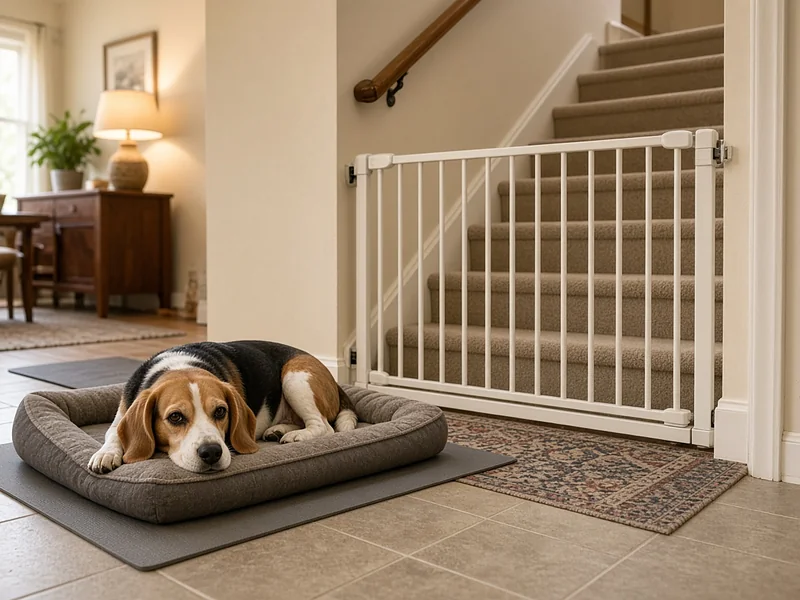
- Stairs only as allowed by your surgeon. Gate them off otherwise.
- Doors and gates closed. A dog that bolts at the doorbell can undo weeks of rest.
- Visitors greet the dog calmly, at its level.
Signs your dog is in pain
Crestwood's guide lists signs of pain to watch for during recovery: decreased appetite, excessive panting, vocalisation, aggression or less interaction with the family, a hunched or altered posture, restlessness, flinching when touched, and an elevated heart rate and breathing rate or dilated pupils. If you see these, especially around exercises, ease off and call your clinic. Pain medication may need adjusting.
Quick shopping list
| Product | Key specs | Link |
|---|---|---|
| MidWest 48-Inch Exercise Pen (Single Door) | Eight 24 x 48 in panels, 16 sq ft area, step-through door with slide-bolt latch and Paw Block | Check price on Amazon (opens in a new tab) |
| Kapaqua Rubber-Backed Custom-Length Runner Rug | 22 in wide (other widths in the menu), custom length, 1/4 in low loop pile, rubber backing for hardwood, laminate, vinyl and tile; hand wash only per the current listing | Check price on Amazon (opens in a new tab) |
| Gorilla Grip Slip-Resistant Rug Pad | Non-adhesive open-grid pad, dual-sided grip, trim with scissors; 2x8 ft size and others | Check price on Amazon (opens in a new tab) |
| Dogbed4less Orthopedic Gel Memory Foam Dog Bed | 4 in single solid gel-infused memory foam pad, 3.2 lb density; waterproof internal zip liner plus washable external cover (Amazon listings add a bonus second cover); 7 sizes from 35x20 to 55x47 in | Check price on Amazon (opens in a new tab) |
| GingerLead Dog Support Sling | Padded rear sling with integrated leash, male and female cuts, dogs up to 250 lb, made in USA | Check price on Amazon (opens in a new tab) |
Specs are from manufacturer and retailer listings and can change between versions; check the listing before you buy. We don't show prices because they change often; the button shows the current price on Amazon.
That is the core list. You will also want gel ice packs, a short fixed leash, a cone that fits and a baby gate if you have stairs. Things you can usually skip: a new elevated bed, a dog wheelchair, supplements you have not discussed with your vet, and anything that encourages active play.
Common mistakes
Leaving the setup until the day the dog comes home. Covering the obvious hallway but not the threshold at the back door. Letting the dog out into the garden alone "just for a minute". Taking the cone off because the dog looks miserable. Starting home exercises before the clinic has shown you how. And assuming a dog that is using the leg well at three weeks is healed; the bone is still knitting until the eight-week X-rays.
If the hard cone is a struggle, ask your vet about the options in our guide to soft cones and recovery suits.
FAQ
What do I need at home before TPLO surgery?
A confinement area (crate, pen or gated room), non-slip rugs on every route, a flat bed with a low edge, a cone, a short leash, a belly sling and ice packs.
Can my dog sleep on my bed after TPLO?
Not if it means jumping. Crestwood's rules forbid jumping on or off the bed or couch. Bring the dog's bed to your room instead if that keeps it calm.
Crate or pen after TPLO?
Either can work. A crate must be large enough to stand and turn. A tall pen gives a large dog more room without allowing running.
How long does my dog need to be restricted?
Typically about eight weeks, until X-rays show the bone has healed, then a gradual return over the following weeks. Your surgeon sets the timeline.
Do I need a ramp after TPLO?
Not necessarily. One surgeon's discharge sheet says ramps are not better than stairs and should also be avoided when possible. See our TPLO stairs and ramps guide.
Prices change often, so we do not list them. Check the current price on Amazon.
Sources
- Crestwood Veterinary Centre, TPLO Home Recovery Program (PDF, updated February 2023).
- Veterinary Orthopedic Services, Post-op instructions: Tibial Plateau Leveling Osteotomy (PDF).
- American College of Veterinary Surgeons, Cranial cruciate ligament disease.
- The Rehab Vet, IVDD sling walking (on holding the leash separately from a sling).
- Product specifications from the linked Amazon listings, checked 2 November 2026.