As an Amazon Associate, SturdyPaws earns from qualifying purchases. This article contains affiliate links; buying through them costs you nothing extra. Read our affiliate disclosure.
Small dogs with arthritis often find car journeys harder as they age. A dog that used to hop onto the back seat and curl up may now struggle to brace itself on a sliding seat, scramble to see out, or slip into the footwell on corners. A booster seat gives a small dog a defined, padded place to sit, raises it high enough to see out and, attached to a harness, keeps it from wandering around the car.
This guide covers the three common styles of booster seat, what each suits, and how to use one safely. It draws on car-travel advice from VCA Animal Hospitals, the RSPCA and the Center for Pet Safety, and on manufacturer specifications. We have not tested these seats ourselves and do not publish ratings or prices.
Key takeaways
- Restrain your dog. VCA says to always use a pet restraint or a crate, and never let a pet ride in the front seat or on the driver's lap.
- Boosters are comfort aids, not crash protection. None of the three listings we checked describes the seat as crash tested.
- Clip to a harness, never a collar. All three seats use a short tether meant for a harness.
- Use the back seat. VCA warns that front airbags were designed for adult humans and can seriously injure pets.
- Match the style to your dog: hanging seats give height, bucket seats are easier to step into, bed-style seats suit dogs that lie down.
Why booster seats help small senior dogs
A small dog on a flat back seat has nothing to brace against. Every turn and stop means shifting weight on stiff hips, elbows or a sore back. A booster seat with raised sides gives the dog something to lean on and a smaller space to move around in. Most also lift the dog closer to window height, so it does not stand on its hind legs trying to see out, a posture that strains backs and hips.
The other benefit is containment. A loose dog can distract the driver. The RSPCA notes that restraining a dog means it cannot move around the car and so has less potential to distract or disrupt the driver.
Safety first: what a booster seat does and doesn't do
Be clear about the limits. A booster seat is a comfortable place to sit with a short tether, not a crash-tested restraint. The RSPCA advises that dogs can be safely restrained in the back seat using a harness that has passed safety or crash tests, and warns that many products on the market have not passed any crash testing and may not prevent injuries in accidents. VCA likewise recommends "doggy seat belts" or a secured crate.
The Center for Pet Safety, a US non-profit that crash tests pet products, also warns against extension tethers and zipline-style products, because they increase the risk of injury during sudden stops or crashes.
What this means in practice:
- Put your dog in a well-fitted harness, never clip the tether to a collar.
- Keep the tether short so the dog can sit and lie down but cannot climb out or reach the footwell.
- If crash protection is your priority, look at a crash-tested harness or secured crate instead of, or alongside, a booster.
- Place the seat in the back. VCA notes front airbags were designed for adult humans, and airbags and seatbelts can seriously injure pets.
The three styles of booster seat
Hanging booster (Kurgo Skybox)
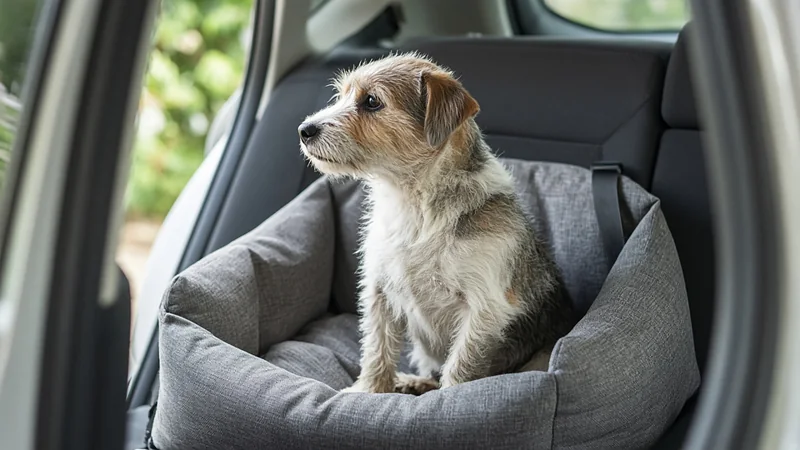
A hanging booster is a fabric box held up by metal supports and straps around the seat back. It sits high, so a small dog can see out of the window without standing up. Kurgo says it fits a bucket seat or the smaller side of a 60/40 split bench, lists a maximum of 30 lb, and recommends it for dogs up to 20 lb, because heavier dogs tend to have bigger bodies that may not fit. It has a waterproof exterior and removable, washable liner.
For a dog with arthritis, the height cuts both ways. The dog gets a view without straining, but it cannot step in. You lift it in and out, which is easy with a 10 lb dog and fine for most small dogs if you support the chest and hindquarters together.
Kurgo Skybox Dog Booster Seat
Hangs from metal supports on a bucket seat or the smaller side of a 60/40 split bench; seat-belt tether to a harness; waterproof exterior, removable washable liner; 16 x 12 x 8 in; listed max 30 lb (Kurgo recommends up to 20 lb)
Pros
- Raises a small dog to window height
- Removable washable liner and storage pockets
- Lifetime warranty stated by Kurgo
Cons
- Not described as crash tested
- Thin liner; add padding for a bony dog
- Dog must be lifted in, which is fine for small dogs but not for stepping in
Bucket booster (K&H Bucket Booster)
A bucket booster is a foam tub that sits on the car seat and is held by the car's own seat belt, threaded underneath the cushion. The K&H version has a firm foam bolster all round and a front that dips down, which K&H says lets small pets climb in and out more easily. It comes with two adjustable tethers for a harness and a removable fleece cover. The small size is 18 x 18 in; the large is 20 x 22 in and K&H says it fits two small pets or one medium dog.
Because it sits on the seat rather than hanging, a bucket gives less height, but the low front is a real advantage for a stiff dog that can manage one small step. The firm sides are good for leaning against.
K&H Bucket Booster Pet Seat
Foam bucket that buckles in with the car seat belt hidden under the cushion; front dips down for easier entry; two adjustable tethers for a harness; removable washable fleece cover; Small 18 x 18 x 16 in, Large 20 x 22 in
Pros
- Firm foam bolster all round
- Low front lip for stepping in
- Washable fleece cover
Cons
- Not described as crash tested
- Sits on the seat, so less height than a hanging booster
- Bulky to store
Bed-style booster (Snoozer Lookout I)
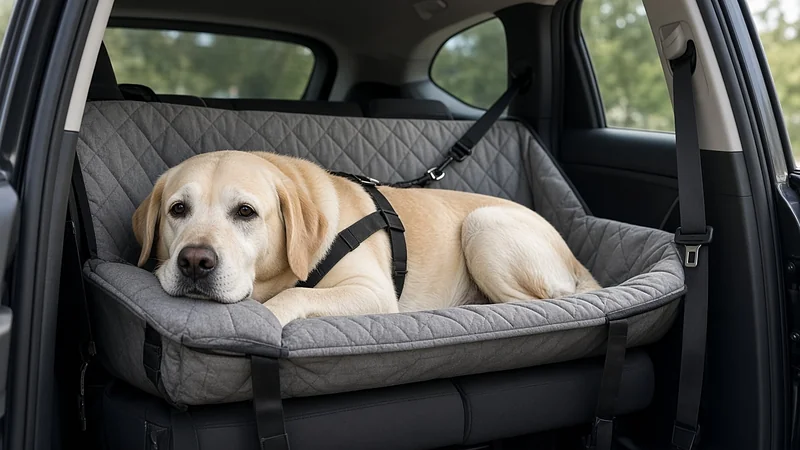
A bed-style booster is a cushioned bed on a raised base. Snoozer's Lookout I has a 6 in raised base with shock-absorbing foam, hooks into the car seat belt and has a containment strap for a harness. The medium size is listed for dogs up to 25 lb, measuring 19 x 22 x 17 in, with a machine-washable cover.
This style suits a small senior dog that prefers to lie down for the journey, because it gives the most cushioning of the three. It is bigger and heavier than a hanging booster, so check it fits your back seat.
Snoozer Lookout I Pet Car Seat (Medium)
Elevated bed with 6 in raised base and shock-absorbing foam; hooks into the seat belt with a containment strap for a harness; removable machine-washable cover; Medium 19 x 22 x 17 in, up to 25 lb; made to order in the USA
Pros
- Cushioned bed suits a dog that likes to lie down
- Raised so the dog can see out
- Washable cover
Cons
- Not described as crash tested
- Large and heavy compared with hanging boosters
- Height means lifting the dog in
| Product | Key specs | Link |
|---|---|---|
| Kurgo Skybox Dog Booster Seat | Hangs from metal supports on a bucket seat or the smaller side of a 60/40 split bench; seat-belt tether to a harness; waterproof exterior, removable washable liner; 16 x 12 x 8 in; listed max 30 lb (Kurgo recommends up to 20 lb) | Check price on Amazon (opens in a new tab) |
| K&H Bucket Booster Pet Seat | Foam bucket that buckles in with the car seat belt hidden under the cushion; front dips down for easier entry; two adjustable tethers for a harness; removable washable fleece cover; Small 18 x 18 x 16 in, Large 20 x 22 in | Check price on Amazon (opens in a new tab) |
| Snoozer Lookout I Pet Car Seat (Medium) | Elevated bed with 6 in raised base and shock-absorbing foam; hooks into the seat belt with a containment strap for a harness; removable machine-washable cover; Medium 19 x 22 x 17 in, up to 25 lb; made to order in the USA | Check price on Amazon (opens in a new tab) |
Specs are from manufacturer and retailer listings and can change between versions; check the listing before you buy. We don't show prices because they change often; the button shows the current price on Amazon.
How to choose
| If your dog... | Consider |
|---|---|
| Is very small and likes to look out | Hanging booster |
| Can manage one small step but not a jump | Bucket booster with a low front |
| Prefers to lie down and is bony or stiff | Bed-style booster |
| Is over about 20–25 lb | Probably too big for a booster; see our car hammock guide |
| Rides in an SUV and struggles getting in | Pair with a ramp or steps; see getting an old dog into an SUV |
Measure your dog's length lying curled and its weight. Compare both with the seat's interior size, not just the weight limit. A dog that has to fold up tightly in a small seat will not be comfortable on a long drive.
Getting a stiff dog in and out
Lifting a small arthritic dog correctly matters as much as the seat. Support the chest with one hand and the hindquarters with the other, so the spine stays level, and lower the dog gently into the seat. Avoid lifting by the front legs or under the belly alone. Clip the harness tether before you let go.
When getting out, unclip and lift the dog out rather than letting it jump to the ground. VCA advises having a leash or harness on your dog before opening the door during a trip.
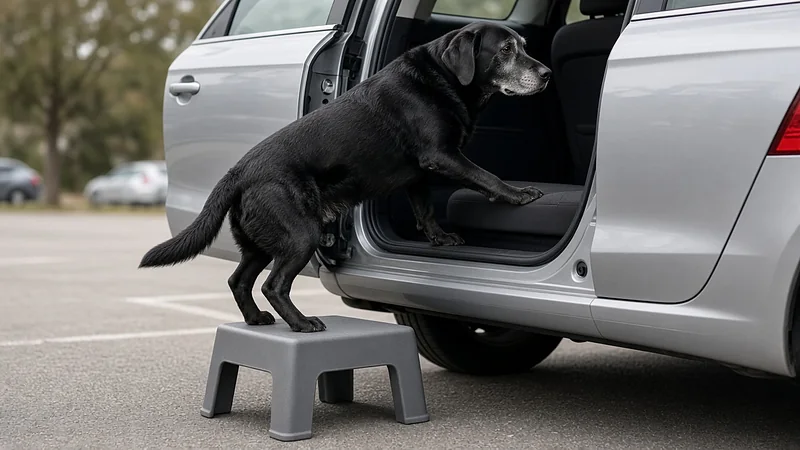
If you drive a car that is tall to reach, a pet step or short ramp can replace the first lift; our guide to sedan ramps and steps covers low cars.
Making the ride comfortable
- Add padding. A thin booster liner can be hard on bony elbows. A small, folded fleece or foam pad helps.
- Windows: VCA advises opening windows only enough that your dog's head cannot fit through, and setting the child lock so a dog cannot step on a power-window button.
- Breaks: VCA recommends frequent breaks, with water.
- Temperature: Never leave your dog alone in a parked car.
- Familiar smells: Putting the dog's own blanket in the seat can help it settle.
Introducing the seat
Set the seat up in the house first so your dog can sniff it and get treats in it. Then put it in the parked car and repeat. Start with very short drives, and build up. Older dogs can take a little longer to accept something new, and a dog that is sore may associate the car with discomfort; short, calm trips help change that.
Common mistakes
- Clipping the tether to a collar. Use a harness.
- Using the front seat. Airbags are a serious risk.
- Long tethers. The dog should not be able to climb out.
- Buying by weight alone. Check interior size.
- Letting the dog jump out. Lift it down.
- Assuming "safety" means crash tested. Check the claim.
FAQ
Are dog booster seats safe?
They reduce movement and distraction, but none of the three listings we checked describes the seat as crash tested. For crash protection, the RSPCA advises a restraint that has passed crash testing.
Can a booster seat go in the front seat?
VCA advises never letting pets ride in the front seat because airbags can seriously injure them. Use the back.
What size dog fits a booster seat?
Mostly small dogs. Kurgo recommends the Skybox for dogs up to 20 lb, and Snoozer lists the medium Lookout I up to 25 lb.
Do booster seats help car sickness?
Some makers claim seeing out helps. We found no veterinary evidence for this. Ask your vet about car sickness.
How do I attach a booster to the dog?
Use the seat's tether clipped to a harness, not a collar, and keep it short.
Prices change often, so we do not list them. Check the current price on Amazon.
Sources
- VCA Animal Hospitals, Road trip safety tips.
- VCA Animal Hospitals, Road trips and car travel with your dog.
- RSPCA Knowledgebase, Do I need to restrain my dog when travelling in my car?
- Center for Pet Safety, Cargo area connection advisory.
- Product specifications from the linked Amazon listings, checked 2 November 2026.