As an Amazon Associate, SturdyPaws earns from qualifying purchases. This article contains affiliate links; buying through them costs you nothing extra. Read our affiliate disclosure.
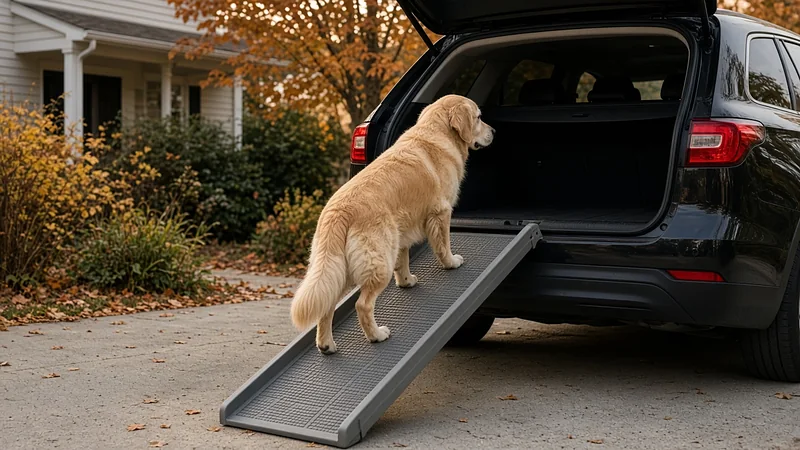
Most dog ramps are designed for SUV tailgates: a wide, flat cargo floor at the back of the vehicle. Sedans, coupes and many hatchbacks force your dog to enter from the side, through a door opening, onto a seat. That changes almost everything about which ramp works. It is one of the most common questions in senior-dog communities, with owners asking for collapsible options that fit a sedan or reach a passenger door.
This research-based guide explains how to measure for side entry and which well-known ramps and steps fit. We have not tested these products ourselves; specs and prices come from manufacturer and retailer pages.
Why side-door entry is tricky
- Limited space beside the car. A ramp extends straight out from the door. On a street or in a parking space, a 72 in ramp may hit the curb or the next car.
- A soft landing surface. A seat cushion compresses and slopes, so the top of the ramp is less stable than on a cargo floor.
- The door frame. Your dog has to duck and turn at the top of the ramp, which is harder for a stiff or wobbly dog.
- Rear seat heights are lower. Sedan back seats are often in the 18–24 in range from the ground (measure yours), which means shorter ramps can still give a reasonable angle.
Measure these three things
- Seat height: ground to the front edge of the seat cushion, pressed down slightly.
- Door opening width: the narrowest point your dog must pass. Compare it with the ramp width.
- Clear distance beside the car: how far a ramp can extend at your usual parking spot, at home and away.
Approximate slope by ramp length (calculated, angle = arcsine of height ÷ length):
| Seat height | 48 in | 62 in | 72 in |
|---|---|---|---|
| 18 in | 22° | 17° | 14.5° |
| 20 in | 24.6° | 19° | 16° |
| 24 in | 30° | 23° | 19.5° |
For many sedans, a ramp around 60–72 in gives a gentle slope. The question is whether you have room to lay it out.
Options compared
| Product | Key specs | Link |
|---|---|---|
| PetSafe Happy Ride Folding Dog Ramp | Bi-fold plastic ramp, 62 x 16 in, about 10 lb, rated to 150 lb per PetSafe | Check price on Amazon (opens in a new tab) |
| Gen7Pets Natural Step Ramp (72 in) | 72 x 16 in, poly-grass tread, 17 lb, folds to 36 x 16 x 3 in, rated 250 lb | Check price on Amazon (opens in a new tab) |
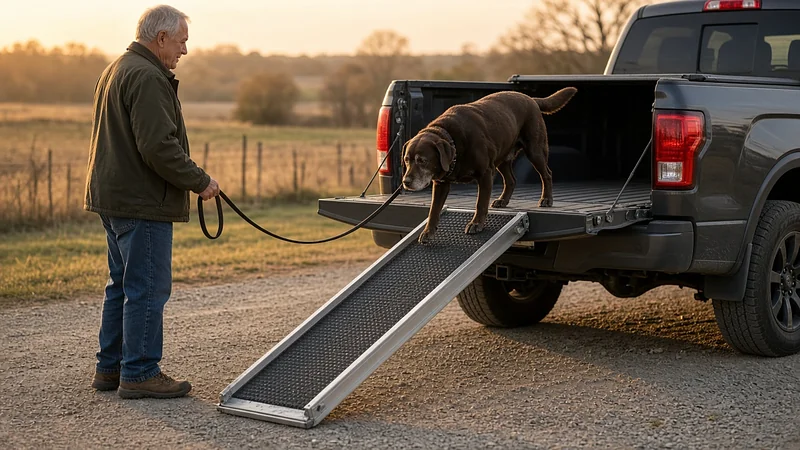
| PetSafe Happy Ride Deluxe Telescoping Dog Ramp | 39–72 in long (99–183 cm), aluminum, rated up to 400 lb per PetSafe | Check price on Amazon (opens in a new tab) |
| Pet Gear Tri-Fold Pet Ramp with SupertraX | Tri-fold, about 71 in, soft rubber-like SupertraX surface | Check price on Amazon (opens in a new tab) |
Specs are from manufacturer and retailer listings and can change between versions; check the listing before you buy. We don't show prices because they change often; the button shows the current price on Amazon.
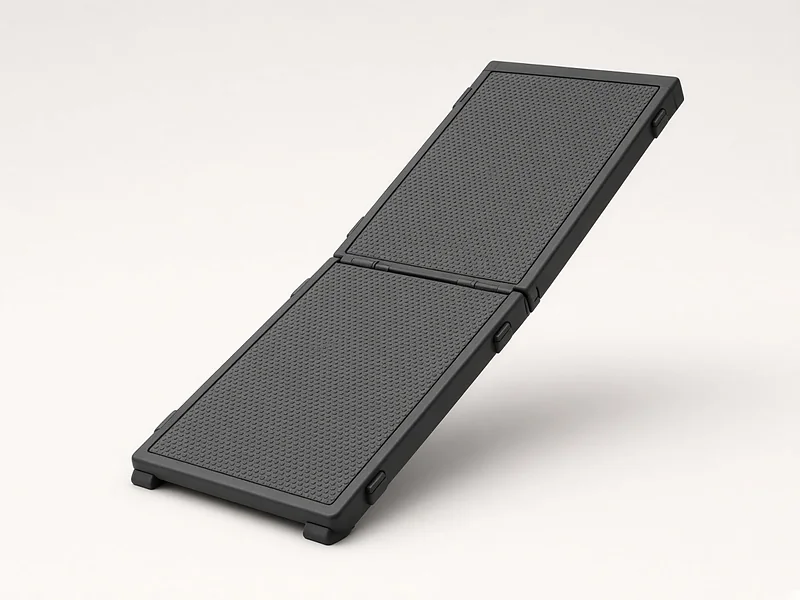
PetSafe Happy Ride Folding Dog Ramp
Bi-fold plastic ramp, 62 x 16 in, about 10 lb, rated to 150 lb per PetSafe
Pros
- Cheapest of the well-known brand ramps
- Easy to carry and fold
Cons
- Shorter length means a steeper angle
- Less suitable for heavy dogs than aluminum telescoping ramps
A light bi-fold ramp at an entry-level price. Its shorter length works well at sedan seat heights and in tight parking, which is exactly where long SUV ramps struggle. Check the exact length and weight rating on the listing before buying; for heavy dogs, an aluminum ramp is the safer bet.
Gen7Pets Natural Step Ramp (72 in)
72 x 16 in, poly-grass tread, 17 lb, folds to 36 x 16 x 3 in, rated 250 lb
Pros
- Grass-like tread many owners find grippier than sandpaper strips
- Folds in half for storage
- Rubber grippers and a safety tether
Cons
- 16 in path is narrower than the PetSafe XL
- 72 in is steep for very tall trucks
At 72 in long and 16 in wide, the Natural Step gives a gentle slope onto a sedan seat, and its grass surface suits hesitant dogs. The catch is space: you need roughly 6 ft beside the car. It folds to 36 in, which fits most sedan trunks.
PetSafe Happy Ride Deluxe Telescoping Dog Ramp
39–72 in long (99–183 cm), aluminum, rated up to 400 lb per PetSafe
Pros
- Telescopes to suit both sedans and mid-height SUVs
- Very high weight rating
- Side rails
Cons
- At 72 in it is steeper than the XL into tall vehicles
- Heavier than folding plastic ramps
Because it telescopes, you can extend it only as far as your parking spot allows, and accept a slightly steeper angle when space is tight. That flexibility is useful for side doors. Check its listed width against your rear door opening before buying.
Pet Gear Tri-Fold Pet Ramp with SupertraX
Tri-fold, about 71 in, soft rubber-like SupertraX surface
Pros
- Soft, cushioned tread that does not feel like sandpaper
- Folds into a compact bundle
Cons
- Tri-fold hinges add weight
- Check the weight rating for giant breeds
The tri-fold design packs into a smaller bundle for a sedan trunk, and the soft tread helps dogs with sensitive paws. Check the folded size against your trunk opening.
Ramp or steps for a sedan?
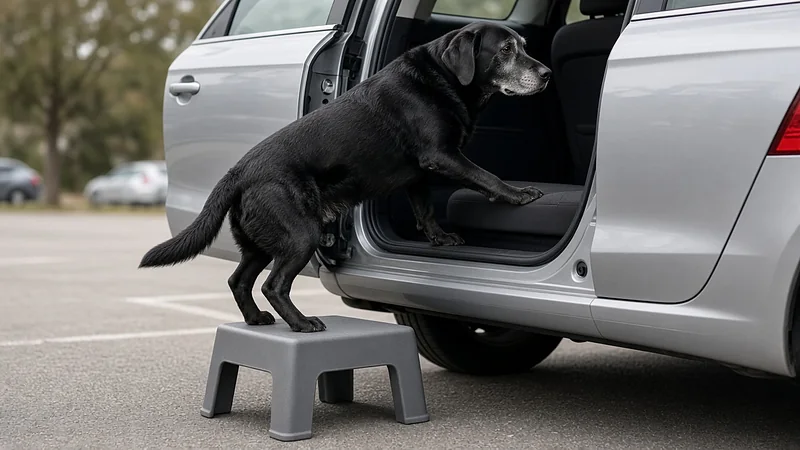
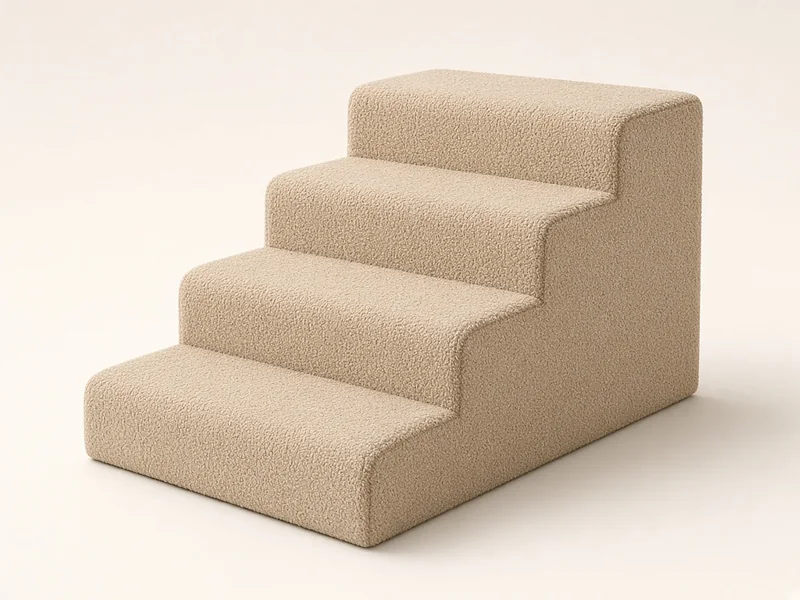
For a seat 18–22 in high, some owners use portable pet steps instead of a ramp because they take less space beside the car. Steps involve more joint flexion per movement, which is why many veterinary guides prefer ramps for dogs with back problems such as IVDD (see our ramp vs stairs guide). If your dog has a spinal condition or is recovering from surgery, ask your vet which is acceptable.
Making side entry safer
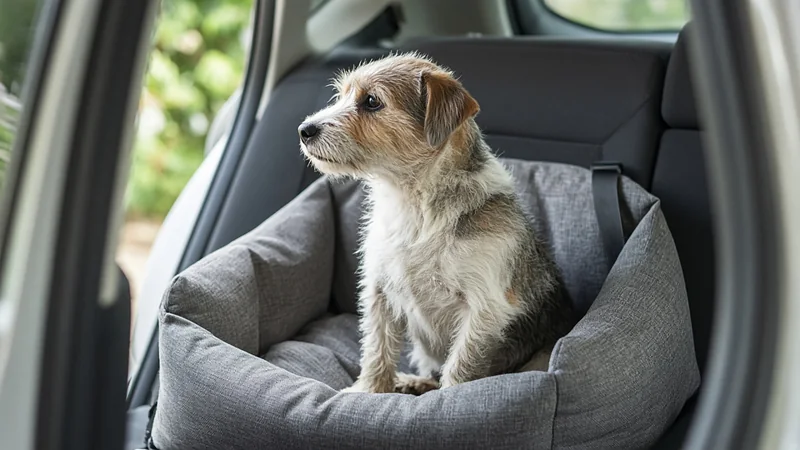
- Protect and firm up the seat. A hammock-style seat cover or firm, non-slip seat protector gives the ramp's top end a stable, grippy landing.
- Front or back? The back seat is generally safer. Airbags in the front passenger seat are not designed for dogs.
- Use a crash-tested restraint once your dog is in, so a sudden stop doesn't throw a fragile dog into the footwell.
- Park on the flat side. A sloped driveway makes the ramp angle worse on one side of the car.
- Lead from inside. A second person on the far side of the car with a treat encourages your dog to walk all the way in rather than stopping in the door frame.
- Support the back end. A rear sling lets you steady weak hind legs on the ramp (see our harness comparison).
Have a tailgate as well? Our SUV dog ramp guide for arthritic senior dogs covers cargo heights and ramp angles.
Training for side doors
Teach the ramp on the ground first, then raised slightly on a step, and finally against the car. Add the door step last, because the duck and turn at the top is the hardest part. Practice exits too, slowly, on a short leash, with the dog's weight supported if needed. Short, positive sessions work better than one long one.
When to talk to your vet
VCA Animal Hospitals notes that reluctance to jump into a car can be a sign of pain in older dogs (VCA). A ramp helps with access, but it does not treat the cause. Arthritis pain often responds to treatment your vet can prescribe, and that may make every other mobility aid easier to use.
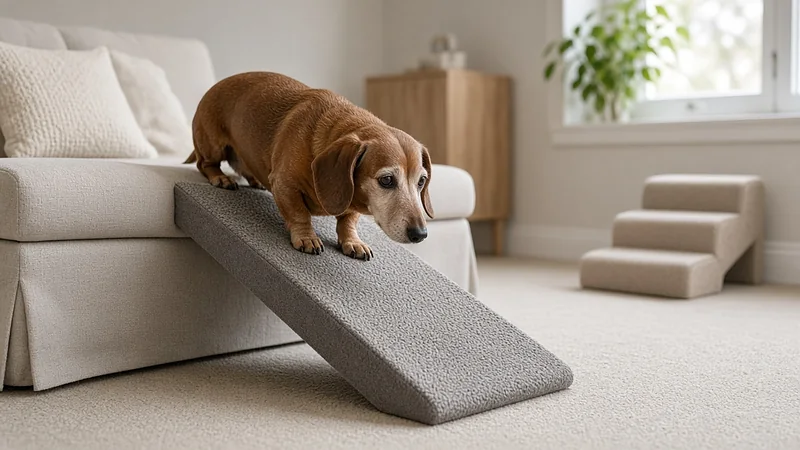
If your dog needs help with the back end as it steps in, pair the step or ramp with a lift harness made for car entry. For small dogs climbing onto furniture at home, see dog stairs for small senior dogs.
Once your dog is in, a stable seat helps. See car hammocks and seat covers for senior dogs.
FAQ
Can I use an SUV ramp for a sedan?
Often yes, if you have room beside the car and the ramp fits through the door. Telescoping ramps are easiest because you can shorten them.
What width do I need?
Measure the narrowest part of the door opening. Many ramps are 16–20 in wide; small and medium dogs manage 16 in well, while large, wobbly dogs benefit from more.
Is the front passenger seat OK?
Generally the back seat is safer for dogs because of front airbags. Check your car manual and your restraint maker's guidance.
Sources
- VCA Animal Hospitals, "How to Recognize Pain in Aging Dogs."
- Veterinary Neurology of Chesapeake, "10 Things to Know After Your Dog's IVDD Diagnosis."
- PetSafe, Amazon and PetSmart product pages (specs and prices, Nov 2026).