As an Amazon Associate, SturdyPaws earns from qualifying purchases. This article contains affiliate links; buying through them costs you nothing extra. Read our affiliate disclosure.
Your dog has come home after surgery for a slipped disc. The vet has said to keep it confined, take it out to toilet a few times a day and support its back end while it walks. Then you discover that "support its back end" is harder than it sounds. A towel slips, the dog wobbles, and you are bent double in the garden trying to keep its hind paws off the ground without lifting too much.
A purpose-made sling makes those toilet trips safer for your dog and easier on your back. This guide explains what a sling is supposed to do during IVDD recovery, the three main designs, how to use one well and which products on Amazon match each design. It draws on advice from a veterinary rehabilitation vet, the PDSA and Dodgerslist, an IVDD owner resource. We have not tested these slings on a recovering dog ourselves.
Key takeaways
- A sling is for dogs that fall, drag or knuckle their hind paws. If your dog walks well, it may not need one; ask your vet.
- Lift only enough to stop dragging. The aim is to help the dog practise stepping, not to carry it.
- Use a lead on a chest harness, controlled separately from the sling. Avoid a collar.
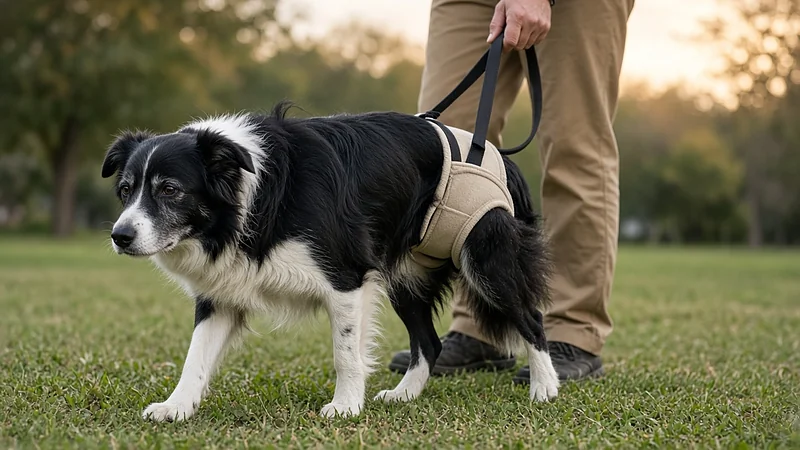
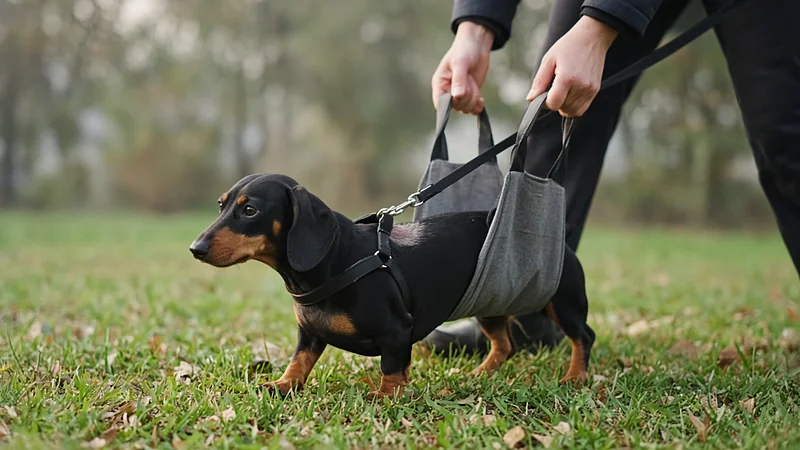
- Small dogs: a soft belly sling with long adjustable handles. Large dogs: a hip-lift sling or rear harness with short handles.
- Never lift by the tail. A towel or scarf is a safer stopgap until the sling arrives.
What a sling is for after IVDD
Intervertebral disc disease happens when a disc between the vertebrae hardens and bulges or bursts, pressing on the spinal cord. The PDSA lists back pain, wobbliness, weak legs, dragging or scuffing feet and paralysis among its signs. After surgery, the spinal cord needs time to recover, and many dogs come home unable to walk properly on their hind legs. Some cannot move them at all. Others move them a little but cannot yet take real steps.
Dr Marianne Dorn, who writes as The Rehab Vet, explains why these dogs should not simply be left to drag themselves along. Dragging can scrape the skin, and a dog that gets into the habit of dragging will find it harder to learn to walk properly again. A sling lets the dog have a go at walking with some physical support, which keeps it safe and helps it relearn the movement.
Her guidance is to use a hindquarter sling when your dog cannot walk without help: when it falls, drags itself along or keeps placing its paws upside down. That last sign, called knuckling, is common in early recovery. She also suggests taking a recovering dog out to toilet for up to five minutes at a time, at least three times a day, and asking your own vet how many trips are right.
The three types of sling
1. Scarf-style belly sling
This is a long strip of fabric that loops under the belly, with a handle at each end. It is the type most often used for dachshunds and other small dogs. The Rehab Vet notes that you can get a similar effect with a long scarf, but a purpose-made sling with adjustable handles gives more precise control and means you do not have to stoop.
Fit matters. The sling should be soft and not too narrow, or it digs into the belly. For male dogs it must not be too wide either, or there is no room to pee. Her rule is that the sling's width should be a little less than the distance between the front of the thigh and the front of the prepuce. If a sling or scarf is too wide, fold it back on itself at the front.
2. Hip-lift sling with leg holes
This design has a hole for each hind leg and supports around the hindquarters where it is most needed. It usually has strappy handles. It should fit snugly enough to support without pinching or rubbing, and leave room for the dog to pee and poo. Handles that adjust in length let you hold it at a comfortable height.
3. Short-handled hip lift for large dogs
For large and tall breeds, The Rehab Vet recommends a short-handled hip-lift harness that gives you a handle just above the dog's rump, and names the Help 'Em Up harness as an example. Its handles are short and strong, like suitcase handles, which gives great control. She also notes that this makes it less useful for small dogs like dachshunds, because you would have to bend right down to reach.
Products that match each type
These are products whose Amazon listings we checked today. Match the type to your dog's size first, then check the maker's size chart.
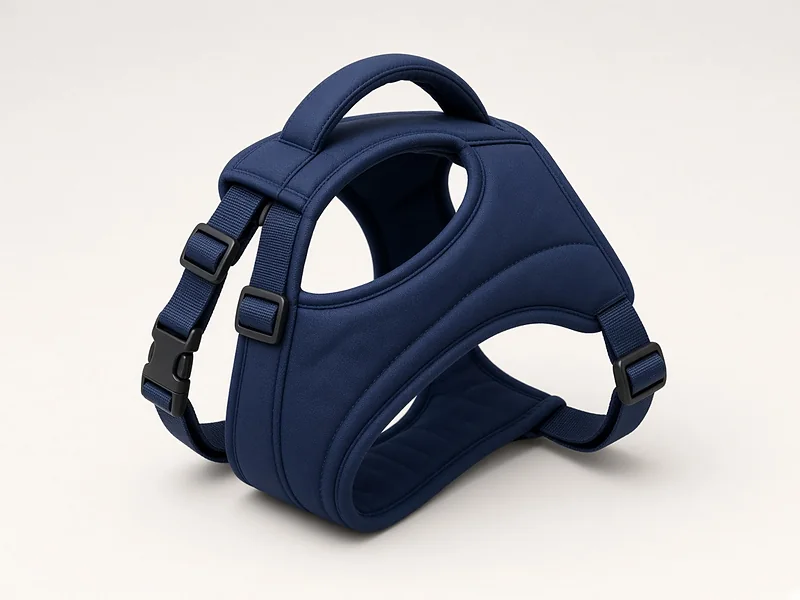
GingerLead Dog Support Sling
Padded rear sling with integrated leash, male and female cuts, dogs up to 250 lb, made in USA
Pros
- Padded belly pad spreads the load
- Integrated leash for one-handed walking
- Widely used after orthopedic surgery
Cons
- Rear support only
- Slides on and off rather than staying on all day by default (optional stay-on straps)
The GingerLead is a padded belly sling, closest to the scarf style but with more padding and separate cuts for male and female dogs, which addresses the room-to-pee problem. One point to know: it comes with an integrated leash. The Rehab Vet's advice is that the lead and the sling do two different jobs and should be controlled separately, so even with a GingerLead, clip a separate lead to a chest harness and use that to slow the dog.
Walkabout Original Back End Harness
Rear-end harness that wraps the hind legs, top handle, made in USA; 7 sizes (XS–XL) chosen by abdomen and upper-thigh measurement
Pros
- Wraps the legs instead of the belly, so less abdominal pressure
- Easy to leave on for short outings
Cons
- Rear only
- Leg loops need correct sizing to avoid rubbing
The Walkabout Back End Harness wraps each hind leg and has a top handle, so it works like the hip-lift type. It comes in several sizes chosen by abdomen and upper-thigh measurement, which makes it usable for many medium dogs as well as larger ones. Our Walkabout review covers sizing in detail.
Help 'Em Up Harness
Two-piece full-body harness (front + hip lift), sizes for 10–225 lb, conventional and U-band (male) styles
Pros
- Lifts front, rear or both with separate handles
- Designed to be worn for long periods
- Male (U-band) and conventional versions
Cons
- Most expensive option here
- Sizing is fiddly; the maker suggests sizing the rear down for dogs with muscle loss
The Help 'Em Up is the short-handled system The Rehab Vet names for large breeds. It pairs a chest harness with a hip lift, so the lead can attach to the chest piece while you hold the rear handle. See our Help 'Em Up review for how the two pieces fit.
PetSafe CareLift Rear Lifting Aid
Rear-only lifting sling with handles; the linked listing is size Large; check the size chart on the listing
Pros
- Simple, low-cost rear sling
- Quick to slip on for short assists
- Handy as a spare for the car
Cons
- Not meant for all-day wear
- Less padding than GingerLead
The PetSafe CareLift Rear Lifting Aid is a rear sling with handles. Check the size chart on the listing, because the linked listing is one size.
| Product | Key specs | Link |
|---|---|---|
| GingerLead Dog Support Sling | Padded rear sling with integrated leash, male and female cuts, dogs up to 250 lb, made in USA | Check price on Amazon (opens in a new tab) |
| Walkabout Original Back End Harness | Rear-end harness that wraps the hind legs, top handle, made in USA; 7 sizes (XS–XL) chosen by abdomen and upper-thigh measurement | Check price on Amazon (opens in a new tab) |
| Help 'Em Up Harness | Two-piece full-body harness (front + hip lift), sizes for 10–225 lb, conventional and U-band (male) styles | Check price on Amazon (opens in a new tab) |
| PetSafe CareLift Rear Lifting Aid | Rear-only lifting sling with handles; the linked listing is size Large; check the size chart on the listing | Check price on Amazon (opens in a new tab) |
Specs are from manufacturer and retailer listings and can change between versions; check the listing before you buy. We don't show prices because they change often; the button shows the current price on Amazon.
How to sling-walk safely
Getting the technique right protects the healing spine. These points come from The Rehab Vet's sling-walking guide; your own vet or rehab therapist may adjust them for your dog.
- Keep the dog on a lead. The lead slows the front end so the hind legs have a chance to step. Without it, many dogs rush forward on their front legs and drag the back.
- Attach the lead to a chest harness, not a collar. The harness spreads the dog's weight more evenly, and the neck is a delicate area while the dog is still losing its balance now and then.
- Lift only a little. The sling gives a slight upward lift to stop the paws dragging. If the hind paws are dangling in the air, you are lifting too much.
- Move the lead and sling separately. When you are doing it well, your hands move in different directions: the lead back, the sling slightly up.
- Never "tail walk". Supporting a dog by its tail can be painful and can damage the end of the spine and the nerve roots. Use a sling, scarf or towel instead.
- Walk slowly on flat, non-slip ground. Avoid stairs, slippery floors and uneven ground. Carry the dog over steps with its spine supported.
Small dogs vs large dogs
For a dachshund, French bulldog or other small breed, a belly sling with long, adjustable handles is usually the most practical. You can stand upright while the sling holds the hind end at the dog's natural height. A hip-lift with short handles would have you crouching.
For a large dog, the weight changes everything. A thin belly sling concentrates the load on a narrow band of the abdomen and can be hard on your back. A hip-lift harness with leg loops spreads the load across the hindquarters, and short handles let you use your arms rather than your lower back. If your large dog is very weak, a two-person approach, with one person on the lead and chest harness and one on the rear handle, is safer for everyone.
Between surgery and the sling arriving
You may need to manage a toilet trip before any sling arrives. A long towel folded lengthways and passed under the belly works as a stopgap. For very small dogs, The Rehab Vet suggests a fluffy bathrobe belt. Keep the towel soft, check it does not cover the penis on a male dog, and use it exactly as you would a sling, lifting only enough to stop dragging.
What else your dog needs during recovery
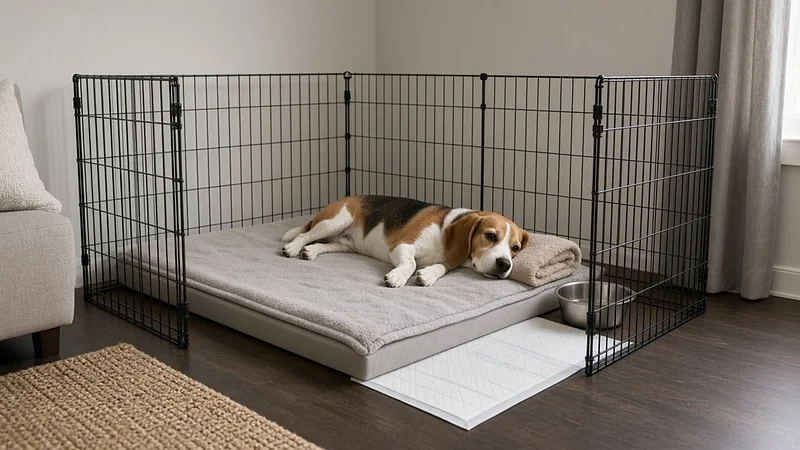
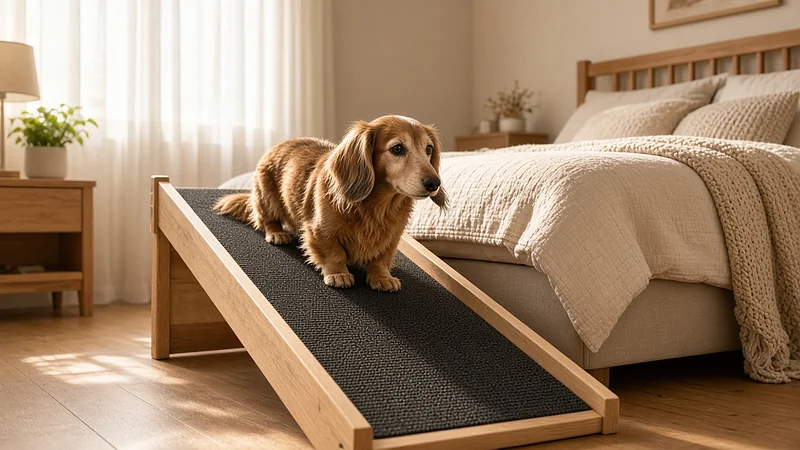
A sling is only one part of IVDD home care. Dodgerslist recommends a confined recovery area with a flat, firm surface, and no couches, beds or laps during the strict rest period. Our IVDD crate rest setup guide covers pens, crates and bedding. Once your vet allows more freedom, a ramp to the sofa or bed can stop jumps that strain the back; see bed ramps for small dogs with IVDD.
Common mistakes
The most common is lifting too high, which turns walking practice into being carried and teaches the dog nothing. The second is clipping the lead to a collar. A third is using a sling that is too wide on a male dog, so he cannot pee and the trip takes twice as long. And finally, rushing. Five slow, supported minutes on flat grass are worth far more than a longer walk that leaves the dog tired and scuffing its paws.
FAQ
When should I start using a sling after IVDD surgery?
Usually from the first toilet trip home, if your dog falls, drags or knuckles its hind paws. Follow your surgeon's instructions on timing and how often to go out.
Can I use a towel instead of a sling?
Yes, as a stopgap. A purpose-made sling with adjustable handles gives more control and saves you stooping.
Should the leash attach to the sling?
The Rehab Vet advises against it. Use a separate lead on a chest harness to slow the front end, and the sling for gentle rear support.
Which sling is best for a dachshund?
A soft belly sling with long, adjustable handles. Short-handled hip lifts suit large dogs better.
How long will my dog need a sling?
It varies with the dog and the injury. Your vet will judge when it can walk without knuckling or falling.
Prices change often, so we do not list them. Check the current price on Amazon.
Sources
- The Rehab Vet (Dr Marianne Dorn), IVDD sling-walking.
- PDSA, IVDD/slipped disc in dogs.
- Dodgerslist, Tips for strict rest recovery.
- Product specifications from the linked Amazon listings, checked 2 November 2026.