As an Amazon Associate, SturdyPaws earns from qualifying purchases. This article contains affiliate links; buying through them costs you nothing extra. Read our affiliate disclosure.
Should you buy pet stairs or a ramp? For a healthy young dog it hardly matters. For a dog with arthritis, a spinal disc problem (IVDD) or a knee repair (TPLO), it can. This guide summarizes what veterinary surgery and neurology practices tell owners, then matches it to products for beds, sofas and cars. It is a research-based guide, not a substitute for your own vet's instructions, which always take priority.
The short answer
| Situation | Usually better choice | Why |
|---|---|---|
| IVDD / back problems (dachshunds, corgis, French bulldogs) | Ramp, or vet-approved low pet steps | Neurology guidance says avoid jumping, stairs and slippery floors |
| Early weeks after TPLO | No stairs or ramps unsupervised; follow surgeon's rules | Surgery centers restrict stairs and jumping during healing |
| Arthritis, still fairly mobile | Either; ramp if stiff or weak behind | Gentle slope avoids repeated deep joint bends |
| Small space, low couch | Deep, low pet steps | A gentle ramp needs a lot of floor length |
| Car or SUV | Ramp | Car heights are too tall for most portable steps |
What vets say about IVDD
Veterinary Neurology of Chesapeake's advice after an IVDD diagnosis is clear: don't let your dog jump, especially on or off furniture or into or out of cars. It suggests pet stairs by the bed or sofa and a ramp or step into the car, and otherwise to avoid stairs and slippery floors, using baby gates if needed (VNOC). After spinal surgery, discharge instructions from VSCD Surgery Centers say no running, jumping, free access to stairs or slippery floors for 8 weeks, with short leash walks only.
In other words, the main goal for IVDD is to stop the jump. Both well-designed steps and ramps do that. Many owners of long-backed breeds prefer ramps because the spine stays in a more neutral line, but ask your vet or neurologist, especially during a flare-up or recovery.
What surgeons say after TPLO
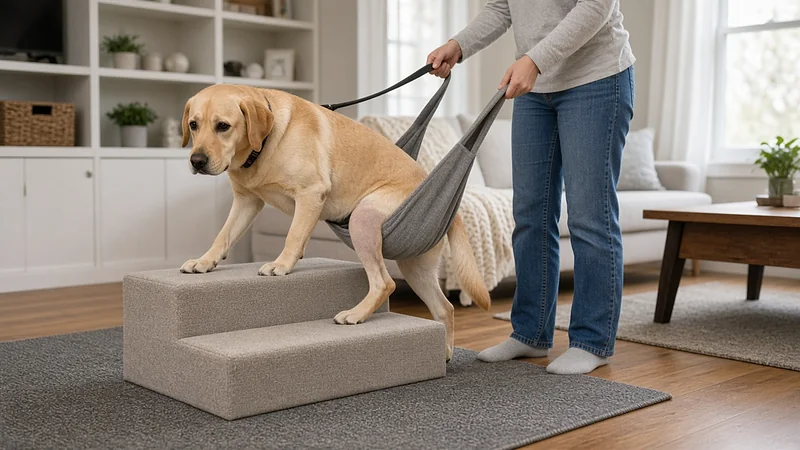
TPLO home-care guides are strict in the early weeks. Edmonton Veterinary's TPLO recovery program says to limit stairs for the first 2–4 weeks to a short flight to get in or out of the house, with the dog on a short leash and supported with a sling under the belly, and to block indoor stairs with a baby gate. It also stresses no jumping on or off the bed or couch, because over-extending the knee or slipping could compromise the repair. MedVet's guide goes further: no stairs until the veterinarian says it is OK, and safe footing (carpet, rugs, yoga mats) in the recovery area.
So during TPLO recovery, a bed ramp or stairs is mostly about preventing unsupervised jumping later in recovery, not giving free access early on. Many owners simply move the dog's bed to the floor for the first weeks. Once your surgeon clears more activity, a gentle ramp is a common way back onto the sofa or into the car. We'll cover recovery-specific gear in more depth in a separate guide.
Arthritis: ramps for stiffness, steps for space
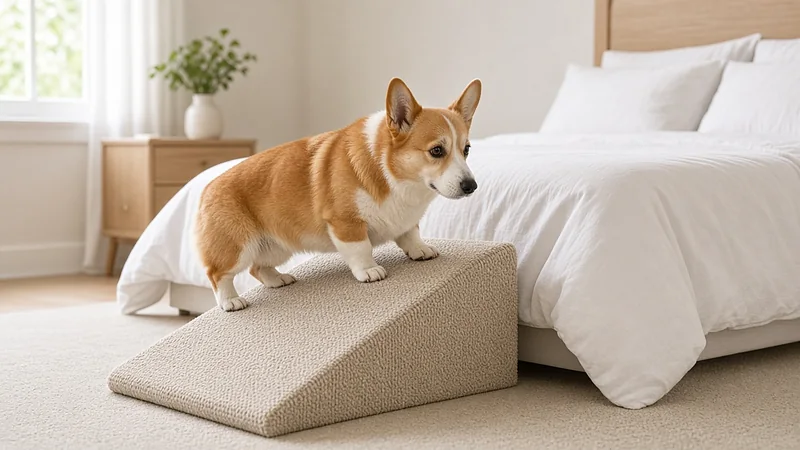
For a dog with arthritis, each stair asks the hips, knees and elbows to bend deeply and push. A gentle ramp spreads the climb over a longer distance. Steps take up less floor space and are easier for many dogs to learn. A sensible rule: if your dog is stiff in the hind legs or hesitates on stairs, start with a ramp; if your dog is mobile and you have little space, deep, low steps are fine.
Bed and sofa options compared
| Product | Key specs | Link |
|---|---|---|
| PetSafe CozyUp Bed Ramp | 70 x 16 x 25 in tall, wood with carpet, rated to 120 lb | Check price on Amazon (opens in a new tab) |
| Pet Gear Easy Step Pet Bed Stair | L-shaped, 37.5 x 14 x 26 in, rated 75 lb | Check price on Amazon (opens in a new tab) |
| Pet Gear StRamp Pet Step & Ramp | Converts between steps and a short ramp, indoor use | Check price on Amazon (opens in a new tab) |
| Pet Gear Easy Step II Pet Stairs | 2-step, about 13–19 in tall depending on version | Check price on Amazon (opens in a new tab) |
Specs are from manufacturer and retailer listings and can change between versions; check the listing before you buy. We don't show prices because they change often; the button shows the current price on Amazon.
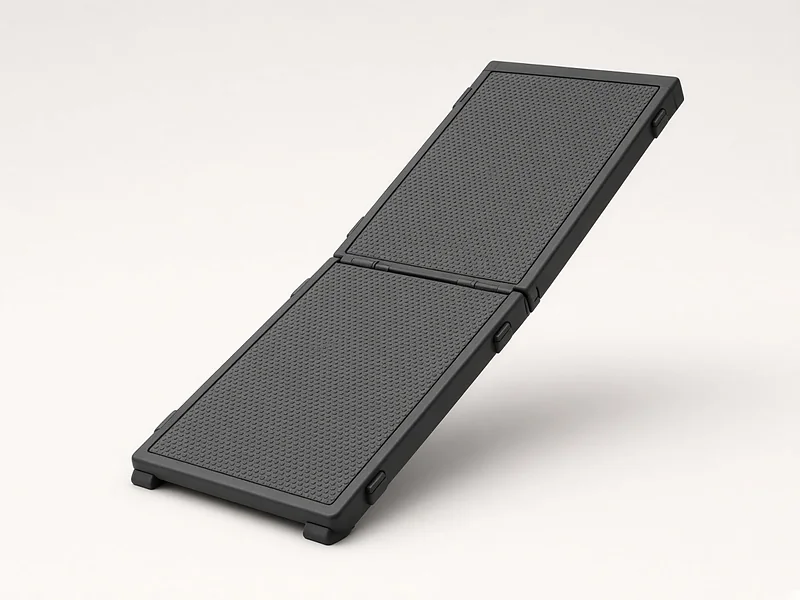
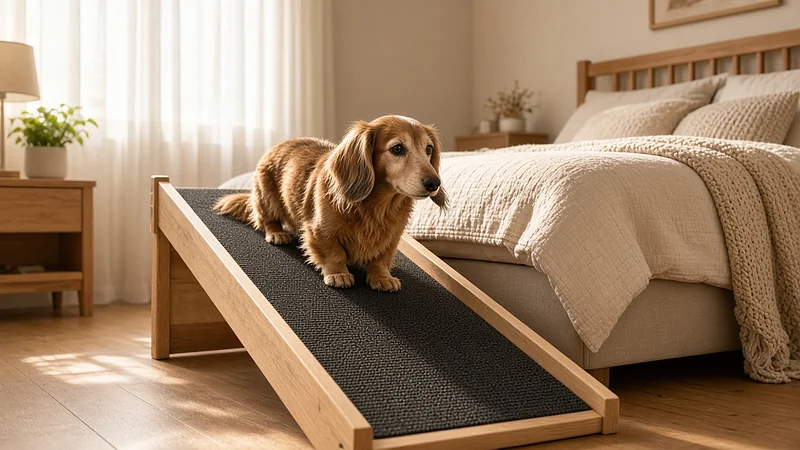
PetSafe CozyUp Bed Ramp
70 x 16 x 25 in tall, wood with carpet, rated to 120 lb
Pros
- Reaches a 25 in bed at a long, gradual slope
- Sturdy wood frame
- Looks like furniture
Cons
- 70 in long: needs real floor space
- Some owners report slipping on the carpet and on hard floors underneath (adding rubber pads helps)
The CozyUp is a wood ramp with a carpet cover, 25 in tall and 70 in long, rated to 120 lb by PetSafe. That long length gives a gentle slope to a standard bed. Two practical notes from buyer reviews on retailer pages: it needs real floor space, and on a hard floor the base can slide, which some owners fixed with rubber pads. Prices vary widely between retailers, so compare.
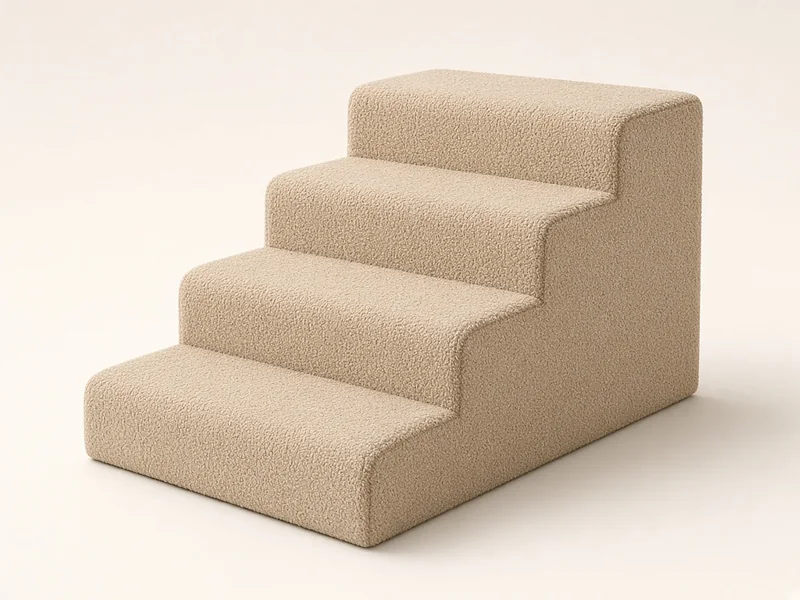
Pet Gear Easy Step Pet Bed Stair
L-shaped, 37.5 x 14 x 26 in, rated 75 lb
Pros
- Deep steps so the whole body fits on each step
- L-shape saves floor space
- Washable tread
Cons
- Still stairs: not ideal while a vet has restricted stair use
- 75 lb limit
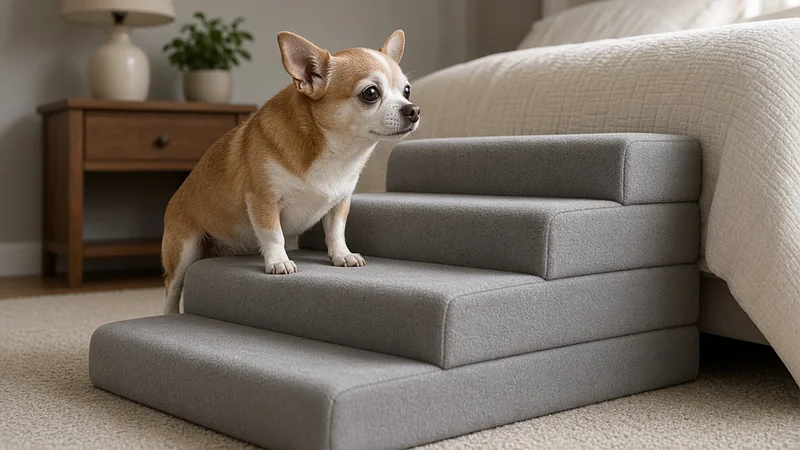
Pet Gear's L-shaped bed stair is 26 in tall with deep steps that let the dog's whole body sit on each one, and a 75 lb limit. The L-shape wraps around the corner of a bed to save floor space. It is still a set of stairs, so check with your vet if your dog has a spinal condition.
Pet Gear StRamp Pet Step & Ramp
Converts between steps and a short ramp, indoor use
Pros
- Two tools in one for a couch or low bed
- Removable washable tread
Cons
- Too short for cars
- Short ramps are steep for tall furniture
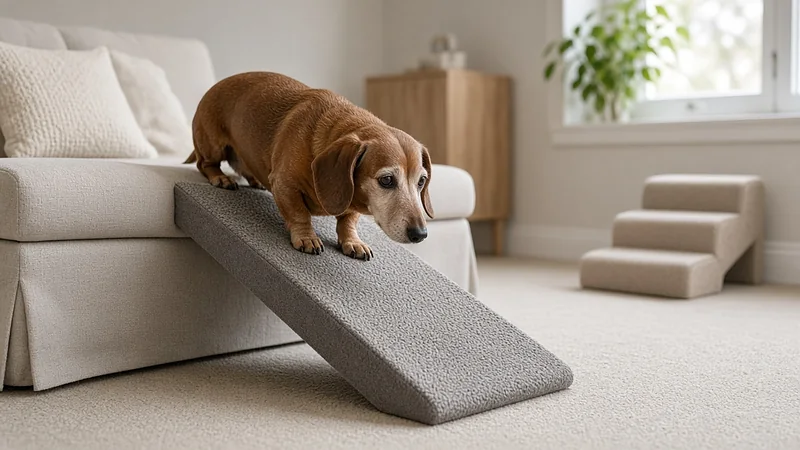
A combination step and short ramp for couches and low beds. It is a good compromise for small dogs, but a short ramp to a tall surface becomes steep.
Pet Gear Easy Step II Pet Stairs
2-step, about 13–19 in tall depending on version
Pros
- Inexpensive
- Good for a couch or low bed
Cons
- Not tall enough for most beds
- Steps, not a ramp
Simple two-step stairs for low sofas. Inexpensive and light, but not tall enough for most beds.
For cars, see our guides to SUV ramps and sedan and passenger-door ramps.
Checklist before you buy
- Height: measure the top of the mattress or cushion, pressed down.
- Slope: for a ramp, longer is gentler. A 25 in bed with a 70 in ramp is about 21°.
- Step depth: for stairs, deeper treads let a long-backed dog stand fully on each step.
- Surface: carpet or rubber, not bare plastic. Add a runner where the ramp meets a hard floor.
- Stability: no wobble or sliding; add rubber feet if needed.
- Weight limit: well above your dog's weight.
- Block the jump: a ramp is useless if your dog still leaps off the other side of the bed. Pillows or a bed rail can help.
Training tips
Lay the ramp flat first and reward each step on it. Then put it in place and lure your dog up with treats, on a leash, at its own pace. Practice coming down as much as going up. Keep it calm and short; for a dog in recovery, follow your surgeon's activity limits even during training.
If the ramp leads to a bed, make the bed itself supportive too: compare orthopedic dog beds for arthritic seniors and beds for large dogs with hip dysplasia.
Ready to pick a product? See dog stairs for small senior dogs, bed ramps for small dogs with IVDD, stairs and ramps after TPLO surgery and ramps for pickup trucks.
For sofas specifically, see the best dog ramps for couches.
FAQ
Are ramps always better than stairs for dachshunds?
Not always, but the key IVDD rule is no jumping and limited stairs. Many owners and vets favor ramps for long-backed breeds. Ask your vet for your dog.
When can my dog use stairs after TPLO?
Only when your surgeon says so. Typical guides restrict stairs heavily for the first several weeks and allow supervised stairs later if the dog is using the leg well.
What angle should a bed ramp be?
There is no official number. Gentler is better for dogs with pain or weakness; use the longest ramp your room allows.
Sources
- Veterinary Neurology of Chesapeake, "10 Things to Know After Your Dog's IVDD Diagnosis."
- VSCD Surgery Centers, IVDD post-operative instructions.
- Edmonton Veterinary Specialists, TPLO Home Recovery Program (2023).
- MedVet, TPLO/TTA home care guide.
- PetSafe and PetSmart product pages (specs and prices, Nov 2026).