As an Amazon Associate, SturdyPaws earns from qualifying purchases. This article contains affiliate links; buying through them costs you nothing extra. Read our affiliate disclosure.
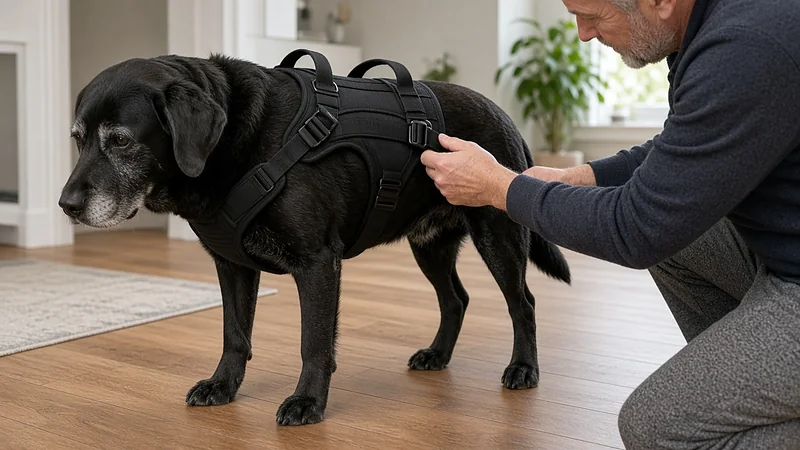
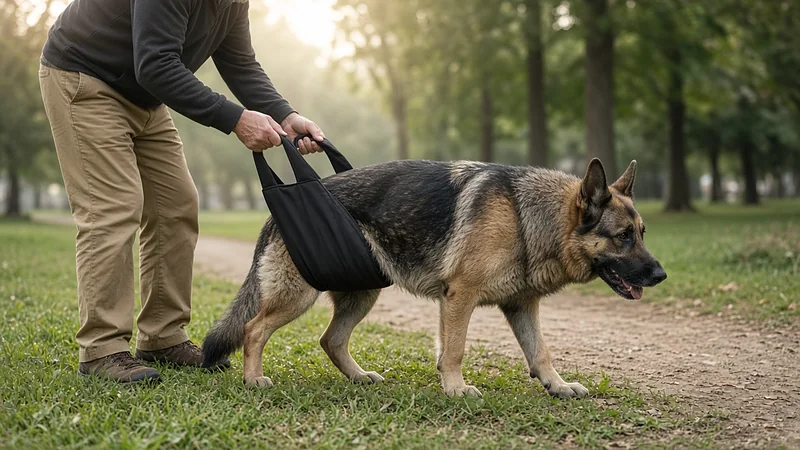
When a large dog's back legs start to give out, lifting them by the belly with a towel works for a few days. After that, your back starts to complain. A purpose-built support harness spreads the load across your dog's body and gives you a proper handle. Veterinary teams commonly recommend slings: dvm360 lists "appropriate sling supports" among the environmental changes that help senior patients with mobility loss (dvm360), and post-surgery discharge instructions from specialty centers routinely tell owners to use a belly sling until the dog walks normally.
When we searched for the best harness for large senior dogs with weak back legs, almost every result was a brand page or an Amazon listing. This guide compares the four best-known options side by side, using manufacturer information and published prices. It is research-based. We have not fitted these harnesses on our own dogs.
Comparison at a glance
| Product | Key specs | Link |
|---|---|---|
| Help 'Em Up Harness | Two-piece full-body harness (front + hip lift), sizes for 10–225 lb, conventional and U-band (male) styles | Check price on Amazon (opens in a new tab) |
| GingerLead Dog Support Sling | Padded rear sling with integrated leash, male and female cuts, dogs up to 250 lb, made in USA | Check price on Amazon (opens in a new tab) |
| Walkabout Original Back End Harness | Rear-end harness that wraps the hind legs, top handle, made in USA; 7 sizes (XS–XL) chosen by abdomen and upper-thigh measurement | Check price on Amazon (opens in a new tab) |
| PetSafe CareLift Rear Lifting Aid | Rear-only lifting sling with handles; the linked listing is size Large; check the size chart on the listing | Check price on Amazon (opens in a new tab) |
Specs are from manufacturer and retailer listings and can change between versions; check the listing before you buy. We don't show prices because they change often; the button shows the current price on Amazon.
| Feature | Help 'Em Up | GingerLead | Walkabout | CareLift |
|---|---|---|---|---|
| Supports | Front + rear | Rear | Rear | Rear |
| Where the load sits | Chest/shoulders and hips | Padded belly pad | Around hind legs/pelvis | Belly sling |
| Wear it for hours? | Designed to | Possible with stay-on straps | Maker says it can stay on during the day | Short assists |
| Largest size | Up to 225 lb | Up to 250 lb | XL (31–35 in abdomen) | 70–130 lb |
| Relative cost | Highest of the four | Mid-range | Mid-range | Lowest |
First decision: rear-only or full-body?
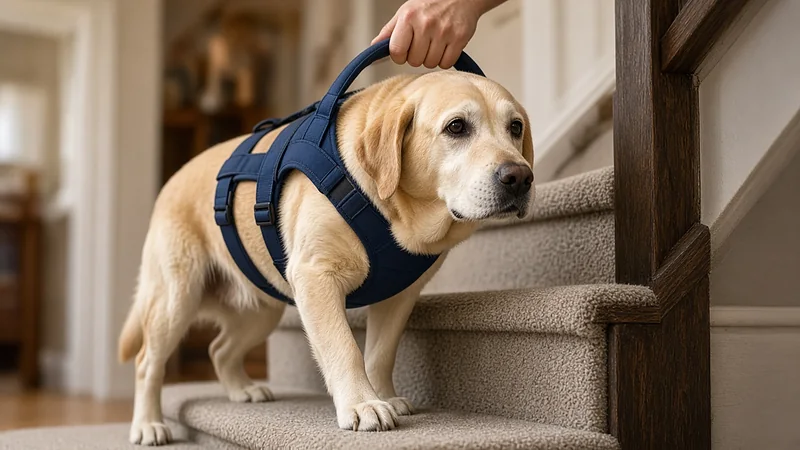
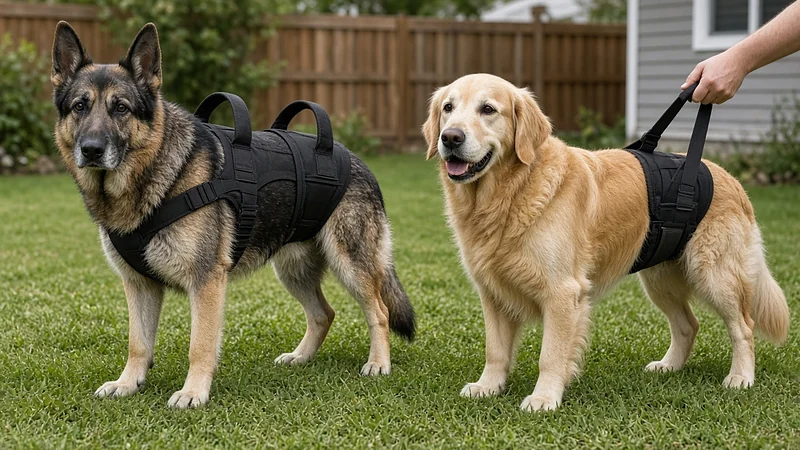
Watch your dog walk. If the front legs are strong and only the hind end is weak (common with hip arthritis, degenerative myelopathy in its early stages, or after a knee surgery), a rear-only sling may be enough. If your dog struggles to stand up from lying down, collapses at the front too, or needs help on every set of stairs, a full-body harness with front and rear handles makes lifting far easier and safer.
Also ask how long the harness will be on. A sling you slip on for the back steps twice a day is a different product from a harness your dog wears from morning to night.
The harnesses in detail
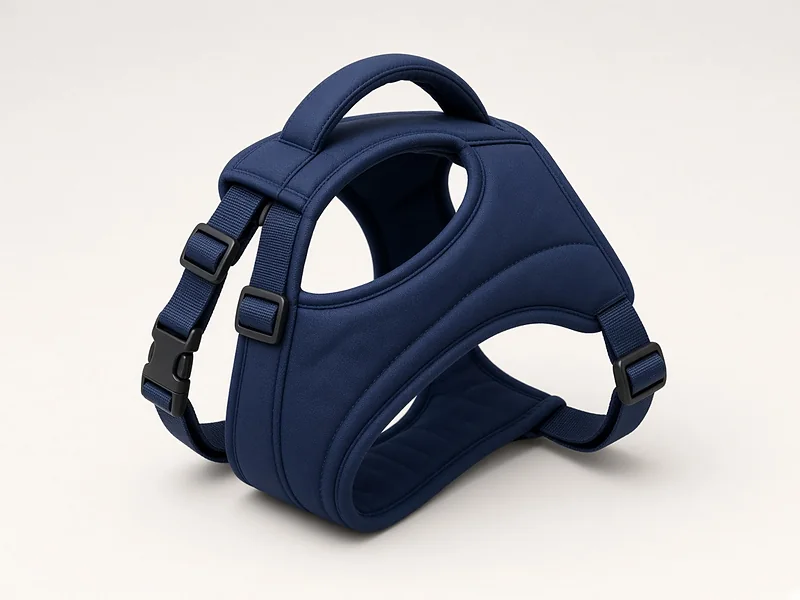
Help 'Em Up Harness
Two-piece full-body harness (front + hip lift), sizes for 10–225 lb, conventional and U-band (male) styles
Pros
- Lifts front, rear or both with separate handles
- Designed to be worn for long periods
- Male (U-band) and conventional versions
Cons
- Most expensive option here
- Sizing is fiddly; the maker suggests sizing the rear down for dogs with muscle loss
The Help 'Em Up is a two-piece harness: a front chest piece and a rear "hip lift" piece, each with its own handle, which can be connected. The maker lists sizes covering 10–225 lb and offers a conventional style and a U-band style for male dogs whose anatomy sits further back. The brand's sizing guide makes a useful point for seniors: for dogs with muscle wasting in the hind end, it can help to size the rear piece down, and it offers a mix-and-match option for that and for barrel-chested breeds.
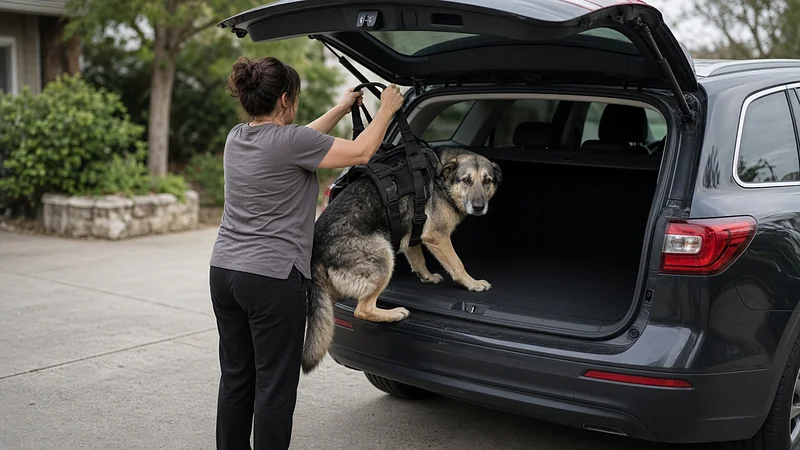
Best for: big dogs who need help standing up, on stairs and into cars every day, and owners who want to leave the harness on. The trade-off is price and a fiddlier first fitting.
GingerLead Dog Support Sling
Padded rear sling with integrated leash, male and female cuts, dogs up to 250 lb, made in USA
Pros
- Padded belly pad spreads the load
- Integrated leash for one-handed walking
- Widely used after orthopedic surgery
Cons
- Rear support only
- Slides on and off rather than staying on all day by default (optional stay-on straps)
GingerLead is a padded rear sling with an integrated leash and separate male and female cuts. It is made in Colorado and supports dogs up to 250 lb. The longer padded pad spreads weight across more of the belly than a simple strap, and the built-in leash means you can walk your dog and support the rear with one hand on the handle. Optional "stay-on" straps let it stay in place when you let go.
Best for: rear-end weakness and recovery walks after orthopedic or spinal surgery, where the dog needs supported potty breaks for weeks.
Walkabout Original Back End Harness
Rear-end harness that wraps the hind legs, top handle, made in USA; 7 sizes (XS–XL) chosen by abdomen and upper-thigh measurement
Pros
- Wraps the legs instead of the belly, so less abdominal pressure
- Easy to leave on for short outings
Cons
- Rear only
- Leg loops need correct sizing to avoid rubbing
Walkabout's back-end harness wraps around the hind legs and pelvis rather than sitting under the belly, with a handle on top. That shifts pressure off the abdomen and away from the genitals, which some owners prefer for male dogs. Walkabout sizes it by two measurements, abdomen circumference just in front of the back legs and upper-thigh circumference, across seven sizes from XS to XL, and says it can be left on during the day if it fits well.
Best for: intermittent rear help with a dog whose front end is fine. For long periods of wear, check the leg loops for rubbing.
PetSafe CareLift Rear Lifting Aid
Rear-only lifting sling with handles; the linked listing is size Large; check the size chart on the listing
Pros
- Simple, low-cost rear sling
- Quick to slip on for short assists
- Handy as a spare for the car
Cons
- Not meant for all-day wear
- Less padding than GingerLead
The CareLift rear lifting aid is PetSafe's budget rear-only sling. It is the least expensive way to try a purpose-made sling, and handy as a spare for the car. Check the size chart on the listing before ordering. PetSafe also makes a separate CareLift Full Body harness with front and rear sections, sized S (7–35 lb), M (35–70 lb) and L (70–130 lb); we cover it in full-body lift harnesses.
Best for: short, occasional assists, or as a first sling while you work out what your dog needs. For giant breeds, check the size chart on the listing first.
Sizing: get it right the first time
Most returns of support harnesses come down to fit. Before ordering:
- Weigh your dog (your vet clinic will do it free).
- Measure chest girth just behind the front legs, and waist/abdomen girth in front of the hind legs.
- Measure the length from the base of the neck to the base of the tail.
- Compare against each brand's own chart, not a generic one. If your dog is between sizes or has lost hind-leg muscle, read the brand's specific advice.
Check the fit after the first few days: look for rubbing in the armpits, groin and belly, and make sure straps do not press on the bladder or a surgical incision.
Using a support harness without hurting your back
- Bend your knees and keep the handle close to your body.
- Support only as much weight as your dog needs. The aim is usually to steady the dog, not carry it.
- Use a shorter handle grip on stairs so the dog's hind end does not swing.
- Pair a harness with non-slip flooring at home (see our floor traction guide). Slipping makes lifting harder for both of you.
A harness helps most when the route is safe too. Pair it with a long, gentle SUV ramp for the car, and read ramp vs stairs for arthritis, IVDD and TPLO for the house.
When to involve your vet or a rehab therapist
Hind-leg weakness has many causes, including arthritis, hip dysplasia, cruciate ligament injury, spinal disc disease and degenerative myelopathy. Some are treatable, and some progress quickly. If the weakness is new, getting worse, comes with knuckling or dragging paws, or comes with pain, see your veterinarian promptly. A certified canine rehabilitation therapist can also show you how to use a sling for your dog's specific condition.
Before you order a Help 'Em Up, read our Help 'Em Up harness review on sizing and fit, because the weight-based sizing can fit loose on muscle-wasted seniors. Deciding between two? See Help 'Em Up vs GingerLead, and for vehicles, the best lift harness for getting into a car.
FAQ
Can my dog sleep in a lift harness?
Some full-body harnesses are designed for long wear, but check skin daily and follow the manufacturer's guidance. Rear slings are generally for use during movement.
Which is best after TPLO surgery?
Many surgeons send dogs home with a simple belly sling. A padded rear sling such as GingerLead is a more comfortable long-term version. Ask your surgeon what support they want during each phase of recovery.
Help 'Em Up or GingerLead?
Choose Help 'Em Up if you need to lift the front end too, or want a harness that stays on all day. Choose GingerLead for rear-only support with a built-in leash at a lower price.
Sources
- dvm360, "My senior patient presented with mobility issues, now what?"
- VSCD Surgery Centers, IVDD post-operative instructions (belly sling use).
- Help 'Em Up, GingerLead, Walkabout Harnesses and PetSafe product pages (specifications and sizing charts, checked Nov 2026).