As an Amazon Associate, SturdyPaws earns from qualifying purchases. This article contains affiliate links; buying through them costs you nothing extra. Read our affiliate disclosure.
Lifting a 70 lb dog into the back of an SUV is one of the fastest ways for an owner to hurt their back, and one of the scariest moments for a dog with weak hind legs. A purpose-made lift harness turns a bear hug into a guided boost: the dog still uses its front legs, you take part of the weight through handles, and nobody is wrestling.
This guide compares the main types of lift harness for car entry and explains how to use one safely. It is research-based, from maker specifications and veterinary guidance; we have not tested each product ourselves.
Key takeaways
- Most dogs need a rear boost, not a full lift. If your dog can put its front paws in the car, a rear sling or rear lift harness is often enough.
- Full-body harnesses help most when the dog needs help at both ends or many times a day.
- A light single-purpose lift harness that lives in the car is handy for occasional boosts.
- Keep the paws working. Guide and boost; do not dangle the dog.
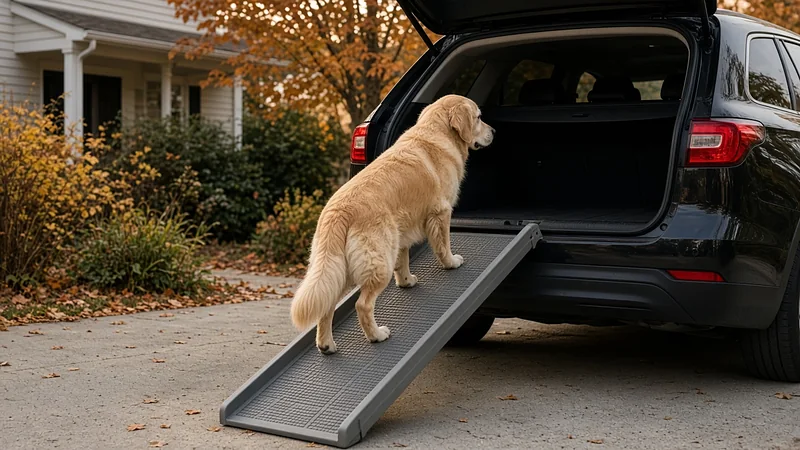
- For tall vehicles or heavy dogs, add a ramp. A harness plus a ramp beats lifting.
Which type of lift harness do you need?
| Your dog… | Best type | Example |
|---|---|---|
| Can put its front paws in, back legs weak | Rear sling or rear harness | GingerLead, Walkabout, CareLift rear |
| Needs help at the front and back | Full-body harness | Help 'Em Up |
| Mostly fine, just needs the occasional boost | Light lift harness kept in the car | Outward Hound Up & Out |
| Too heavy for you to boost at all | Ramp, with a harness for guidance | See our ramp guides |
Our picks
| Product | Key specs | Link |
|---|---|---|
| Help 'Em Up Harness | Two-piece full-body harness (front + hip lift), sizes for 10–225 lb, conventional and U-band (male) styles | Check price on Amazon (opens in a new tab) |
| GingerLead Dog Support Sling | Padded rear sling with integrated leash, male and female cuts, dogs up to 250 lb, made in USA | Check price on Amazon (opens in a new tab) |
| Walkabout Original Back End Harness | Rear-end harness that wraps the hind legs, top handle, made in USA; 7 sizes (XS–XL) chosen by abdomen and upper-thigh measurement | Check price on Amazon (opens in a new tab) |
| Outward Hound (Kyjen) Up & Out Lift Harness | Simple lift harness with a durable handle, one size, fits most dogs 50–90 lb per the listing, about 6.4 oz | Check price on Amazon (opens in a new tab) |
Specs are from manufacturer and retailer listings and can change between versions; check the listing before you buy. We don't show prices because they change often; the button shows the current price on Amazon.
Full-body: Help 'Em Up
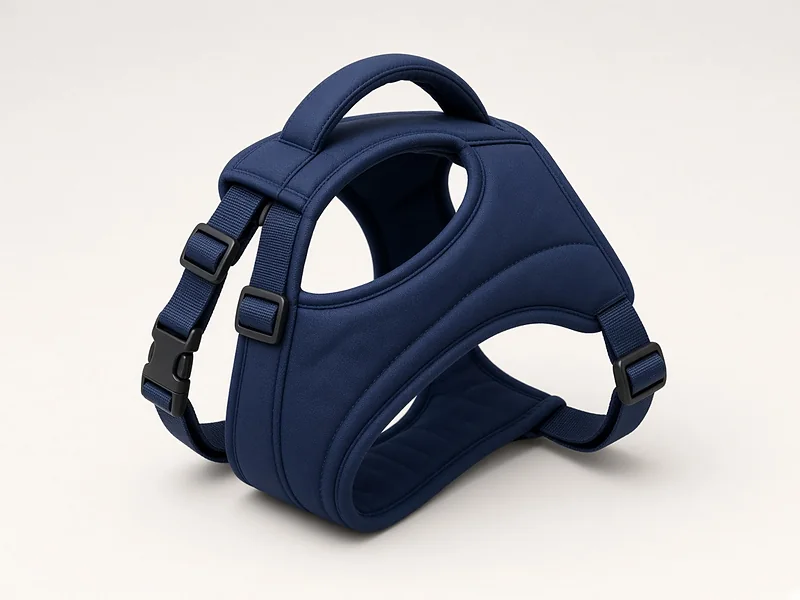
Help 'Em Up Harness
Two-piece full-body harness (front + hip lift), sizes for 10–225 lb, conventional and U-band (male) styles
Pros
- Lifts front, rear or both with separate handles
- Designed to be worn for long periods
- Male (U-band) and conventional versions
Cons
- Most expensive option here
- Sizing is fiddly; the maker suggests sizing the rear down for dogs with muscle loss
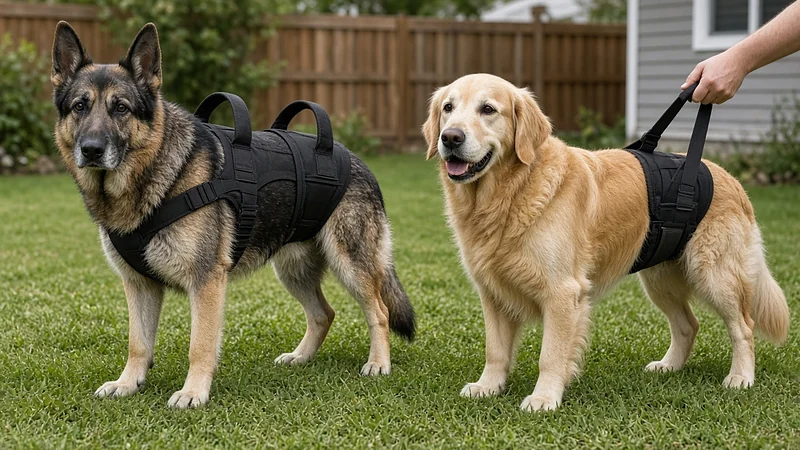
The Help 'Em Up is a two-piece harness: a chest piece and a hip-lift piece, each with a handle, worn together. The maker offers five sizes from 10 to 225 lb, each adjustable in 11 places. For car entry, the big advantage is two handles: you can lift the front onto the cargo floor, then boost the rear, without changing grip. It is designed to stay on through the day, so it is already on when you need to get in the car. We review fit and sizing in detail in our Help 'Em Up harness review.
Rear sling: GingerLead
GingerLead Dog Support Sling
Padded rear sling with integrated leash, male and female cuts, dogs up to 250 lb, made in USA
Pros
- Padded belly pad spreads the load
- Integrated leash for one-handed walking
- Widely used after orthopedic surgery
Cons
- Rear support only
- Slides on and off rather than staying on all day by default (optional stay-on straps)
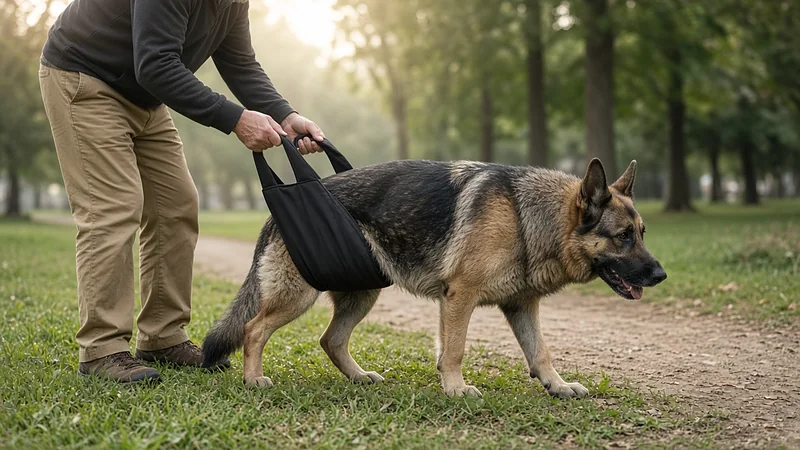
The GingerLead is a padded sling that goes under the belly in front of the back legs, with a built-in leash handle. It comes in male and female cuts for dogs up to 250 lb. It is quick to slip on at the car door and off again, so it suits dogs that only need help at the back end. Compare it with the Help 'Em Up in Help 'Em Up vs GingerLead.
Rear harness: Walkabout
Walkabout Original Back End Harness
Rear-end harness that wraps the hind legs, top handle, made in USA; 7 sizes (XS–XL) chosen by abdomen and upper-thigh measurement
Pros
- Wraps the legs instead of the belly, so less abdominal pressure
- Easy to leave on for short outings
Cons
- Rear only
- Leg loops need correct sizing to avoid rubbing
The Walkabout Back End Harness wraps around the hind legs with a handle on top. The maker says it helps pets climb stairs and get in and out of vehicles, and that it can be left on during the day with room to toilet. It comes in seven sizes chosen by abdomen and upper-thigh measurements. It gives a more secure rear lift than a simple belly sling for dogs whose back legs splay.
Light car-only option: Outward Hound Up & Out
Outward Hound (Kyjen) Up & Out Lift Harness
Simple lift harness with a durable handle, one size, fits most dogs 50–90 lb per the listing, about 6.4 oz
Pros
- Very light; lives in the glovebox
- Designed specifically to boost a dog into higher vehicles
- Quick to put on for a single lift
Cons
- Basic padding; not for all-day wear
- One size only
- Rear support only for the lift, not a full-body harness
The Up & Out is a simple lift harness with a handle, sold as one size for most dogs from 50 to 90 lb and marketed for boosting dogs into higher vehicles. At a few ounces it can live in the glovebox. It is basic: think of it as an occasional helper for a dog that is still fairly mobile, not a daily mobility aid.
Budget rear option: PetSafe CareLift rear lifting aid
PetSafe CareLift Rear Lifting Aid
Rear-only lifting sling with handles; the linked listing is size Large; check the size chart on the listing
Pros
- Simple, low-cost rear sling
- Quick to slip on for short assists
- Handy as a spare for the car
Cons
- Not meant for all-day wear
- Less padding than GingerLead
PetSafe's rear lifting aid is a simple rear-only sling with handles. It is a low-cost spare to keep in the car. If your dog also needs help at the front, PetSafe's separate CareLift Full Body harness supports both ends.
How to lift a dog into a car with a harness
- Prepare the car. Open the hatch or door fully, lay down a non-slip mat or blanket on the cargo floor, and move anything the dog could slip on.
- Line up straight. Walk the dog up to the opening square-on, close enough that it can place its front paws inside.
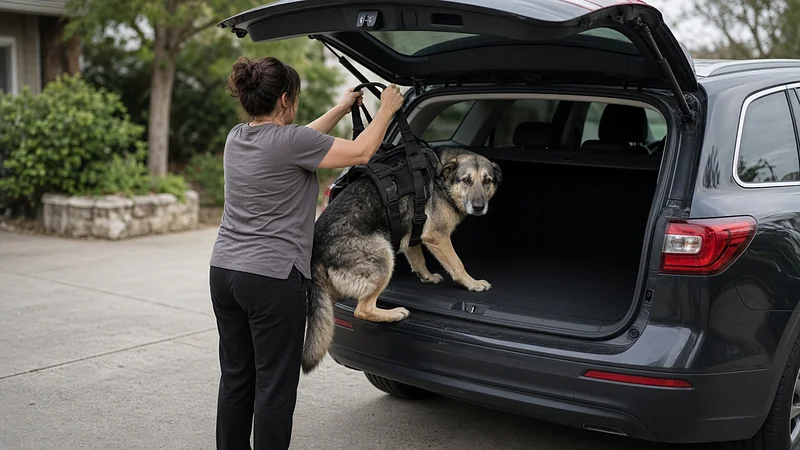
- Front paws first. Let the dog put its front paws on the floor of the car by itself, or lift the front handle to help.
- Boost the rear. Bend your knees, keep your back straight and the dog close to your body, and lift the rear handle as the dog pushes with its back legs.
- Steady, then settle. Keep a light hold until the dog is fully in and lying down.
- Getting out is harder. Do not let a senior dog jump down. Support the rear as it steps down, front paws first, or use a ramp.
Lift harnesses are for assisting, not for travel restraint. Unless the maker states otherwise, do not rely on a lift harness as a car safety restraint.
When a ramp is the better choice
A harness still means you take part of the dog's weight. If your dog is heavy, your vehicle is tall, or you have back problems, a ramp lets the dog walk in under its own power. You can still use the harness to steady it on the ramp. See:
- Best dog ramps for SUVs for senior dogs with arthritis
- Best dog ramps and stairs for sedans and passenger doors
- Best dog ramps for pickup trucks
The AKC's buying checklist for ramps and stairs is a good start: a slip-resistant surface, enough width for your dog, the right height for the vehicle, and a weight limit that suits your dog.
Sizing a lift harness
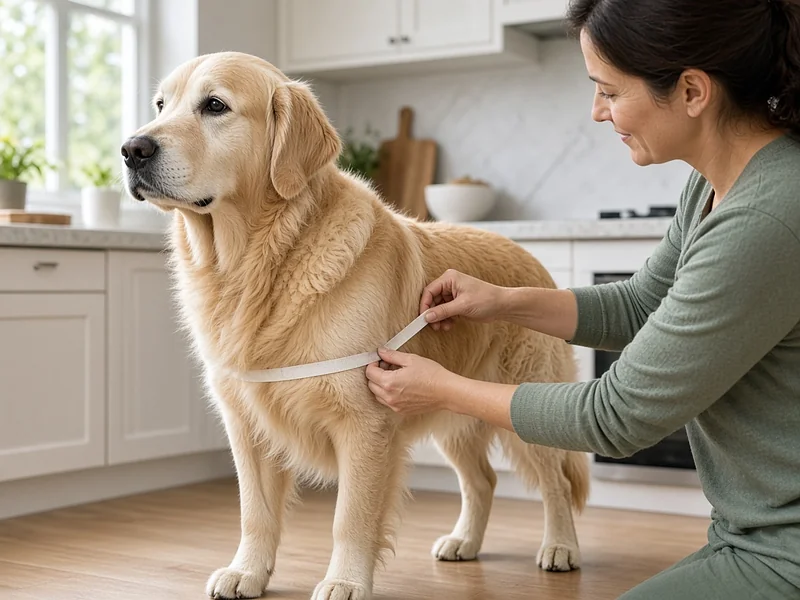
- Weigh and measure. Note your dog's weight, chest girth behind the front legs, and waist just in front of the back legs.
- Follow the maker's chart. Help 'Em Up sizes mainly by weight and recommends sizing down when between sizes. Walkabout sizes by abdomen and thigh measurements.
- Allow for muscle loss. Help 'Em Up notes that dogs with wasted hind quarters may need a smaller rear piece.
- Check the fit. The harness should not slide when you lift, and should not rub behind the legs.
Practise before you need it
Put the harness on at home, reward your dog, and practise lifting gently over a step before the first car trip. A dog that is used to the harness is calmer when it matters, and you will find out whether the fit is right.
For the ride itself, see car hammocks and seat covers for senior dogs.
Related reading: our guides to getting an old dog into an SUV without a ramp and raised dog bowls for joint pain.
FAQ
How do I get my old dog into the car without hurting my back?
Use a lift harness or sling so you can boost from handles with bent knees and a straight back, let the dog place its front paws first, and consider a ramp for tall vehicles or heavy dogs.
Is a full-body harness or a rear sling better for the car?
A rear sling is enough if your dog can put its front paws in. A full-body harness helps if it needs support at both ends or wears it all day.
Can I leave a lift harness on in the car?
Some, such as the Help 'Em Up and Walkabout, are designed to be worn through the day. They are lift aids, not car restraints, unless the maker says otherwise.
Should my senior dog jump out of the car?
Jumping down puts a lot of force on the front legs and spine. Support the rear as the dog steps down, or use a ramp, and ask your vet if your dog has a joint or spinal condition.
Prices change often, so we do not list them. Check the current price on Amazon.
Sources
- Help 'Em Up, Choosing a Harness (sizes and sizing advice).
- Walkabout Harnesses, Original Back End Harness.
- American Kennel Club, Dog Stairs vs. Ramps.
- VCA Animal Hospitals, Creating a Comfortable Home for Your Mobility Compromised Dog.
- GingerLead, Outward Hound and PetSafe listings (specifications, checked November 2026).