As an Amazon Associate, SturdyPaws earns from qualifying purchases. This article contains affiliate links; buying through them costs you nothing extra. Read our affiliate disclosure.
Dog bed listings throw around three terms more than any others: memory foam, egg crate and bolster. They are often used as if they described quality levels, with memory foam at the top and egg crate at the bottom. In fact they describe three different things: a type of foam, a way of cutting foam, and the shape of the bed around it. A bed can be all three at once.
For an older dog with stiff joints, the differences matter. The wrong combination can mean a dog sinking through to the floor, overheating, or struggling to climb out of its own bed. This guide explains what each term really means, the trade-offs for senior dogs, and gives verified examples of each type. It draws on guidance from VCA Animal Hospitals and on manufacturer specifications. We have not tested these beds ourselves.
Key takeaways
- Memory foam is a material; egg crate is a cut; bolster is a shape. Compare them separately.
- Thickness and density matter more than the label. A thin memory foam topper can support less than a thick plain foam slab.
- Egg-crate foam is softer and cheaper, but has less solid foam under the dog. Fine for light dogs, less so for heavy ones.
- Bolsters help dogs that like to lean, but can be a barrier. VCA advises beds a dog does not have to climb over.
- For most arthritic seniors, solid foam with a low or open side is the safest default.
What VCA says a senior dog's bed should do
VCA's osteoarthritis guidance suggests an orthopedic or memory foam bed to reduce pressure on sore joints and improve sleep quality. Its advice on making a home comfortable for a mobility-compromised dog adds three details that help you choose between bed styles. First, choose bedding that does not retain heat, especially in warm climates. Second, choose beds your dog does not have to climb over or onto; it describes the ideal as a recessed orthopedic bed that does not require climbing. Third, the bed or cover should be machine washable to protect against urine or faeces.
Hold those three points in mind as you read the rest of this guide: pressure relief, easy entry, and keeping cool and clean.
Memory foam: the material
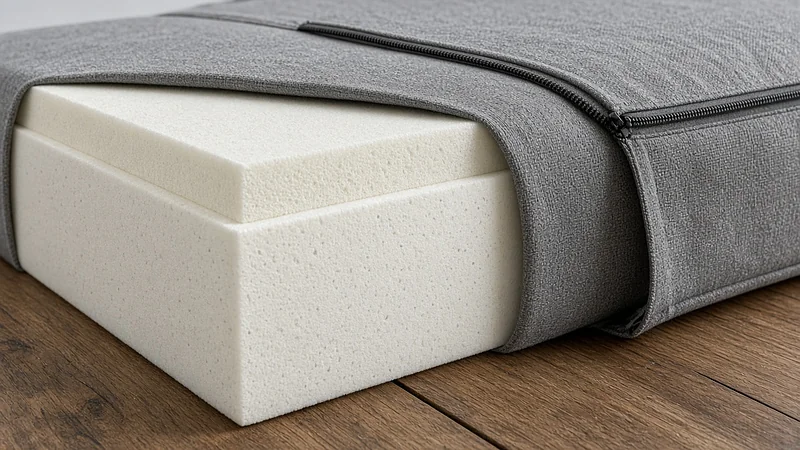
Memory foam is viscoelastic polyurethane foam. It softens with body heat and pressure and slowly moulds to the shape lying on it, then recovers when the weight is removed. That moulding spreads a dog's weight over a larger area, so less pressure lands on the bony points of the hips, elbows and shoulders.
Good for
- Bony, thin or older dogs that get pressure sores or calluses.
- Dogs with arthritis that sleep for long stretches in one position.
- Owners who want one bed to last several years, if the foam is dense enough.
Watch for
- Heat. Memory foam can feel warm, which conflicts with VCA's advice to avoid beds that retain heat. Gel-infused foam and breathable covers are meant to help; a cooler room helps more.
- Sinking. A thin layer of soft memory foam lets a heavy dog bottom out. Many better beds put memory foam on top of a firmer support foam.
- Slow response. Very soft memory foam can make standing up harder, because the dog pushes into foam that gives way.
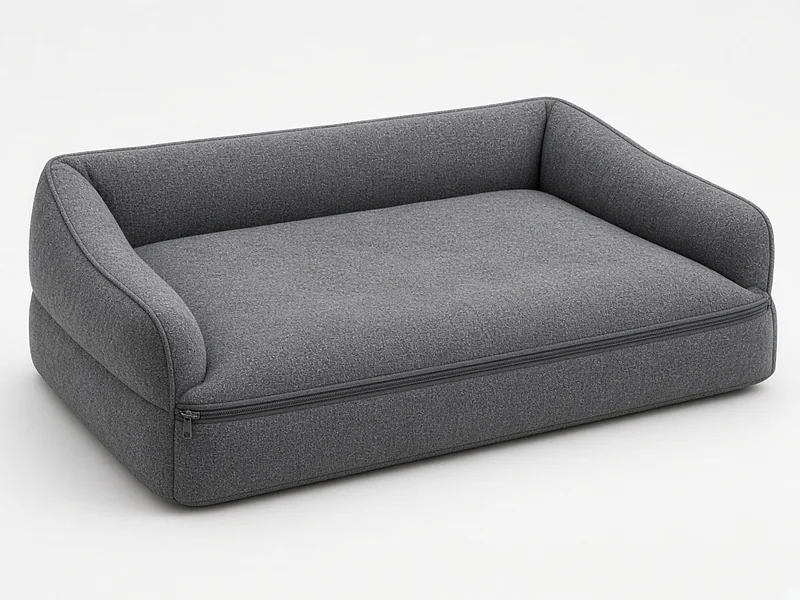
Dogbed4less Orthopedic Gel Memory Foam Dog Bed
4 in single solid gel-infused memory foam pad, 3.2 lb density; waterproof internal zip liner plus washable external cover (Amazon listings add a bonus second cover); 7 sizes from 35x20 to 55x47 in
Pros
- Stated foam density published (3.2 lb), which few brands do
- Liner plus a spare cover suits frequent washing
- Flat, low mattress is easy to step onto; large sizes available
Cons
- No bolster
- 4 in may be thin for the heaviest giant breeds
- Only the inner liner is waterproof, not the outer cover
The Dogbed4less bed is a single four-inch slab of gel-infused memory foam, with a listed density of 3.2 lb, a waterproof internal liner and a washable outer cover. It has no bolster, so it meets VCA's "no climbing over" point.
Layered foam: memory foam over support foam
Many orthopedic beds combine layers: a firm base, a support layer and a softer comfort layer on top. The aim is to get memory foam's pressure relief without letting a heavy dog sink through.
Big Barker 7" Pillow Top Orthopedic Dog Bed
7 in, three foam layers (2 in base, 3 in support, 2 in comfort); Large 48x30, XL 52x36, Giant 60x48 in; CertiPUR-US foam made in USA; 10-year no-flatten warranty (foam must keep 90% of shape)
Pros
- Thickest common option for very heavy dogs; sizes start at Large
- Clear written no-flatten warranty
- Low, flat profile is easy to step onto
Cons
- Highest relative cost in this guide
- Warranty excludes covers, chewing and accident damage
- Overkill for small and medium dogs
Big Barker's seven-inch bed, for example, lists three foam layers (a two-inch base, a three-inch support layer and a two-inch comfort layer). It is aimed at large and giant breeds, and the brand offers a ten-year warranty against flattening. Our Big Barker review covers whether that is worth it. The trade-off is height: a seven-inch bed is a real step up for a small or very weak dog.
Egg-crate foam: the cut
"Egg crate", also called convoluted foam, describes foam cut into a pattern of peaks and valleys. It can be made from any foam, including memory foam, though in dog beds it is usually a standard polyurethane foam.
How it differs from solid foam
The peaks compress easily, which feels soft and lets air move through the valleys. But a two-inch egg-crate pad is not two inches of support. Some of that height is air, and the peaks squash first, so less foam is left under the dog's hips than the thickness suggests. Solid foam of the same thickness has more material doing the work.
Good for
- Light and small dogs that do not compress foam much.
- Dogs that run warm and appreciate the airflow.
- Budget beds and crate pads where cushioning matters more than deep support.
Watch for
- Heavy dogs flattening the peaks quickly.
- Listings that quote the peak-to-base height as "thickness" without saying how much solid foam sits beneath.
- Beds where egg-crate foam is the only layer under a large dog with arthritis.
Furhaven Deluxe Mattress Dog Bed (Solid Orthopedic Foam option)
Choice of solid orthopedic or egg-crate (convolute) foam; water-resistant coated poly-canvas Oxford cover on the indoor/outdoor version; removable zip cover; sizes Medium to Jumbo Plus; Furhaven states its foam is CertiPUR-US certified
Pros
- Budget-friendly relative cost
- Solid foam option avoids egg-crate
- Many sizes
Cons
- Thinner than premium beds
- Make sure you pick the solid orthopedic foam variant
- Water-resistant, not waterproof, cover
Furhaven's Deluxe Mattress bed is a useful example because it is sold with a choice of solid orthopedic foam or egg-crate foam in the same cover. If you are comparing the two directly, that makes it easy to see the difference in what you are paying for.
Bolster beds: the shape
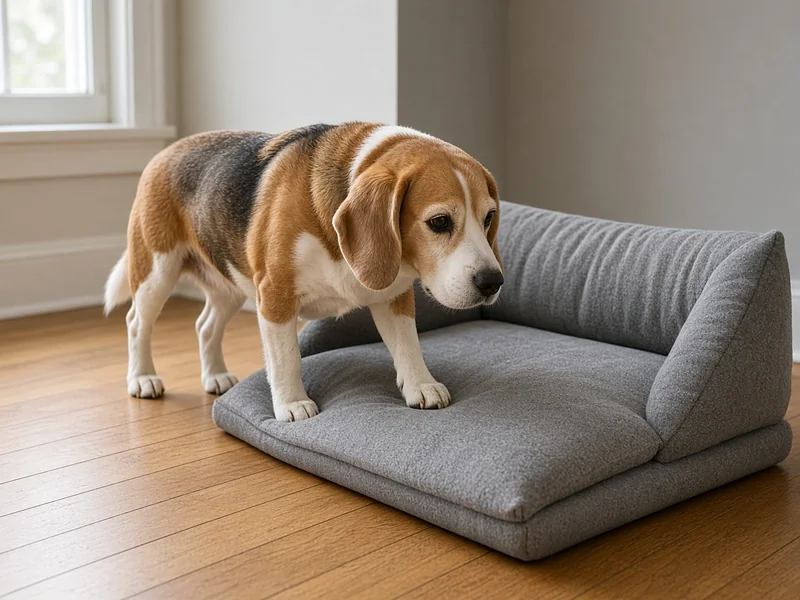
A bolster bed has raised, cushioned sides on two, three or four edges. The bolster is usually filled with polyfill, a fibre stuffing, rather than foam. The base can be any foam, solid or egg crate.
Good for
- Dogs that sleep curled up or like to rest their head or back against something.
- Anxious dogs that settle better with an edge around them.
- Dogs that slide off flat beds while asleep.
Watch for
- Climbing. VCA's advice is a bed the dog does not have to climb over. For a stiff dog, a four-sided bolster is a wall to step over twice a day or more. Choose one with a lowered or open front.
- Thin base. Plush bolsters can hide a thin base. Look for the foam thickness of the sleeping area, not the total height including the bolster.
- Washing. Polyfill bolsters can be awkward to wash and slow to dry. Check whether the cover comes off.
PetFusion Ultimate Dog Bed & Lounge
Solid CertiPUR-US memory foam: S 25x20 (2.5 in foam), L 36x28 (4 in), XL 44x34 (4 in), Jumbo 50x40 (6 in); waterproof inner liner; water-resistant machine-washable cover; recycled polyfill bolsters
Pros
- Bolsters on three sides for a head rest
- Inner liner plus water-resistant cover
- Mid relative cost
Cons
- Bolsters add height on three sides; front is the only low entry
- 4 in foam on L/XL is thin for 100 lb+ dogs
- Warranty wording varies by listing: check before buying
The PetFusion Ultimate combines a solid memory foam base with polyfill bolsters, and its listing gives the foam thickness by size, from 2.5 inches on the small to six inches on the jumbo. Smaller dogs get thinner foam, which suits their weight.
Bedsure Orthopedic Bolster Bed (Small, 24 in)
24 x 18 x 6 in; high-density egg-crate foam base; four-sided bolster with a lowered entrance; laminated waterproof layer in the cover; removable machine-washable cover; non-skid bottom; CertiPUR-US foam and OEKO-TEX cover
Pros
- Lowered front makes it easy to step in
- Bolsters for dogs that like to curl and lean
- Waterproof layer and washable cover
Cons
- Egg-crate foam is thinner and softer than solid memory foam
- Bolster sides still need a small step over at the back
- Size carefully: small dogs that stretch out may need the next size
For small dogs, the Bedsure bolster bed shows the other common combination: an egg-crate foam base with a four-sided bolster and a lowered entrance on one side.
Side-by-side summary
| Product | Key specs | Link |
|---|---|---|
| Dogbed4less Orthopedic Gel Memory Foam Dog Bed | 4 in single solid gel-infused memory foam pad, 3.2 lb density; waterproof internal zip liner plus washable external cover (Amazon listings add a bonus second cover); 7 sizes from 35x20 to 55x47 in | Check price on Amazon (opens in a new tab) |
| Big Barker 7" Pillow Top Orthopedic Dog Bed | 7 in, three foam layers (2 in base, 3 in support, 2 in comfort); Large 48x30, XL 52x36, Giant 60x48 in; CertiPUR-US foam made in USA; 10-year no-flatten warranty (foam must keep 90% of shape) | Check price on Amazon (opens in a new tab) |
| Furhaven Deluxe Mattress Dog Bed (Solid Orthopedic Foam option) | Choice of solid orthopedic or egg-crate (convolute) foam; water-resistant coated poly-canvas Oxford cover on the indoor/outdoor version; removable zip cover; sizes Medium to Jumbo Plus; Furhaven states its foam is CertiPUR-US certified | Check price on Amazon (opens in a new tab) |
| PetFusion Ultimate Dog Bed & Lounge | Solid CertiPUR-US memory foam: S 25x20 (2.5 in foam), L 36x28 (4 in), XL 44x34 (4 in), Jumbo 50x40 (6 in); waterproof inner liner; water-resistant machine-washable cover; recycled polyfill bolsters | Check price on Amazon (opens in a new tab) |
| Bedsure Orthopedic Bolster Bed (Small, 24 in) | 24 x 18 x 6 in; high-density egg-crate foam base; four-sided bolster with a lowered entrance; laminated waterproof layer in the cover; removable machine-washable cover; non-skid bottom; CertiPUR-US foam and OEKO-TEX cover | Check price on Amazon (opens in a new tab) |
Specs are from manufacturer and retailer listings and can change between versions; check the listing before you buy. We don't show prices because they change often; the button shows the current price on Amazon.
How to choose for your dog
Large, heavy or giant dogs
Solid foam, ideally layered, thick enough that the dog does not bottom out. Bolsters only if the front is open. Avoid relying on egg-crate foam alone. Our guide to beds for large dogs with hip dysplasia has more detail.
Small and toy dogs
They compress foam less, so egg-crate or thinner memory foam can be enough. A low bolster with a dip at the front is often popular. See our small orthopedic beds guide.
Dogs that struggle to get up
Firmer solid foam, no bolster or a fully open side, and a low overall height. Very soft memory foam can make standing harder. Our low-entry beds guide focuses on this.
Dogs that run hot
Egg-crate airflow or gel-infused foam, a breathable cover and a cool spot in the room. VCA specifically advises against bedding that retains heat.
Incontinent dogs
Whatever the foam, a waterproof inner liner and a washable outer cover. See our waterproof bed guide.
How to read a dog bed listing
- Find the foam thickness of the sleeping surface, not the total height.
- Check whether the foam is solid or convoluted (egg crate).
- Look for a stated density for memory foam, and for layer thicknesses on layered beds.
- Check the height of the edge your dog has to step over.
- Check that the cover is removable and washable, and whether there is a waterproof liner.
- Look for a stated warranty against flattening, and read its conditions.
- Measure your dog lying stretched out and add some space, so it is not hanging over the edge.
Common mistakes
Buying a deep, plush bolster bed for a dog that can barely lift its back legs. Assuming "memory foam" on a label means a thick slab. Buying a bed too small, so a large dog lies with its elbows on the floor. Placing a good bed on a slippery floor, so the dog skids getting on and off; a rug or foam tiles under the bed help. And ignoring heat in summer.
If your dog leaves its bed for cool floors, see cooling orthopedic beds.
If your dog sleeps in a crate, see orthopedic crate pads for sizing and thickness.
FAQ
Is memory foam or egg crate better for dogs with arthritis?
For most arthritic dogs, solid memory foam or layered foam gives more consistent support. Egg-crate foam can suit light dogs or dogs that run hot.
Are bolster beds bad for senior dogs?
Not if the dog can get in easily. VCA advises beds a dog does not have to climb over, so choose a bolster bed with a lowered or open front.
How thick should a dog bed be for an old dog?
Thick enough that the dog's hips and elbows do not press through to the floor, and low enough to step onto. Heavier dogs need thicker or firmer foam.
Does memory foam make dogs hot?
It can. Gel-infused foam, breathable covers and a cool room help. VCA recommends bedding that does not retain heat.
What is convoluted foam?
Another name for egg-crate foam: foam cut into peaks and valleys. It feels soft and allows airflow but has less solid foam than a flat slab of the same height.
Prices change often, so we do not list them. Check the current price on Amazon.
Sources
- VCA Animal Hospitals, Helping your dog with osteoarthritis.
- VCA Animal Hospitals, Creating a comfortable home for your mobility-compromised dog.
- Big Barker, Orthomedic dog bed (layer specifications and warranty).
- Furhaven, Deluxe mattress bed (foam options).
- Product specifications from the linked Amazon listings, checked 2 November 2026.