As an Amazon Associate, SturdyPaws earns from qualifying purchases. This article contains affiliate links; buying through them costs you nothing extra. Read our affiliate disclosure.
Search for ways to stop an old dog slipping on hardwood and you will soon find paw wax. It is cheap, it comes in a small tin, and many listings mention traction. It sounds like the easiest fix there is: rub a little on the pads and the dog grips the floor again.
The reality is more mixed. Paw wax and paw balm are excellent at what they were designed for, which is protecting and conditioning pads outdoors in snow, salt, heat and rough ground. As an indoor traction aid for a senior dog on a smooth floor, they are a weaker choice, and at least one veterinarian quoted by Vetstreet warns that the oils in balms can make paws more slippery. This guide compares paw wax with the other paw-level traction products (toe grips, grip socks and rubber boots), explains when wax makes sense and when it does not, and points to the floor-level fixes that usually help most. It draws on VCA Animal Hospitals, PetMD, Vetstreet and the American Kennel Club. We have not tested these products on our own dogs.
Key takeaways
- Paw wax is a pad protector first. VCA recommends it for snow, ice and de-icing salt.
- Indoors, balms can make pads slicker. A vet quoted by Vetstreet flags this as a bigger issue for arthritic senior dogs.
- For indoor grip, toe grips, grip socks and rubber boots do more. Floor coverings do more still.
- Use wax for cracked or dry pads, and outdoors. Apply thinly and let it absorb before the dog walks on hard floors.
- Cracked, bleeding or sore pads need a vet. Dryness can have medical causes.
What paw wax actually is
Paw wax and paw balm are thick, dog-safe blends of waxes and oils that you rub into the paw pads. The best-known brand, Musher's Secret, says on its Amazon listing that its wax was developed in Canada for sled dogs and is a blend of food-grade waxes, including white and yellow beeswax, carnauba and candelilla, with added vitamin E. The listing describes it as forming a breathable barrier against ice, snow, salt and chemicals in winter, against hot pavement and sand in summer, and against rough terrain all year. It also positions the wax as an alternative to dog socks for dogs that will not wear them.
Notice what that list is about: protection from the outside world, and moisture. Traction on a polished indoor floor is not the main claim.
What vets say paw wax is good for
Winter walks
VCA Animal Hospitals includes paw balm or wax in its advice on cold-weather paw protection. For dogs that are hesitant to wear booties, it suggests a thick layer of balm before a walk to help stop snow and ice balls forming between the toes, and to create a barrier against salt and other de-icing chemicals. It notes that these products also moisturise, and that rough, cracked pads can be massaged with wax or balm.
Dry or cracked pads
PetMD's advice on cracked paws recommends cleaning the paws and applying a moisturising butter or balm to the pads, noting that these thicker products protect the pads for longer than a cream. It also says a moisturising balm, butter or wax can be a good substitute for booties outdoors, putting a barrier between the pads and ice, salt, dirt and rough ground.
When to see the vet instead
PetMD advises a vet visit if you see cracked or very dry pads for the first time, and promptly for bleeding cracks, swelling, limping, behaviour changes or excessive licking or chewing of the paws. Dry, cracked pads can have underlying causes that need tests. Wax can soothe; it does not diagnose.
The indoor problem: wax can make paws slippery
This is the part most product listings leave out. In Vetstreet's guide to paw balm, veterinarian Stephanie Lantry points out that because balms contain a lot of oil, they can make paws slippery on slick surfaces, and that this can be a bigger issue with senior dogs who may need more traction because of arthritis. She also notes that balm leaves residue where the dog walks, so the dog should be kept in one place until it has dried.
Musher's Secret's own instructions are consistent with that. The listing says the wax absorbs in a few moments and, once absorbed, should not come off on floors, carpets or clothing; if it does, you are applying too much and should use thinner layers less often.
Put together, the practical rule is simple. If your aim is indoor grip on hardwood, laminate or tile, paw wax is at best a minor helper and at worst counterproductive, especially if it is applied thickly just before the dog gets up. If your aim is to protect and condition the pads, wax is a good tool, used thinly and given time to soak in.
Why old dogs slip in the first place
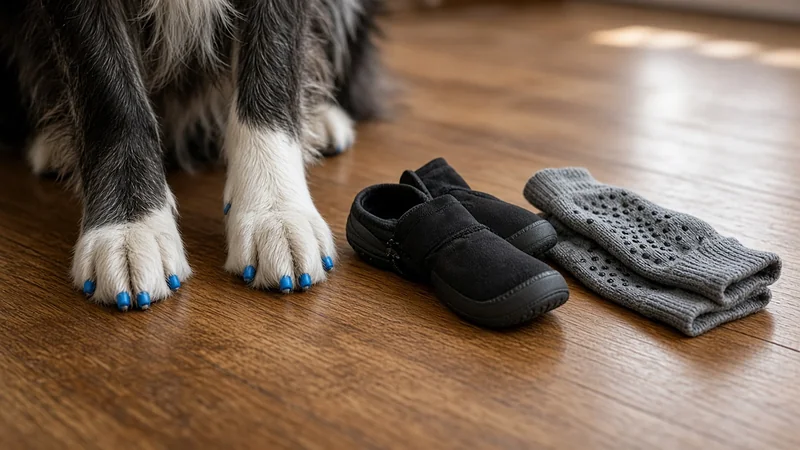
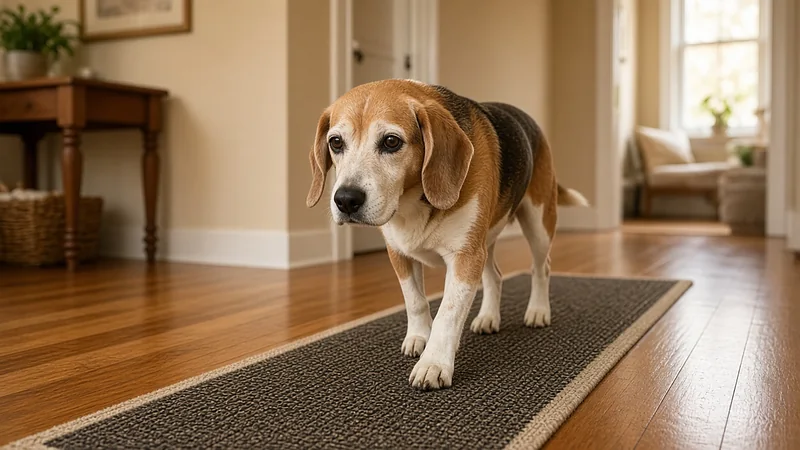
It helps to know what you are trying to fix. VCA's advice on making a home comfortable for a mobility-compromised dog explains that dogs who feel unsteady on hard floors walk cautiously, with short strides and a hunched back, which in turn causes stiffness and less movement. Its recommended fixes, in roughly this order, are: non-slip rugs or runners where the dog spends most time, nails kept short, fur between the toes trimmed, and pad coverings or boots for extra grip. It also suggests asking your vet or a rehabilitation therapist which option suits your dog.
Two of those are free or nearly free and work better than any product: trimming the fur that grows over the pads, and keeping nails short. Long nails push the toes up off the floor and reduce the pad area in contact with it. Fur over the pads acts like a felt slipper on a polished floor.
Paw-level traction options compared
Paw wax or balm
Best for: outdoor protection, dry or cracked pads, dogs that refuse anything on their feet. Indoor grip: limited, and possibly worse if over-applied. Effort: a minute or two, two or three times a week according to the Musher's Secret listing. Risk: slick residue if applied thickly.
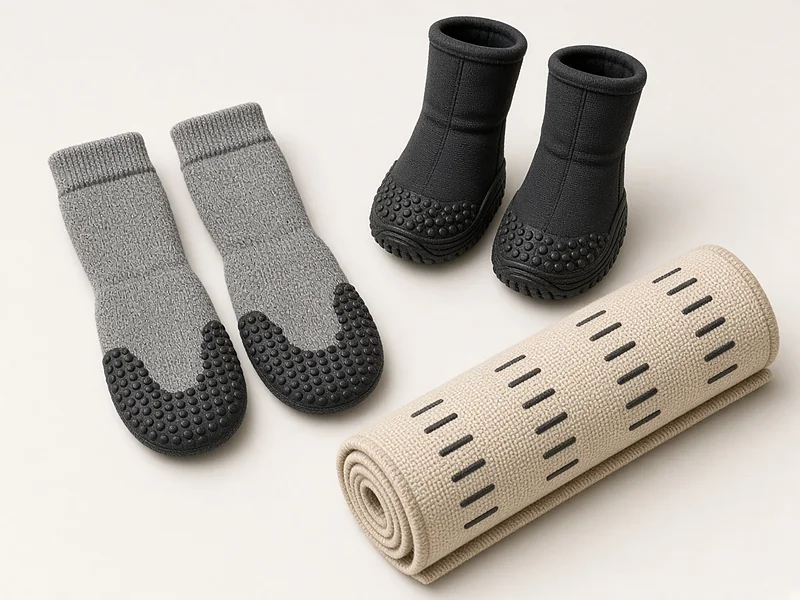
Musher's Secret Paw Wax (60 g)
60 g (2.1 oz) tin; blend of food-grade waxes incl. white and yellow beeswax, carnauba and candelilla with vitamin E (per listing); brand suggests a thin layer 2-3 times a week; also 200 g and 454 g sizes
Pros
- Protects pads from snow, salt and hot pavement
- Moisturises dry, rough pads
- Option for dogs that refuse boots
Cons
- Not an indoor traction aid; thick layers can make paws slick
- Needs time to absorb
- Does not treat bleeding cracks
Toe grips
Rubber rings that slip over the toenails so the nail tips grip the floor. They leave the paw uncovered, which many dogs prefer, and they work on the specific problem of nails skidding. The maker says they last one to three months. They need correctly sized rings for each nail and a little practice to fit. See our ToeGrips review.
Dr. Buzby's ToeGrips
Rubber rings that slip over toenail tips; sized by nail; 20 per pack (16 weight-bearing nails plus 4 spares); last 1–3 months per the maker. Linked listing is Medium (the listing says Medium suits dogs with an ideal weight of 15–39 lb)
Pros
- Leaves paw pads free; nothing over the foot
- Developed by a veterinarian
Cons
- Fitting takes patience and correct sizing
- Can fall off or need replacing every 1–3 months
- Not suitable for every nail shape
Grip socks
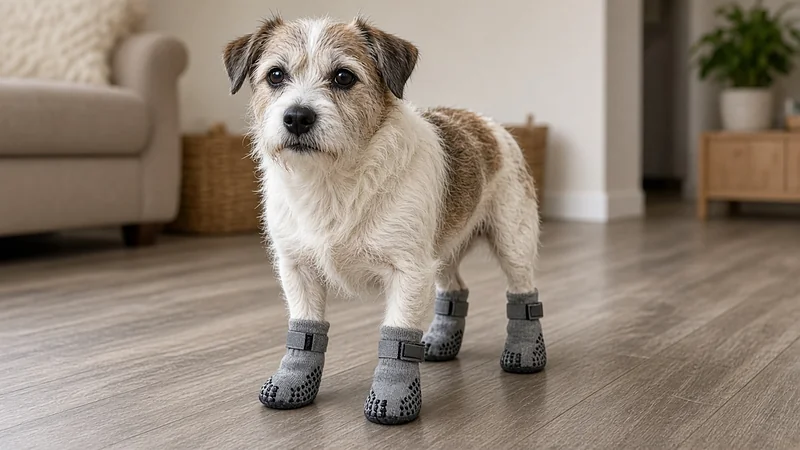
Soft socks with rubber dots. Quick to put on and usually well tolerated, but they twist and slip off if they are the wrong size or have no strap, and they are for indoor use. Our grip socks guide explains fit.
EXPAWLORER Double-Side Anti-Slip Dog Socks
6 socks + 6 detachable straps per pack; grip on both sides; Medium listed as paw width 2.6 in, length 6.3 in; brand says size down if between sizes
Pros
- Grip on top and bottom so a twisted sock still grips
- Straps help them stay on
- Six socks lets you rotate
Cons
- Indoor use; grip wears down
- Sizing varies by listing
- Nails can poke through
Rubber boots
Thin natural-rubber boots cover the whole paw and give strong grip on smooth floors and outdoors. Some dogs walk strangely in them at first. They can trap moisture, so they are not for all-day wear. See our dog boots for traction guide.
Pawz Rubber Dog Boots
Thin natural-rubber disposable boots, reusable for a while
Pros
- Inexpensive and thin, so many dogs tolerate them
- Waterproof
Cons
- Tear with nails and heavy use
- Can trap moisture if worn for hours
| Product | Key specs | Link |
|---|---|---|
| Musher's Secret Paw Wax (60 g) | 60 g (2.1 oz) tin; blend of food-grade waxes incl. white and yellow beeswax, carnauba and candelilla with vitamin E (per listing); brand suggests a thin layer 2-3 times a week; also 200 g and 454 g sizes | Check price on Amazon (opens in a new tab) |
| Dr. Buzby's ToeGrips | Rubber rings that slip over toenail tips; sized by nail; 20 per pack (16 weight-bearing nails plus 4 spares); last 1–3 months per the maker. Linked listing is Medium (the listing says Medium suits dogs with an ideal weight of 15–39 lb) | Check price on Amazon (opens in a new tab) |
| EXPAWLORER Double-Side Anti-Slip Dog Socks | 6 socks + 6 detachable straps per pack; grip on both sides; Medium listed as paw width 2.6 in, length 6.3 in; brand says size down if between sizes | Check price on Amazon (opens in a new tab) |
| Pawz Rubber Dog Boots | Thin natural-rubber disposable boots, reusable for a while | Check price on Amazon (opens in a new tab) |
Specs are from manufacturer and retailer listings and can change between versions; check the listing before you buy. We don't show prices because they change often; the button shows the current price on Amazon.
Which should you choose?
- Dog slips indoors on smooth floors: rugs and runners first, then nails and pad fur, then toe grips or grip socks. Skip wax for this job.
- Dog has dry, rough or cracked pads: paw wax or balm, applied thinly at a quiet time (for example, before bed on a rug), after a vet check if the cracks are new.
- Winter walks on salted pavements: boots if your dog accepts them; otherwise paw wax before the walk and a rinse and dry afterwards, as VCA suggests.
- Summer heat or rough trails: boots give more protection than wax on very hot surfaces. Wax helps for mild abrasion.
- Dog refuses anything on its feet: toe grips, which sit only on the nails, or wax for pad care, combined with floor coverings.
How to apply paw wax without making floors slick
- Clean and dry the paws first.
- Trim the fur between and around the pads if it is long. This does more for grip than anything you put on.
- Take a very small amount on a fingertip and work a thin layer into each pad, including between the pads.
- Keep the dog lying on a rug or towel while it absorbs. Vetstreet's guidance suggests restricting the dog until it is dry; bedtime is a convenient moment.
- If the dog leaves greasy prints, you used too much. Use less next time.
- Do not let the dog lick most of it off. The brand says the waxes are food-grade, but a vet quoted by Vetstreet notes that balm licked off does no good.
Never use human lotions on your dog's paws. VCA warns that pets tend to lick off what is applied and some human skin products contain ingredients that should not be swallowed.
What about "traction sprays" and sticky products?
You will also see sprays and liquids sold to make paw pads tackier. We have not found veterinary guidance supporting them as a mobility aid for senior dogs, and we could not verify how long their effect lasts, so we do not recommend a specific one. If you try one, test it on a single paw, watch for licking or skin irritation and stop if you see either. Changes to the floor, the nails and the pad fur remain the evidence-backed basics.
Common mistakes
Using wax as the main fix for an old dog sliding on laminate. Applying a thick layer just before the dog walks on hardwood. Skipping the nail trim because the dog dislikes it, when long nails are often the real problem. Treating new cracks at home without a vet check. And using human hand cream instead of a dog product.
FAQ
Does paw wax help dogs grip slippery floors?
Not much, and it can make it worse if applied thickly. It is designed to protect and moisturise pads. For indoor grip, use rugs, short nails, trimmed pad fur and toe grips, socks or boots.
Is Musher's Secret safe if my dog licks it?
The brand says its waxes are food-grade and not a concern if licked. Licked-off wax simply stops working, so distract your dog while it absorbs.
How often should I apply paw wax?
The Musher's Secret listing suggests a thin layer two or three times a week for year-round use, and more often in extreme heat or cold.
Can I use paw wax instead of boots in winter?
VCA suggests paw balm or wax for dogs that will not wear booties, to reduce ice balls and protect against salt. Rinse and dry the paws after the walk.
What is better for a senior dog: wax or toe grips?
For grip on smooth floors, toe grips. For dry or cracked pads, wax. Many dogs benefit from both, used for different jobs.
Prices change often, so we do not list them. Check the current price on Amazon.
Sources
- VCA Animal Hospitals, Four strategies for cold weather paw protection.
- VCA Animal Hospitals, Creating a comfortable home for your mobility-compromised dog.
- VCA Animal Hospitals, Personal care products and your pet.
- PetMD, Cracked dog paws: common causes and how to care for them.
- Vetstreet, Dog paw balm: what it is and how to use it.
- American Kennel Club, Choosing the right dog boots or shoes.
- Product specifications from the linked Amazon listings, checked 2 November 2026.