As an Amazon Associate, SturdyPaws earns from qualifying purchases. This article contains affiliate links; buying through them costs you nothing extra. Read our affiliate disclosure.
Watching an older dog splay its back legs on a shiny kitchen floor is hard. Rugs help, but you cannot carpet the whole house, and some dogs need grip right where they stand up, turn or eat. Boots with rubber soles are one way to bring traction with the dog wherever it goes.
Boots are not right for every dog, though. Some dogs hate them, some walk oddly in them and some slip out of them within minutes. This guide explains when boots make sense for indoor traction, how to measure and fit them, how to get a reluctant senior dog used to wearing them and two boots whose Amazon listings we checked today. It draws on advice from the American Kennel Club and VCA Animal Hospitals. We have not tested these boots on our own dogs.
Key takeaways
- Fix the floor and the nails first. Rugs and short nails help every dog; boots are an add-on for dogs that tolerate them.
- Boots suit dogs that need grip outdoors as well as in, or whose paws need protecting.
- Measure each paw while it bears weight. Front paws are often wider than back paws.
- Break boots in slowly, one paw at a time, with treats, indoors.
- Ask your vet or rehab therapist before relying on boots for a dog that drags or knuckles its paws.
Why senior dogs slip
Several things come together in an older dog. Muscle in the hind legs weakens. Arthritic joints do not flex the way they used to, so the dog cannot correct its footing quickly. Nails grow long when a dog walks less on rough ground, and long nails tip the paw back so the pads lose contact with the floor. And fur between the pads grows over the grippy surface.
VCA's guide to homes for mobility-compromised dogs describes what happens next. Dogs that have fallen, or that feel unsteady, walk cautiously on hard floors with short strides and a hunched back. That posture leads to sore muscles and stiff joints, and the dog moves around less. Better grip breaks that cycle.
Where boots fit among traction options
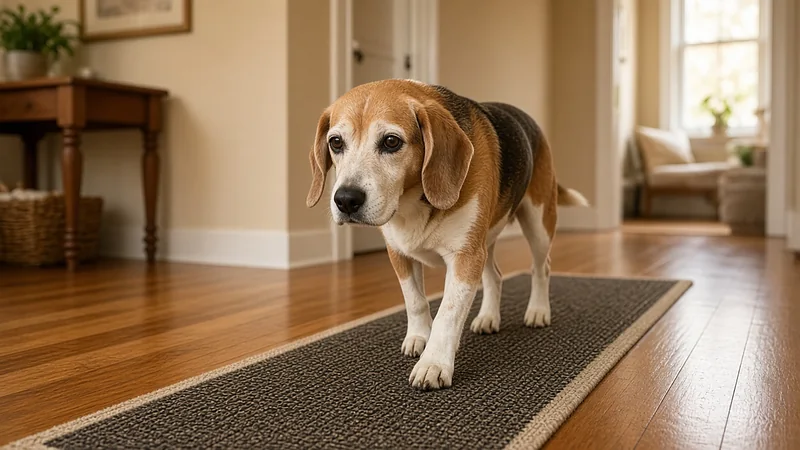
VCA suggests starting with non-slip rugs and runners, trimming nails at least monthly and trimming fur between the toes. It then lists nail caps, pad coverings and boots as further options for extra grip, and says different options work differently for each pet, so talk to your vet or rehabilitation therapist about which may suit your dog. VCA's osteoarthritis page specifically mentions lightweight traction boots for dogs that will tolerate them.
Compared with the alternatives, boots have clear strengths and weaknesses:
| Option | Good for | Drawbacks |
|---|---|---|
| Rugs and runners | Every dog, no fitting needed | Only cover part of the floor |
| Nail grips | Dogs that hate anything on the paw | Fiddly to fit; need replacing |
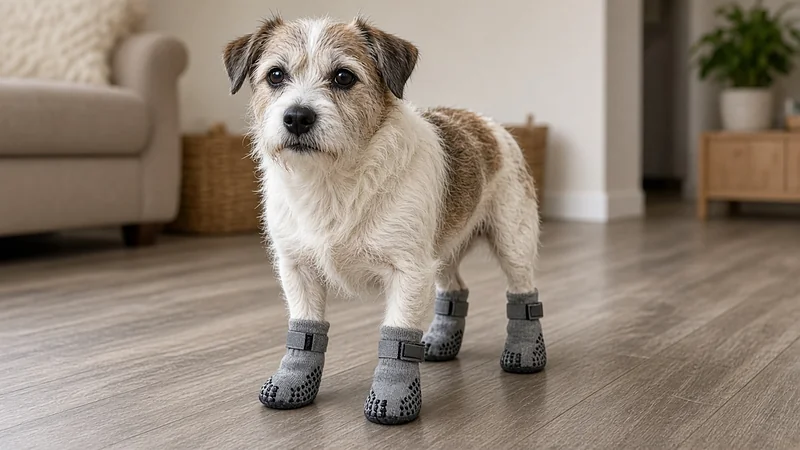
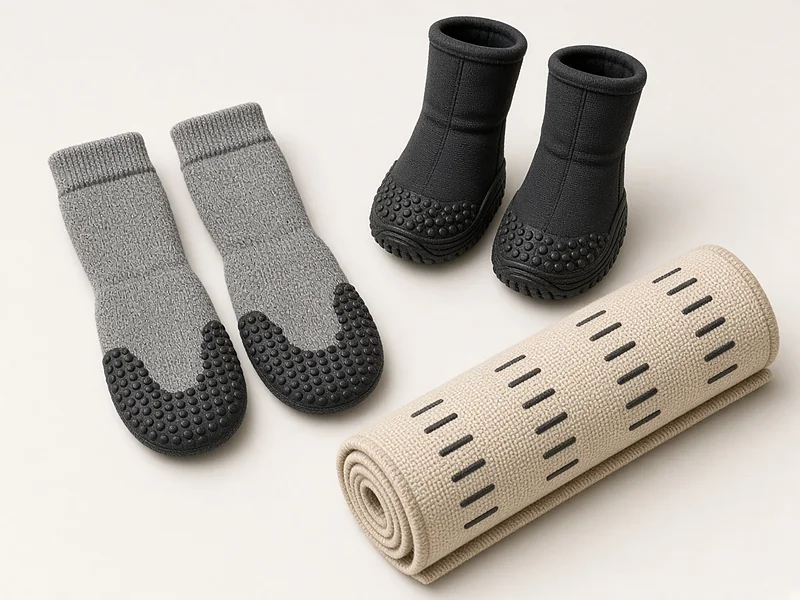
| Grip socks | Indoor use, lightest feel | Twist and slip off; wear out |
| Rubber-soled boots | Indoor and outdoor grip, paw protection | Bulkier; some dogs refuse them |
Our toe grips vs boots vs socks comparison goes deeper into the trade-offs, and our grip socks guide covers the lighter option.
What to look for in a traction boot
The AKC's boot guide lists features worth checking, and a few matter most for indoor traction:
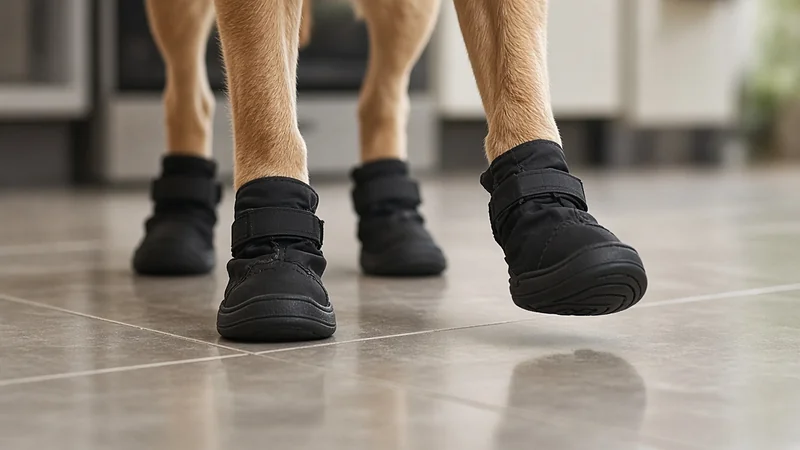
- Anti-slip soles. AKC notes that soles with grooves give more traction and help a dog keep its balance on slick surfaces.
- Secure straps. Hook-and-loop straps are quick to fasten and help the boot fit snugly. For a senior dog, quick on and off matters, because you may do it several times a day.
- A shape that follows the paw. AKC suggests checking that the boot conforms to the natural shape of the paw. A stiff, oversized boot can make an unsteady dog trip.
- Breathability. AKC warns against boots that trap moisture, which can encourage yeast infections between the pads. Take boots off when the dog is resting.
Two boots worth considering
Ruffwear Grip Trex Boots
Vibram rubber outsole, breathable mesh upper, sold in pairs
Pros
- Durable rubber sole with strong grip
- Good outdoors on rough ground too
Cons
- Bulkier; some seniors high-step or refuse them
- Need the right width; sold in pairs, so buy two
The Ruffwear Grip Trex has a Vibram rubber outsole and a breathable mesh upper. Ruffwear sells it in pairs rather than sets of four, because many dogs have wider front paws than back paws, so you can buy a different size for each end. The listing mentions slick tile among the surfaces it is built for. It is a substantial boot, closer to a hiking shoe than a sock, which gives durable grip but may feel heavy to a frail small dog.
Pawz Rubber Dog Boots
Thin natural-rubber disposable boots, reusable for a while
Pros
- Inexpensive and thin, so many dogs tolerate them
- Waterproof
Cons
- Tear with nails and heavy use
- Can trap moisture if worn for hours
Pawz are thin natural-rubber boots that pull on like a balloon. The linked listing is Medium, for paws 2.5 to 3 in, in a pack of 12. They are light and close-fitting, so many dogs walk more naturally in them than in a structured boot. They are often described as disposable, though they can be reused for a while. They suit short indoor sessions and wet walks; the thin rubber is not made for rough trails.
| Product | Key specs | Link |
|---|---|---|
| Ruffwear Grip Trex Boots | Vibram rubber outsole, breathable mesh upper, sold in pairs | Check price on Amazon (opens in a new tab) |
| Pawz Rubber Dog Boots | Thin natural-rubber disposable boots, reusable for a while | Check price on Amazon (opens in a new tab) |
| Dr. Buzby's ToeGrips | Rubber rings that slip over toenail tips; sized by nail; 20 per pack (16 weight-bearing nails plus 4 spares); last 1–3 months per the maker. Linked listing is Medium (the listing says Medium suits dogs with an ideal weight of 15–39 lb) | Check price on Amazon (opens in a new tab) |
| EXPAWLORER Double-Side Anti-Slip Dog Socks | 6 socks + 6 detachable straps per pack; grip on both sides; Medium listed as paw width 2.6 in, length 6.3 in; brand says size down if between sizes | Check price on Amazon (opens in a new tab) |
Specs are from manufacturer and retailer listings and can change between versions; check the listing before you buy. We don't show prices because they change often; the button shows the current price on Amazon.
How to measure paws
Boot sizing is mostly about paw width. The AKC's method is simple: put a sheet of paper on a hard floor, press your dog's paw onto it so the toes spread as they would when walking, and trace around it. Then measure across the widest part of the tracing. Do it with the dog standing so the paw is bearing weight. You can lift the opposite paw gently to make sure the measured paw takes the load.
Measure a front paw and a back paw separately. If they fall in different sizes, a brand that sells in pairs lets you buy two sizes. If your measurement sits between two sizes, read the maker's own advice on whether to size up or down, because brands differ.
Getting a senior dog used to boots
Most dogs walk strangely the first time they wear boots, lifting their feet high or freezing on the spot. That is normal. The AKC recommends positive reinforcement and patience:
- Let the dog sniff and explore the boots first, with praise and good treats.
- Start with one boot, and add the others once the dog accepts it.
- Wear them indoors for short periods, gradually lengthening the time.
- Watch for discomfort or stress, and stop if the dog seems upset.
The AKC also suggests a test run indoors to check that paws stay in the boots, that the soles give enough grip and that the boot follows the shape of the paw. If paws slip out, try a different size.
For an older dog with arthritis, keep sessions especially short at first. A dog that is already unsteady may feel even less sure of itself until it learns how the boots feel. Put the boots on where the dog will stand still, such as on a rug, rather than on the slippery floor you are trying to fix.
When boots are not the answer
Boots will not help, and can make things worse, in some situations:
- Knuckling or dragging. If your dog drags the tops of its back paws, that is a nerve or strength problem. Boots can protect the skin, but ask your vet first. A dog in that situation may need a support harness more than better grip.
- Dogs that panic in them. Some dogs never accept boots. Nail grips or rugs are a better route than forcing it.
- All-day wear. Boots are for when the dog is up and moving. Take them off for rest so paws can breathe, and check the skin for rubbing.
Combine boots with a better floor
Even a dog that wears boots happily benefits from a better floor. Lay runners along the main routes, put a non-slip mat under the food and water bowls and keep nails short. Our slippery floor guide walks through the whole house, and the runner rug guide lists rugs with rubber backing.
Common mistakes
Buying a set of four in one size when the front paws are bigger. Fitting boots for the first time right before a walk, so the dog's first experience is stressful. Leaving boots on all day. And treating boots as a fix for slipping without checking nail length, which on many senior dogs is the quickest improvement of all.
Related reading: our guides to paw wax versus traction products and foam mats versus rugs.
FAQ
Do dog boots stop slipping on hardwood floors?
Boots with grooved rubber soles add grip on hardwood and tile. They work best alongside rugs and short nails, and only if your dog tolerates them.
Can my dog wear boots all day indoors?
It is better not to. Put them on when the dog is active and take them off for rest so the paws can breathe.
How do I measure my dog for boots?
Trace the paw on paper while the dog stands on it, then measure the widest part. Measure front and back paws separately.
Are boots or grip socks better for senior dogs?
Socks are lighter and easier indoors; boots grip better and work outdoors too. Many owners try socks first.
My dog refuses boots. What else can I try?
Nail grips, rugs and runners, and regular nail trims. See our comparison of toe grips, boots and socks.
Prices change often, so we do not list them. Check the current price on Amazon.
Sources
- American Kennel Club, Choosing the right dog boots or shoes for your dog.
- VCA Animal Hospitals, Creating a comfortable home for your mobility-compromised dog.
- VCA Animal Hospitals, Helping your dog with osteoarthritis.
- Product specifications from the linked Amazon listings, checked 2 November 2026.