As an Amazon Associate, SturdyPaws earns from qualifying purchases. This article contains affiliate links; buying through them costs you nothing extra. Read our affiliate disclosure.
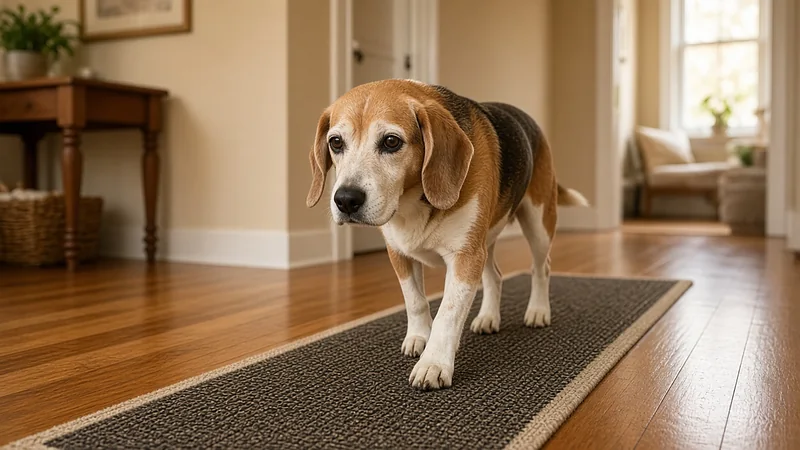
Your older dog's back legs splay on the kitchen floor, and the internet offers three fixes: rubber rings on the toenails, boots, or socks with rubber dots. They all promise grip, but they work in different ways, suit different dogs, and fail in different ways. A sock that twists so its grip ends up on top can make things worse.
This is a research-based comparison. We have not fitted these products to our own dogs. We drew on a veterinary sports medicine and rehabilitation specialist's published advice, manufacturer sizing pages and Amazon listings (see Sources, checked November 2026).
Key takeaways
- Fix the floor first. Runner rugs and yoga mats help almost every slipping dog, and there is nothing to wear.
- Nail grips (such as Dr. Buzby's ToeGrips) leave the paw pads uncovered and can stay on for weeks. A rehab specialist writing in Today's Veterinary Practice preferred nail-based traction over boots for indoor slipping.
- Boots are mainly outdoor gear. The same specialist advised wearing boots for no more than 1–2 hours with close monitoring.
- Grip socks are cheap and easy, but tend to twist and slide, which moves the grip off the floor.
- Trim the fur between the pads and keep nails short. Both cost nothing and help traction.
Why senior dogs slip
Older dogs lose muscle in the back legs, stiff joints shorten their stride, and some lose some of the sense of where their feet are (proprioception). Long nails tip the paw back so the pads touch the floor less, and overgrown fur between the pads acts like felt on a smooth floor. Hardwood, laminate and tile give little grip to start with. Most dogs need a combination of fixes, which is why we cover the floor itself in our guide to stopping a senior dog slipping on hardwood floors.
The comparison
| Feature | Nail grips | Thin rubber boots | Soled outdoor boots | Grip socks |
|---|---|---|---|---|
| Example | Dr. Buzby's ToeGrips | Pawz | Ruffwear Grip Trex | Various brands |
| What touches the floor | Rubber ring on each nail | Thin natural rubber under the whole paw | Vibram rubber outsole | Rubber dots on fabric |
| Pads covered? | No | Yes (thin) | Yes | Yes |
| How long it stays on | 1–3 months per the maker | Short sessions | Walks, then off | Short sessions |
| Main weakness | Fiddly to fit; can come off | Sweaty; wear out | Bulky indoors | Twist and slide down |
| Relative cost | Low–moderate | Low | Higher | Lowest |
Nail grips (ToeGrips)
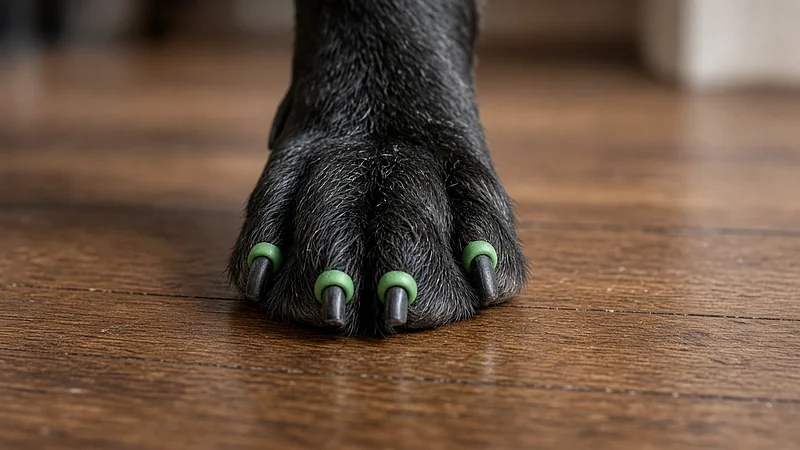
Dr. Buzby's ToeGrips are small rubber rings that slide onto each toenail so the rubber, rather than the hard nail, meets the floor. They were developed by a veterinarian, Dr. Julie Buzby. The maker says they usually last one to three months and are sized by nail. Its own comparison page makes the case against covering the paw: the toes have receptors that help the dog sense where its body is, dogs sweat through their paws, and grips can stay on indoors and outdoors without daily removal. Those are the maker's claims, but the rehab specialist writing in Today's Veterinary Practice made a similar point: the best indoor traction products, in the author's experience, add grip without affecting foot function or sensation, which meant nail-attached products and keeping interdigital fur short. The author listed ToeGrips, Dr. McHenry's Dog Toe Treads and Soft Claws/Soft Paws nail caps, and noted ToeGrips do not need glue, though dogs with nerve problems that drag their nails may need glued-on options.
Downsides: fitting takes patience, sizes must be right, and grips can fall off, especially on dogs that scuff. Not every nail shape suits them.
Evidence: it is thin. PetRehabNetwork's review found no study of these products in dogs that knuckle, and small studies in other dogs found little or no measurable benefit from nail grips. Treat them as worth a try, not a guaranteed fix.
Dr. Buzby's ToeGrips
Rubber rings that slip over toenail tips; sized by nail; 20 per pack (16 weight-bearing nails plus 4 spares); last 1–3 months per the maker. Linked listing is Medium (the listing says Medium suits dogs with an ideal weight of 15–39 lb)
Pros
- Leaves paw pads free; nothing over the foot
- Developed by a veterinarian
Cons
- Fitting takes patience and correct sizing
- Can fall off or need replacing every 1–3 months
- Not suitable for every nail shape
Thin rubber boots (Pawz)
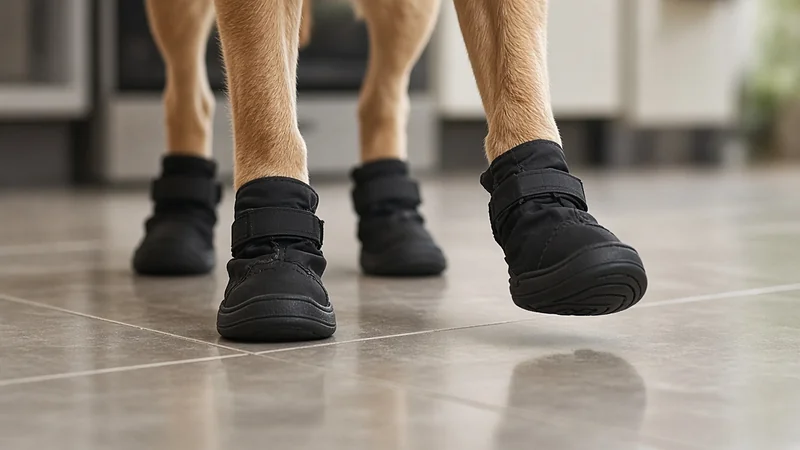
Pawz are thin, balloon-like natural rubber boots sold in packs (the Amazon listing we checked is a pack of 12). They are light and flexible, and the Today's Veterinary Practice specialist singled them out as one indoor boot option that tends to stay in place, thanks to the light, snug fit. The author also warned that breathability is a concern and boots should not be worn for more than 1–2 hours with close monitoring.
Best for: short sessions, such as an evening on the sofa-to-door route, or visits to a house with slippery floors. Downsides: they tear and get used up, and some dogs hate the feel.
Pawz Rubber Dog Boots
Thin natural-rubber disposable boots, reusable for a while
Pros
- Inexpensive and thin, so many dogs tolerate them
- Waterproof
Cons
- Tear with nails and heavy use
- Can trap moisture if worn for hours
Soled outdoor boots (Ruffwear Grip Trex)
Ruffwear describes the Grip Trex as paw wear for dogs who "hike, bike, run, or explore the great outdoors". It has a Vibram non-marking rubber outsole, a breathable mesh upper and a hook-and-loop cinch closure, and comes in sets of two so front and rear can be different sizes. These are excellent for ice, salted pavements, hot paths and rough ground.
Indoors they are a compromise. A thicker, stiffer sole changes how the foot feels the floor, and the rehab specialist noted that dogs with proprioceptive deficits struggle with boots that add weight or have a stiff sole. Keep them for walks.
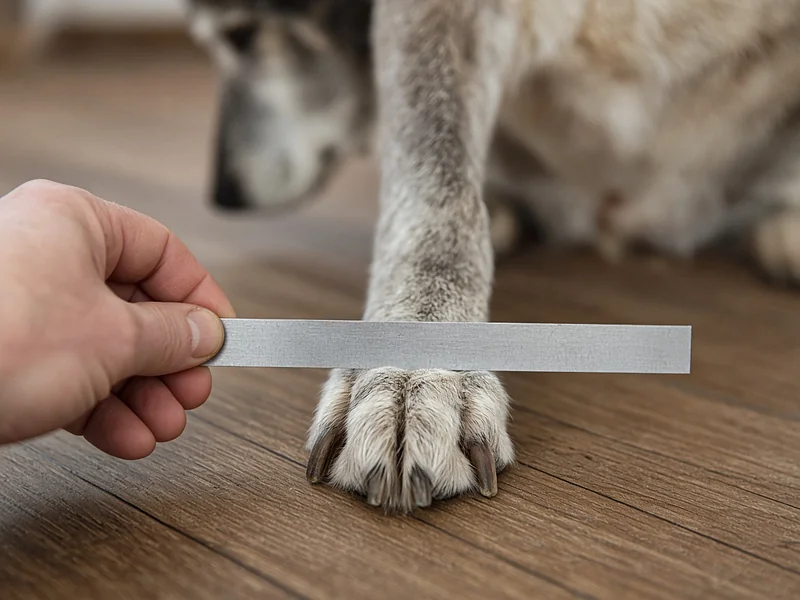
Sizing: Ruffwear sizes by paw width, measured across the widest part of the paw while the dog is standing on it, from 1.50 to 3.25 in. It says to measure all paws, size down if between sizes, and recheck the fit about 15 minutes into an outing. An oversized boot is more likely to twist or fall off.
Ruffwear Grip Trex Boots
Vibram rubber outsole, breathable mesh upper, sold in pairs
Pros
- Durable rubber sole with strong grip
- Good outdoors on rough ground too
Cons
- Bulkier; some seniors high-step or refuse them
- Need the right width; sold in pairs, so buy two
Grip socks
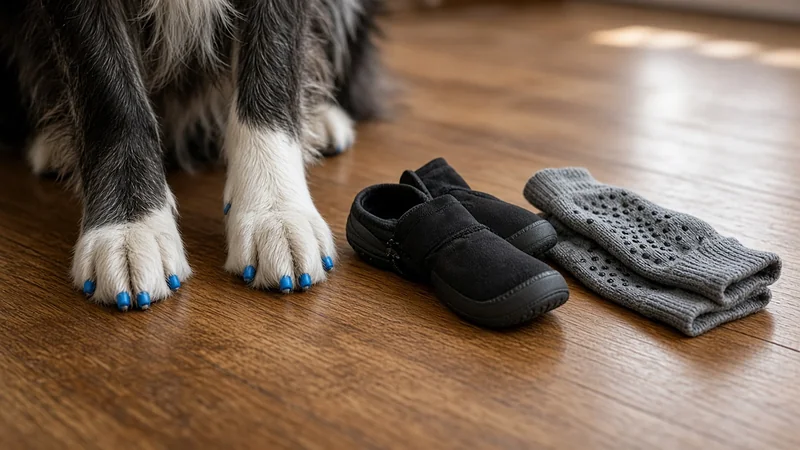
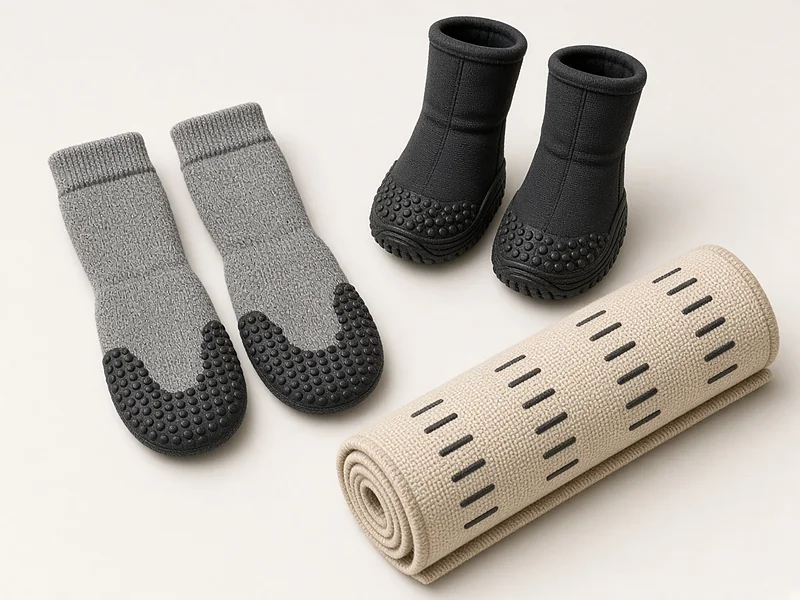
Dog socks with rubber dots are the cheapest and gentlest option, and many dogs accept them more readily than boots. Their known problem is rotation: as the dog walks, the sock twists so the dots end up on top of the paw, and it can slide down. Socks that strap together over the back stay on better. They also cover the pads, so the dog feels the floor less.
Best for: short supervised periods, dogs that will not let you touch their nails, or as a first experiment. The Today's Veterinary Practice specialist also mentions using a light infant sock under a boot to reduce sweating and help it stay on.
Non-slip dog grip socks (various brands)
Cotton socks with rubber dots
Pros
- Cheapest traction fix
- Soft and easy to try
Cons
- Twist and slide down so the grip ends up on top
- Rubber dots wear quickly
Which should you try first?
- Rugs and runners along your dog's usual routes, and a rug where it gets up from bed. Nothing to wear. See our floor guide.
- Short nails and trimmed paw fur. Ask your groomer or vet if nails are hard to cut.
- Nail grips if your dog still slips and will tolerate a fitting session.
- Grip socks for short spells if nail grips do not suit.
- Boots for outdoor walks on ice, salt or rough ground.
If your dog's legs are weak rather than just slipping, a harness may help more; see our Help 'Em Up vs GingerLead comparison. Browse all floors and traction guides.
Indoors, rugs usually come first: see non-slip runner rugs for dogs on hardwood.
Considering toe grips? Our Dr. Buzby's ToeGrips review covers sizing, fitting and how long they last.
Related reading: our guides to dog boots for slippery floors and grip socks that stay on.
FAQ
Do toe grips work for senior dogs?
Many owners and some vets find they help on smooth floors, and they leave the pads free. Formal evidence is limited, and they need correct sizing and occasional replacement.
Can my dog wear boots indoors all day?
Not recommended. A veterinary rehab specialist advised no more than 1–2 hours with monitoring, because of sweating and fit.
Why do dog grip socks keep twisting?
Fabric rotates around the paw as the dog walks. Choose socks that fasten securely or connect over the back, and check them often.
What is cheaper than toe grips?
Trimming nails and paw fur and putting down rubber-backed rugs. These help almost every dog and should come first.
Prices change often, so we do not list them. Check the current price on Amazon.
Sources
- Today's Veterinary Practice, Ask a Specialist: Sports Medicine and Physical Rehabilitation.
- Dr. Buzby's ToeGrips, Traction Socks vs ToeGrips.
- PetRehabNetwork, Dog Knuckling Boots vs Toe Grips vs Socks (evidence summary).
- Ruffwear, Grip Trex Dog Boots (features and sizing chart).
- VCA Animal Hospitals, Creating a Comfortable Home for Your Mobility Compromised Dog.
- ToeGrips, Pawz and Grip Trex listings on Amazon (checked November 2026).