As an Amazon Associate, SturdyPaws earns from qualifying purchases. This article contains affiliate links; buying through them costs you nothing extra. Read our affiliate disclosure.
The PetSafe CareLift is one of the best-known full-body lift harnesses for dogs. It's the harness many vets and owners reach for when a dog needs help at both ends: into the car, up the stairs, or just up off the floor in the morning. We compared it with the Help 'Em Up in our full-body lift harness guide. This review goes deeper on the CareLift alone: what each part does, how to choose a size, how to put it on without a fight, how to clean it, and what owners and reviewers say goes wrong.
It's research-based. We used PetSafe's product page and size chart, the Amazon listing, and an independent review on Able Paws written by a veterinarian. We haven't used a CareLift on our own dog, so treat the fitting advice as a starting point, and follow PetSafe's instructions.
Key takeaways
- Two sections, used together or alone. A front chest piece and a rear hip piece, each with a handle, joined by a lifting leash.
- Sized by weight, waist and chest. PetSafe's chart: S 7–35 lb, M 35–70 lb, L 70–130 lb. Measure, don't guess.
- Best for lifts and short trips. It's built for assisted lifting, not all-day wear.
- Male shield is removable. Check it doesn't press on the dog when urinating.
- Expect a learning curve. Reviewers say it's tricky to put on at first and leg straps can loosen.
What's in the box
According to PetSafe, the CareLift has:
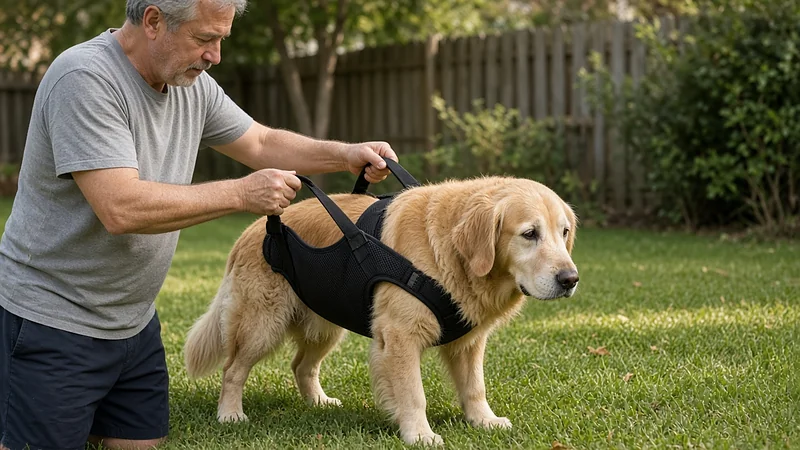
- A front harness that wraps the chest and shoulders, with a handle on top.
- A rear harness that wraps the hips and hind legs, with its own handle.
- A lifting leash that links the two and can be held in one hand to lift both ends at once.
- A shoulder strap on the Medium and Large sizes, so you can take some weight on your shoulder instead of your arms and back.
- A removable male shield on the underside of the rear section.
- Breathable, machine-washable mesh lining.
The Able Paws review adds detail on materials: mainly nylon, with padding and a mesh liner on the inside, and rubber-covered handles for grip. The reviewer liked the padding and even support across the body and judged it suited to longer-term conditions, compared with a simple sling.
Sizing: use all three measurements
PetSafe's chart sizes the CareLift by weight and by chest and waist girth:
| Size | Weight (PetSafe chart) | Typical dogs |
|---|---|---|
| Small | 7–35 lb | Beagles, small spaniels, corgis |
| Medium | 35–70 lb | Border collies, pit bull types, smaller labs |
| Large | 70–130 lb | Labs, shepherds, goldens, larger breeds |
Weight alone can mislead. A deep-chested greyhound and a stocky bulldog of the same weight have very different shapes. Measure the chest around its widest point behind the front legs, and the waist just in front of the back legs, and check both against PetSafe's girth ranges on its product page. If one measurement falls in a different size from the weight, go by the girths, and contact PetSafe if you're unsure. Very thin senior dogs that have lost muscle often fit better by girth in a smaller size than their frame suggests.
The listing we link
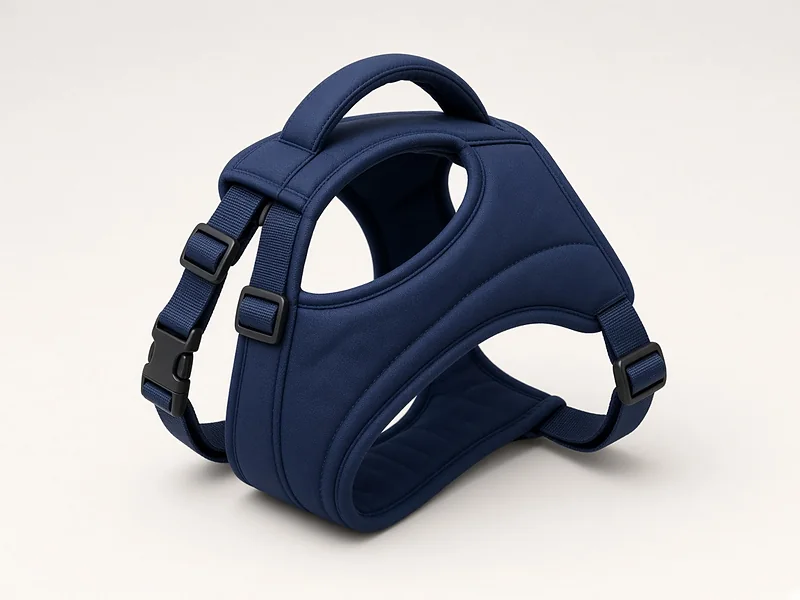
PetSafe CareLift Full Body Support Harness
Front and rear sections with handles plus a lifting leash; shoulder strap on M and L; removable shield for male dogs; machine washable mesh. PetSafe chart: S 7–35 lb, M 35–70 lb, L 70–130 lb, also sized by waist and chest girth. Linked listing is Large (a Medium listing is linked in the text)
Pros
- Supports front and back at the same time
- Front or rear section can be used alone, per the maker
- Shoulder strap takes load off your back on M and L
Cons
- Bulkier to put on than a rear sling
- Sized by weight, waist and chest, so measure all three
- Meant for assisted lifting, not long all-day wear
The card above links the Large. For dogs of about 35–70 lb, the Medium is a separate listing: PetSafe CareLift Full Body, Medium. If your dog only needs help at the back, PetSafe also sells a rear-only CareLift, covered in our rear support harness guide.
How to put it on
Reviewers agree the first few fittings take time. The Able Paws reviewer found the instructions not the easiest to follow, though it got simpler with practice. Do the first fitting when the dog is calm, with treats and a helper.
- Lay out both pieces and identify front and rear, top and bottom. Loosen all straps.
- Front section first. Slip it over the head or wrap it around the chest, depending on the design, and close the straps behind the front legs. The handle should sit on top of the shoulders.
- Rear section next. Bring it under the belly in front of the back legs, then fit the leg loops around each hind leg. The handle should sit above the hips.
- Check the male shield. On male dogs, make sure the shield sits clear of the penis so the dog can urinate freely. Remove it for female dogs, as PetSafe intends.
- Snug, not tight. You should get two fingers under each strap. Loose straps let the harness shift during a lift.
- Clip on the lifting leash between front and rear when you need both ends at once, and adjust the shoulder strap on M and L.
Using the front or rear alone
A big strength of the CareLift is that the two halves work separately. PetSafe says the front or rear section can be used on its own. That means one purchase can follow a dog through changing needs:
- Rear only for a dog whose hind legs are weak but whose front end is fine, for walks and stairs.
- Front only for front-leg problems or after elbow or shoulder surgery, if your vet advises.
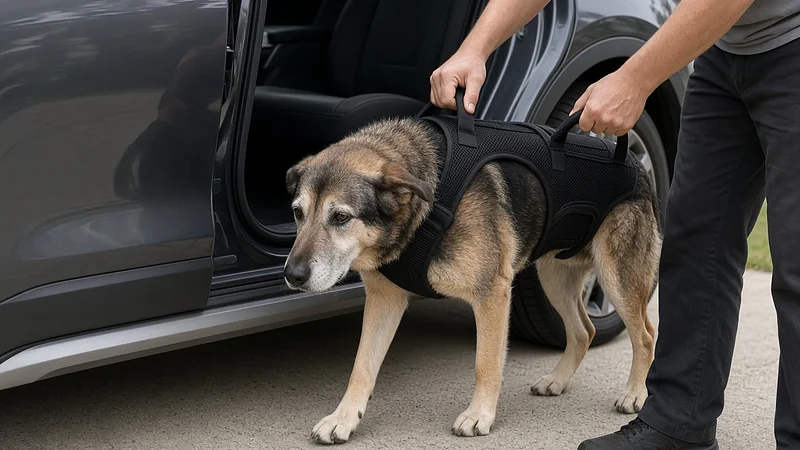
- Both for car loading, stairs, and dogs that need lifting from lying down.
CareLift vs a towel or simple sling
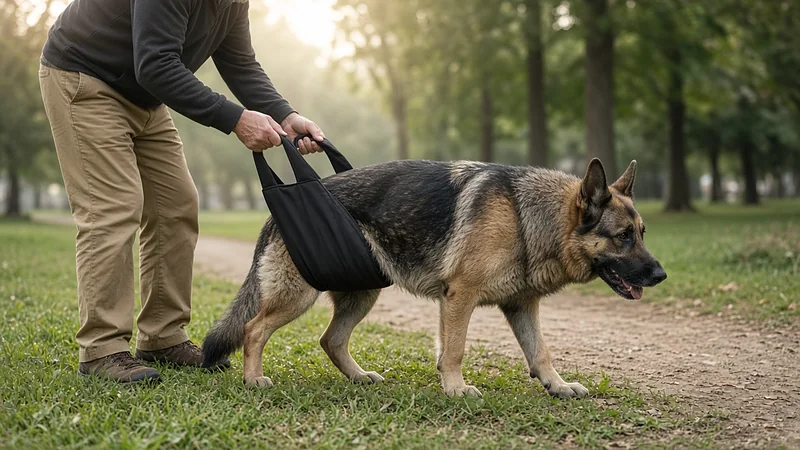
Many owners start with a bath towel looped under the belly. It works for a day or two, but it slides, it bunches against the groin, and it gives you nothing to hold at the front. A basic padded sling is a step up for short-term rear support, such as the first days after surgery. The Able Paws reviewer made the same distinction: a simple sling suits small dogs and temporary use, while the CareLift makes more sense for a dog with a long-term condition. The difference is control. With two fitted sections and fixed handles, the load spreads across the chest, belly and hips, and the harness stays put while the dog moves. That matters most on stairs and at the car door, where a sling that slips can drop a dog's back end at the worst moment.
Lifting technique
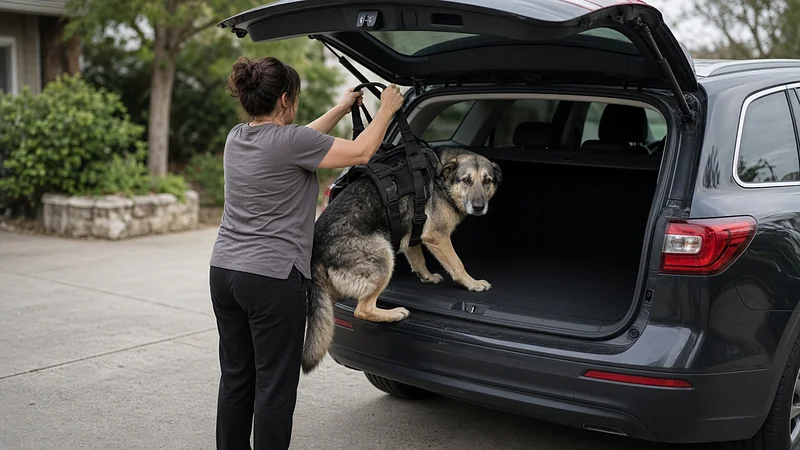
Bend your knees, keep the dog close and lift with your legs. For car loading, lift the front feet onto the seat or floor first, then lift the rear; our car lift harness guide walks through it. For heavier dogs, use the shoulder strap, and consider a ramp so the harness only steadies rather than lifts.
Common complaints
The Able Paws reviewer listed two downsides: the leg straps tend to come undone, and the harness can be tricky to put on. It also mentioned an owner whose male dog found the shield too tight, causing him to wet himself, and suggested testing it on your own dog. We'd add the common trade-offs of any full-body design:
- It's bulkier than a simple sling and takes longer to fit.
- Fit depends on correct sizing across three measurements.
- It isn't designed to be worn all day. Take it off for rest, and check for rubbing.
If you want a harness that stays on all day, the Help 'Em Up is designed for that, as we covered in our Help 'Em Up review. If only the back end needs support, the Walkabout is simpler.
Cleaning and care
PetSafe describes the mesh as machine washable. Separate the sections, close the buckles and hook-and-loop strips so they don't snag, and wash on a gentle cycle. Air-dry fully before refitting, because damp padding against the skin can cause irritation. Check stitching, buckles and handles each time. A harness that's used to lift a dog has to be in good condition.
For incontinent dogs, wipe the rear section after each use and wash it more often. A waterproof bed helps too; see our waterproof bed guide.
Who the CareLift suits
| Dog | CareLift a good fit? |
|---|---|
| Weak at both ends, medium or large | Yes, its main purpose |
| Needs lifting into a car | Yes, with both sections |
| Back end only, walks alone | Rear section or a simpler rear harness |
| Needs a harness on all day | Consider the Help 'Em Up |
| Recent spinal injury | Only with your vet's guidance |
Verdict
From its specs and the independent review, the CareLift is a solid, well-padded choice for a medium to large dog that needs help at both ends, especially for car trips and stairs. Its modular design is a real plus. Budget time for the first fittings, check the leg straps on each use, and test the male shield. If your dog needs all-day wear or only rear support, there are simpler options.
FAQ
What size CareLift do I need?
PetSafe's chart lists Small 7–35 lb, Medium 35–70 lb and Large 70–130 lb, along with chest and waist girths. Check all three.
Can I use only the back part of the CareLift?
Yes. PetSafe says the front or rear section can be used alone.
Can my dog wear the CareLift all day?
It's designed for assisted lifting. Take it off between uses so the skin can breathe and to check for rubbing.
Is it suitable for female dogs?
Yes. The male shield is removable for female dogs.
Is the CareLift washable?
PetSafe describes the mesh as machine washable. Air-dry it before use.
Prices change often, so we do not list them. Check the current price on Amazon.
Sources
- PetSafe, CareLift Support Harness (features and size chart).
- Able Paws, PetSafe CareLift Support Harness review.
- Product specifications from the linked Amazon listings, checked 2 November 2026.