As an Amazon Associate, SturdyPaws earns from qualifying purchases. This article contains affiliate links; buying through them costs you nothing extra. Read our affiliate disclosure.
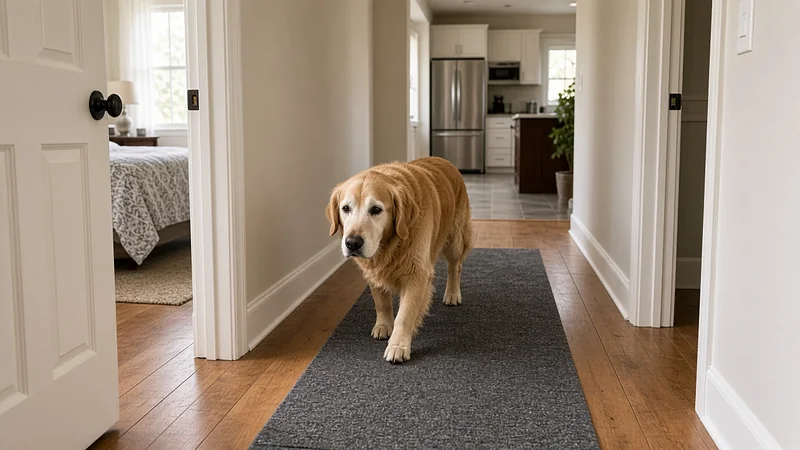
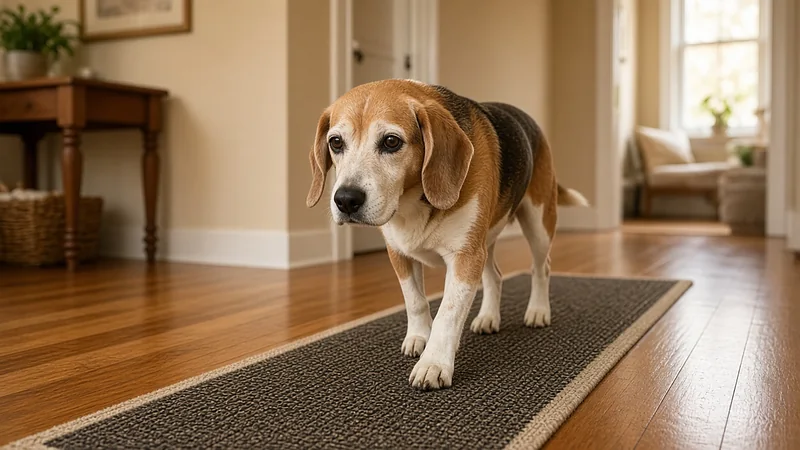
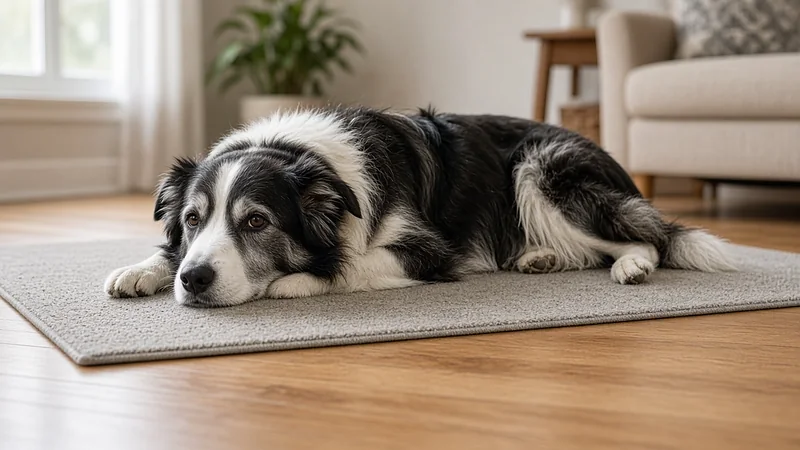
When an older dog starts sliding on hardwood, laminate or tile, the most reliable fix is to cover the floor. Vets suggest it, rehabilitation therapists suggest it and surgeons put it in their discharge sheets. The question most owners then face is what to cover it with: interlocking foam tiles of the kind sold for home gyms and play rooms, or ordinary rugs and runners with a rubber back.
Both work. They suit different rooms, different dogs and different budgets, and each has drawbacks that only show up after a few weeks of use. This guide compares them point by point and suggests where to use each. It draws on guidance from VCA Animal Hospitals and a veterinary practice's post-surgery home care booklet. We have not tested these products on our own dogs.
Key takeaways
- Both are vet-suggested options. VCA mentions foam floor tiles and yoga mats alongside rugs and runners.
- Foam tiles win for cushioning and for covering a whole area. Think pens, recovery rooms and the spot by the bed.
- Rugs win for hallways, looks and dogs that chew. A rubber-backed runner is tidier for long routes.
- Edges are the weak point of both. Curled rug corners and lifting tile edges are trip hazards.
- Measure the routes your dog actually uses. Cover those first, not the whole house.
Why covering the floor matters
VCA's guide to creating a comfortable home for a mobility-compromised dog explains that dogs who feel unsteady on hard floors walk cautiously, with short strides and a hunched back. That posture leads to stiffness and less movement, which leads to weaker muscles, and the cycle continues. Its first recommendation is non-slip rugs or runners in the areas where the dog spends most time. VCA's osteoarthritis guidance goes further, suggesting yoga mats or foam floor tiles as options for slick floors, along with baby gates to keep the dog out of rooms you cannot cover.
Post-surgery advice is similar. Crestwood Veterinary Centre's TPLO home recovery booklet recommends throw rugs with rubber backing or yoga mats on hardwood, tile and linoleum to make it easier for a dog to walk around while recovering.
So the choice is not whether either material is acceptable. It is which one suits each part of your home.
Interlocking foam tiles: what they are
These are the square EVA foam tiles sold as exercise puzzle mats, usually about two feet square and half an inch thick, that join with jigsaw edges. You can cover a precise area, take a damaged tile out and replace it, and pack the whole floor away when you no longer need it.
ProsourceFit Exercise Puzzle Mat (1/2 in, 6 tiles)
Six 24 x 24 x 1/2 in interlocking EVA foam tiles with end borders, 24 sq ft total; water-resistant; phthalate-free per listing; clean with warm water and dish soap
Pros
- Covers a whole pen or bed area with no gaps
- Half-inch foam adds cushioning
- Single tiles lift out for cleaning
Cons
- Some dogs chew foam edges
- Liquid can seep through joins
- Foam may dent under heavy objects (per listing)
Strengths
- Coverage. You can carpet an entire pen, a recovery room or the area around a dog bed edge to edge, with no gaps.
- Cushioning. Half an inch of foam is noticeably softer to lie on and to land on than a thin rug. That helps dogs who flop down rather than lower themselves.
- Grip. The textured surface gives a dog's pads and nails something to push against.
- Easy cleaning. The ProsourceFit listing recommends warm water and dish soap with a soft cloth and air drying. Single soiled tiles can be lifted out and washed in the sink or shower.
- Modular. Buy one pack, then add more as you learn where your dog goes.
Weaknesses
- Chewing. EVA foam is soft and some dogs chew the edges. Puppies and anxious dogs are the main culprits, but bored dogs on crate rest can start too. Remove any tile a dog has started chewing, because swallowed foam can cause a blockage.
- Urine can seep into the joins. Liquid gets between tiles and onto the floor underneath. For incontinent dogs, lift and clean underneath regularly, or use a washable rug instead.
- Edges and borders. Unfinished jigsaw edges catch toes. Use the edge strips that come with most packs, and keep tile areas away from places your dog turns sharply.
- Looks. Gym tiles in a living room are a practical choice rather than a decorative one.
- Compression. The listing notes that foam may compress slightly under heavy objects. Under a heavy dog bed, expect some dents over time.
- Smell when new. New EVA foam can smell for a few days. Air the tiles out before laying them in a small room.
Rubber-backed rugs and runners: what they are
Low-pile rugs with a rubber or latex backing that grips a hard floor. Runners are long, narrow versions for hallways. Many are sold by the foot so you can cut a length to fit.
Kapaqua Rubber-Backed Custom-Length Runner Rug
22 in wide (other widths in the menu), custom length, 1/4 in low loop pile, rubber backing for hardwood, laminate, vinyl and tile; hand wash only per the current listing
Pros
- Cut to the exact length of your hallway or route, so there are fewer gaps
- Low 1/4 in pile is easy for dragging feet
- Rubber backing made for bare hard floors
Cons
- Not for use on carpet
- Current listing says hand wash only
- 22 in is narrow for a large dog that splays; check wider options
Strengths
- Long routes. A single runner covers a hallway with no joins, which is ideal for the path from the bed to the back door.
- Appearance. Rugs look like normal furnishings, so you are more likely to keep them in place for the long term.
- Chew resistance. A low loop pile is less tempting to chew than soft foam.
- Grip on the dog side. Low pile gives pads and nails purchase without being deep enough to trip a dog that drags its feet.
Weaknesses
- Little cushioning. A thin rug barely softens the floor. It is a traction aid, not a bed.
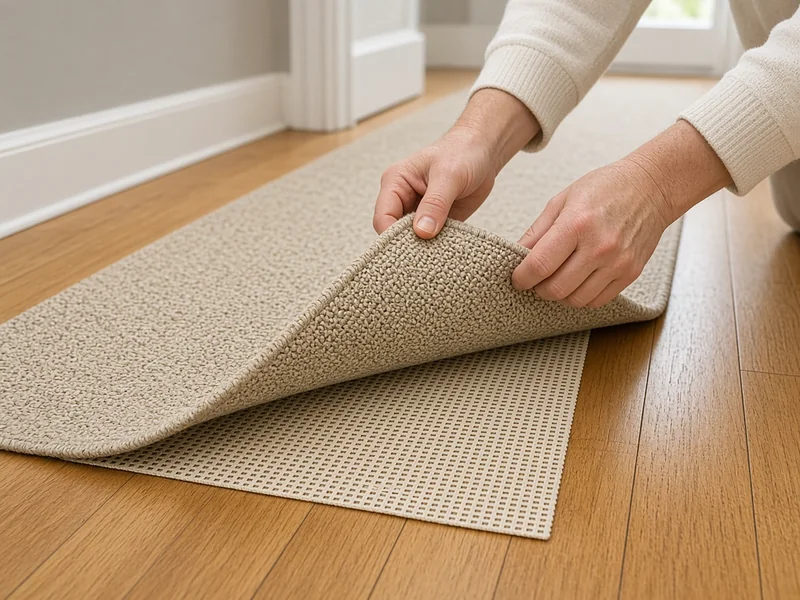
- Edges curl and rugs creep. Over time, a rug can shift or curl at the corners, especially when a dog scrambles. A rug pad underneath helps hold it.
- Cleaning limits. Check the care label. The Kapaqua runner listing we checked today says hand wash only. Machine-washable rugs are easier for dogs with accidents.
- Shag and deep pile are a trap. They catch weak or dragging feet. Stick to low, flat pile.
Gorilla Grip Slip-Resistant Rug Pad
Non-adhesive open-grid pad, dual-sided grip, trim with scissors; 2x8 ft size and others
Pros
- Makes rugs you already own stay put
- Trims to fit any runner
- Open grid lets floors breathe
Cons
- Adds no traction on its own; it goes under a rug
- Check your floor maker’s guidance on pads
Head to head
| Product | Key specs | Link |
|---|---|---|
| ProsourceFit Exercise Puzzle Mat (1/2 in, 6 tiles) | Six 24 x 24 x 1/2 in interlocking EVA foam tiles with end borders, 24 sq ft total; water-resistant; phthalate-free per listing; clean with warm water and dish soap | Check price on Amazon (opens in a new tab) |
| Kapaqua Rubber-Backed Custom-Length Runner Rug | 22 in wide (other widths in the menu), custom length, 1/4 in low loop pile, rubber backing for hardwood, laminate, vinyl and tile; hand wash only per the current listing | Check price on Amazon (opens in a new tab) |
| Gorilla Grip Slip-Resistant Rug Pad | Non-adhesive open-grid pad, dual-sided grip, trim with scissors; 2x8 ft size and others | Check price on Amazon (opens in a new tab) |
Specs are from manufacturer and retailer listings and can change between versions; check the listing before you buy. We don't show prices because they change often; the button shows the current price on Amazon.
Grip
Both give a dog far more traction than bare hardwood, laminate or tile. A securely laid rug with a pad underneath is about as stable as foam tiles. The difference is in how the covering itself holds the floor: tiles interlock and spread across a large area, while a rug relies on its backing and any pad underneath.
Comfort
Foam tiles are clearly softer. That matters where your dog lies down, gets up or might stumble. It matters less in a hallway the dog walks along.
Hygiene
For occasional accidents, both are manageable. For a dog with regular urine leakage, a machine-washable rug, or foam tiles that you lift and clean under every few days, are the realistic options. Our guide to waterproof beds for incontinent dogs covers the sleeping area.
Safety
For both, the edges are the risk. Tape or pad rug edges and use tile borders. Make sure no covering ends at the top of a stair or right where the dog turns.
Cost and flexibility
Tiles are cheap per square foot for large areas and easy to rearrange. Runners are more cost-effective for long, narrow routes. Prices change often, so check current listings.
Where to use which
- Hallways and routes to the door: rubber-backed runner, with a rug pad.
- Around the dog's bed: foam tiles, so getting up and lying down happens on a cushioned, grippy surface.
- Inside a recovery pen: foam tiles cut to fit the pen footprint, or a washable rug if the dog chews.
- Kitchen and feeding area: a washable rug or a small rubber mat. Foam joins collect spilled water and food.
- Bottom of the stairs: a rug that sits flat, not tiles that might shift when the dog lands.
- Rooms you cannot cover: close them off with a baby gate, as VCA suggests.
Laying them so they stay put
- Clean and dry the floor first. Dust stops rubber backing from gripping.
- Lay foam tiles from a wall outwards, so the cut edges end against something solid.
- Fit the edge strips on any open side. Bevelled edges are easier for a dragging paw.
- Put a non-adhesive rug pad under every rug on a hard floor. Trim it an inch smaller than the rug so it does not show.
- Walk the route yourself in socks. If you slide or catch your toes, so will your dog.
- Check weekly for lifting corners, chewed edges and damp underneath.
Do not forget the dog's feet
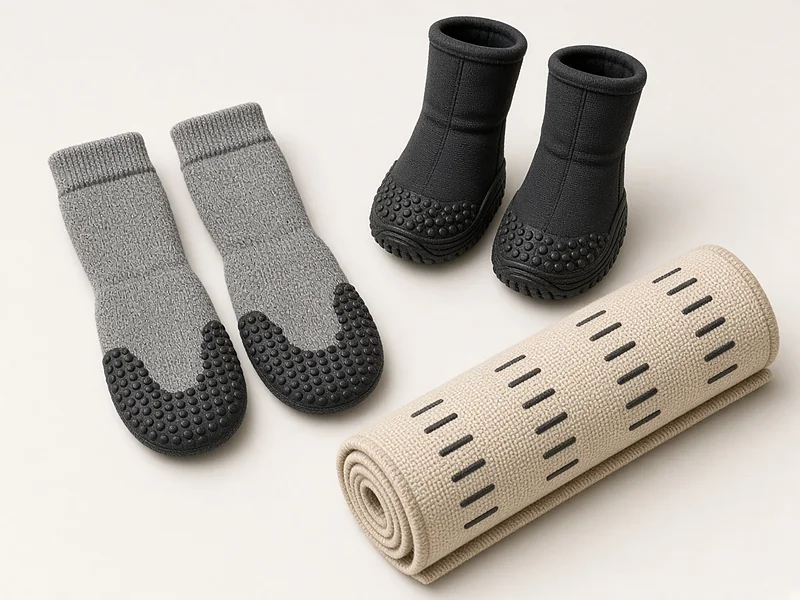
Floor coverings work best together with the basics VCA lists: nails kept short and fur between the toes trimmed. If your dog still slips on the bits you cannot cover, paw-level aids such as toe grips, grip socks or rubber boots can help. Our comparison of toe grips, boots and socks and our look at paw wax versus traction products explain the options.
Common mistakes
Covering the middle of a room but leaving a gap at the doorway, which is exactly where the dog turns. Using a thick shag rug for a dog that drags its back feet. Leaving a chewed foam tile in place. Laying rugs on a hard floor without a pad. And forgetting the route outside, which is usually the one the dog walks most often.
To keep a less active dog busy, try our low-impact enrichment ideas.
FAQ
Are foam mats good for dogs who slip?
Yes. VCA lists foam floor tiles and yoga mats among options for dogs on slick floors. They add grip and cushioning. Watch for chewing.
Are rugs or foam tiles better for a senior dog with arthritis?
Use foam tiles where the dog lies down and gets up, and runners along walking routes. Many homes benefit from both.
Can dogs chew interlocking foam mats?
Some do. Remove damaged tiles promptly, because swallowed foam can cause a blockage. Choose a low-pile rug for dogs that chew.
How do I stop rugs sliding on hardwood?
Use a rubber-backed rug and a non-adhesive grip pad underneath, and clean the floor first so the backing can grip.
Are foam mats OK for incontinent dogs?
Urine can get into the joins and onto the floor below. Lift and clean underneath often, or use machine-washable rugs in that area.
Prices change often, so we do not list them. Check the current price on Amazon.
Sources
- VCA Animal Hospitals, Creating a comfortable home for your mobility-compromised dog.
- VCA Animal Hospitals, Helping your dog with osteoarthritis.
- Crestwood Veterinary Centre, TPLO Home Recovery Program (PDF).
- Product specifications from the linked Amazon listings, checked 2 November 2026.