As an Amazon Associate, SturdyPaws earns from qualifying purchases. This article contains affiliate links; buying through them costs you nothing extra. Read our affiliate disclosure.
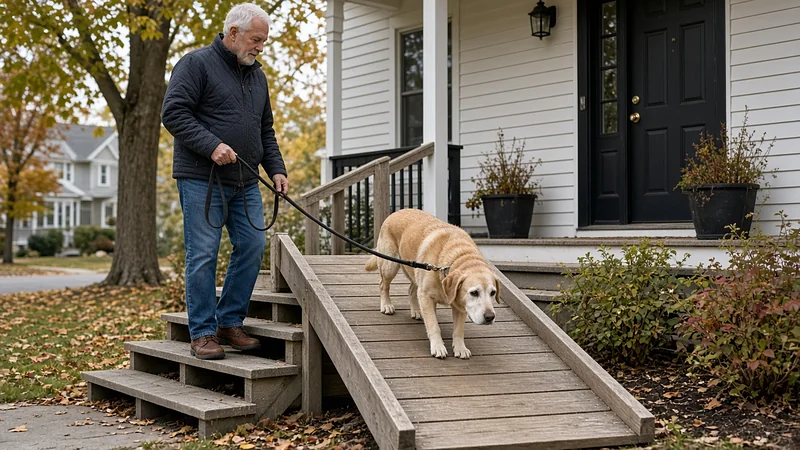
For many older dogs the hardest part of the day is not the walk. It is the three steps off the back deck to reach the yard, and the same three steps back up when the dog is tired. Outdoor steps are often steep, narrow, wet and without a rail on the dog's side. A dog with arthritis, weak hind legs or failing eyesight can slip or misjudge a tread, and a fall on wood or concrete hurts.
A ramp over porch or deck steps is one of the most useful changes you can make for a senior dog. This guide shows how to measure your steps, how long a ramp must be to keep the slope gentle, and which long ramps on Amazon have the length, width and traction for the job. It is research-based: we used maker and listing specifications plus veterinary advice on home changes. We have not tested these ramps on our own porch.
Key takeaways
- Measure total rise, not step count. Ground to top landing decides the ramp length.
- Two or three steps is realistic. Above about 28 in of rise, most portable ramps get steep.
- Most portable ramps are sold for cars. They can work on steps, but makers do not specifically rate them for that, so secure the top and check stability yourself.
- Outdoors, traction rules. Grit or rubber surfaces cope with rain better than carpet.
- Five or more steps? Look at a built ramp with a landing, or gate the steps and use another exit.
Why outdoor steps are harder than indoor stairs
VCA Animal Hospitals, writing about homes for mobility-compromised dogs, singles out outdoor stairs: make them non-slip, or replace them with a sturdy ramp that has good traction and sides. That is exactly where the risk is. Indoor stairs are usually carpeted and enclosed by walls. Porch and deck steps are open at the sides, are often painted or weathered wood that turns slick when wet, and may have open risers a paw can slip through. Many also have a tall first step down onto grass or a paver that has sunk over the years.
Seniors also use these steps at the worst times: first thing in the morning when joints are stiffest, in the dark for a late toilet trip, and in rain or frost. A dog that hesitates at the top, takes the steps one at a time, or jumps the last two is telling you the steps have become hard.
Step 1: Measure the total rise
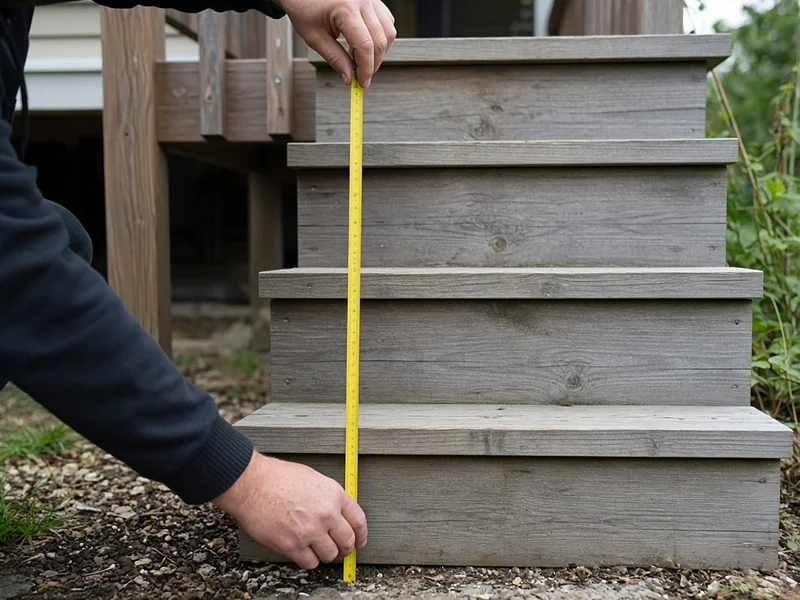
Put a tape on the ground where the ramp foot will sit and measure straight up to the surface of the top landing or deck. That number is the rise. Do not count steps and guess: outdoor steps vary a lot, and the ground at the bottom is rarely level. Then measure the run available: the flat distance from the edge of the top step out into the yard or path, where nothing is in the way. A long ramp needs room at the bottom for the dog to step off straight, not into a flower bed.
Also check the width of the steps and whether there is a handrail post or a door swing at the top. A ramp needs a firm, flat edge to rest on, and ideally a little landing space so the dog is not stepping off the ramp straight into a closed door.
Step 2: Match ramp length to rise
The slope depends only on the rise and the ramp length. Using a typical step height of about 7 in, this table shows the angle for common ramp lengths, worked out with basic trigonometry:
| Rise (about) | 62 in ramp | 72 in ramp | 87 in ramp |
|---|---|---|---|
| 14 in (2 steps) | 13° | 11° | 9° |
| 21 in (3 steps) | 20° | 17° | 14° |
| 28 in (4 steps) | 27° | 23° | 19° |
| 35 in (5 steps) | 34° | 29° | 24° |
There is no official safe angle for dogs, but gentler is easier for sore joints, and dogs tend to accept a ramp in the teens far more readily than one approaching 30°. For two or three steps, a 6 ft ramp works well. For four steps you want the longest ramp you can fit. At five steps and above, even an 87 in ramp is getting steep, and a portable ramp starts to feel like a compromise.
Step 3: Decide portable or built
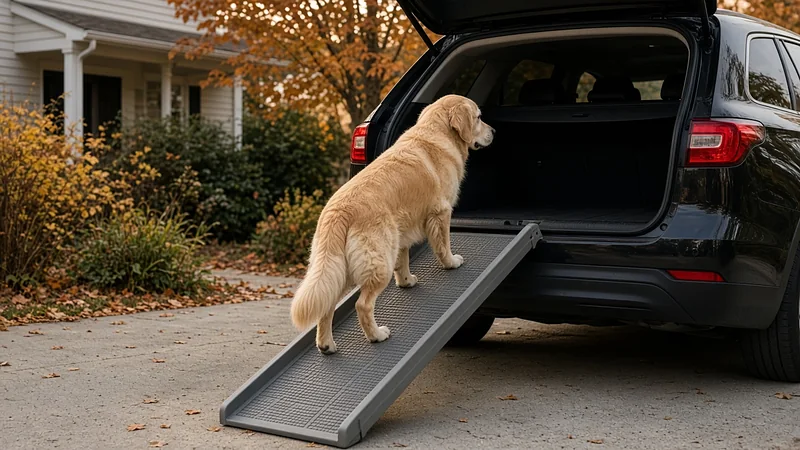
Portable ramps are what this guide covers. They are sold mostly for getting dogs into cars, but their length, rails and grip make them a common choice for a few outdoor steps. They are quick to set up, can be moved to the car when needed, and need no building work. The trade-offs: they need a secure top edge, they are narrower than a built ramp, and you may want to bring them in out of the weather.
Built ramps are framed in timber or aluminum and fixed in place, sometimes with a landing halfway. They suit tall decks, very large dogs, or a household that also needs step-free access for people. They cost more and may need a contractor, but they can be as wide and gentle as you have room for.
An honest note: none of the makers below markets these ramps specifically for porch steps. They are rated for vehicles. Our suggestions are based on their stated length, width, surface and weight limits. Make sure the top edge sits fully on a flat surface and cannot slide, and test it with your own weight on the middle before the dog uses it.
Porch-length ramps compared
| Product | Key specs | Link |
|---|---|---|
| PetSafe Happy Ride Extra Long Telescoping Dog Ramp | 47–87 in long, 20 in wide, aluminum, 18 lb, rated to 300 lb | Check price on Amazon (opens in a new tab) |
| Gen7Pets Natural Step Ramp (72 in) | 72 x 16 in, poly-grass tread, 17 lb, folds to 36 x 16 x 3 in, rated 250 lb | Check price on Amazon (opens in a new tab) |
| Pet Gear Tri-Fold Pet Ramp with SupertraX | Tri-fold, about 71 in, soft rubber-like SupertraX surface | Check price on Amazon (opens in a new tab) |
| PetSafe Happy Ride Deluxe Telescoping Dog Ramp | 39–72 in long (99–183 cm), aluminum, rated up to 400 lb per PetSafe | Check price on Amazon (opens in a new tab) |
| PetSafe Happy Ride Folding Dog Ramp | Bi-fold plastic ramp, 62 x 16 in, about 10 lb, rated to 150 lb per PetSafe | Check price on Amazon (opens in a new tab) |
Specs are from manufacturer and retailer listings and can change between versions; check the listing before you buy. We don't show prices because they change often; the button shows the current price on Amazon.
The picks
Longest and widest for big dogs and four steps: PetSafe Happy Ride Extra Long Telescoping Ramp
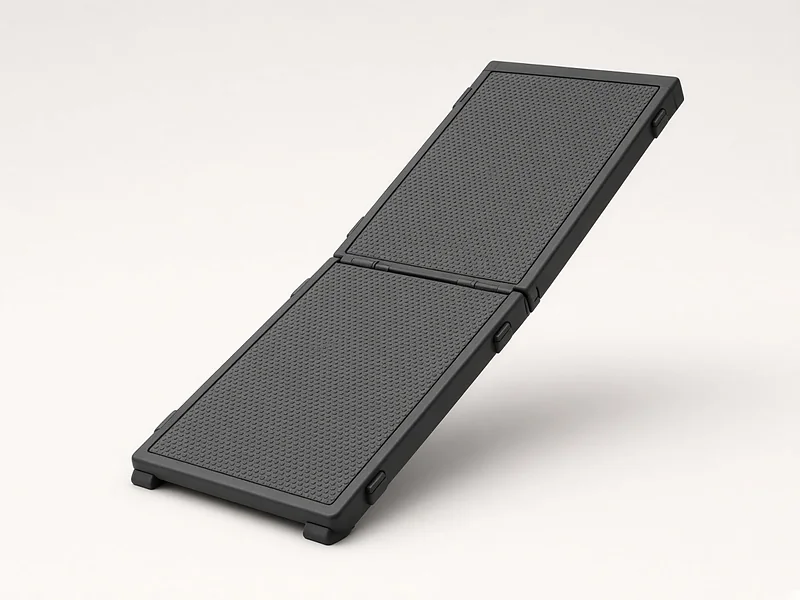
PetSafe Happy Ride Extra Long Telescoping Dog Ramp
47–87 in long, 20 in wide, aluminum, 18 lb, rated to 300 lb
Pros
- Longest common telescoping ramp: 87 in gives a gentler angle into tall SUVs and trucks
- 20 in walking width suits big or unsteady dogs
- Light for its length (18 lb)
Cons
- Long and bulky to stow in smaller cargo areas
- Pricier than folding ramps
- Some dogs need time to trust any ramp surface
The telescoping Happy Ride extends from 47 to 87 in and is 20 in wide, with a stated capacity of 300 lb. On the steps it has two useful traits. The length can be set to suit the rise and the run you have, and at full length it brings four steps down to about 19°. The width gives a large, unsteady dog more room for foot placement than a 16 in ramp. It is heavier and bulkier than a folding ramp, so it suits a setup that mostly stays in place.
Best for: large dogs, four steps, owners who want the gentlest slope a portable ramp can give.
Best grip for wet weather: Gen7Pets Natural Step ramp
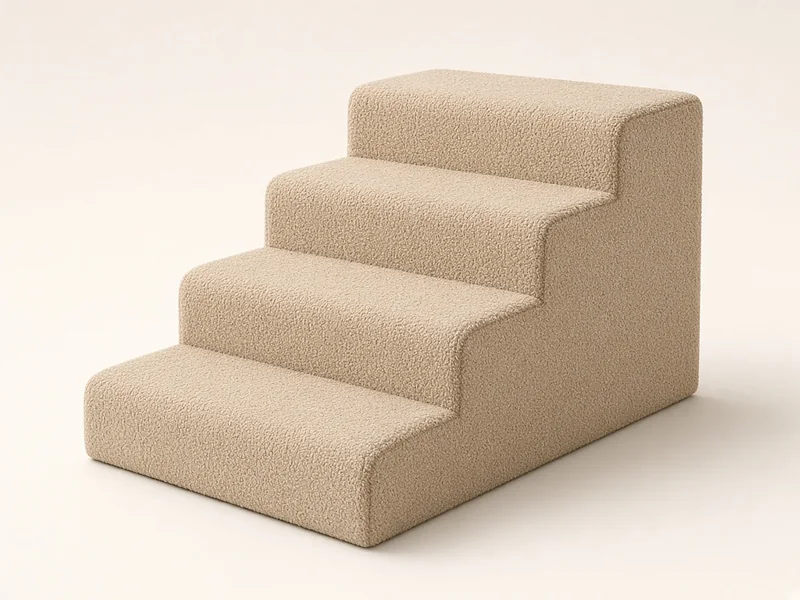
Gen7Pets Natural Step Ramp (72 in)
72 x 16 in, poly-grass tread, 17 lb, folds to 36 x 16 x 3 in, rated 250 lb
Pros
- Grass-like tread many owners find grippier than sandpaper strips
- Folds in half for storage
- Rubber grippers and a safety tether
Cons
- 16 in path is narrower than the PetSafe XL
- 72 in is steep for very tall trucks
The Gen7Pets ramp is 72 in long and 16 in wide with a 250 lb rating. Its surface is a rubber-like tread rather than sandpaper grit or carpet, which is gentler on paw pads and drains well. For two or three steps it gives 11° to 17°. It folds in half, so you can bring it inside between uses or move it to the car.
Best for: medium and large dogs on two or three steps, sensitive paws, rainy climates.
Long tri-fold ramp: Pet Gear tri-fold ramp
Pet Gear Tri-Fold Pet Ramp with SupertraX
Tri-fold, about 71 in, soft rubber-like SupertraX surface
Pros
- Soft, cushioned tread that does not feel like sandpaper
- Folds into a compact bundle
Cons
- Tri-fold hinges add weight
- Check the weight rating for giant breeds
At about 71 in, Pet Gear's tri-fold ramp gives a slope close to the Gen7Pets for the same rise and folds into three to store compactly. Check the listing for the surface and weight rating of the size you buy. A tri-fold has two hinges, so check both for play before each season.
Best for: owners who need the ramp to pack small, on two or three steps.
Heavy-duty mid-length: PetSafe Happy Ride Deluxe Telescoping Ramp
PetSafe Happy Ride Deluxe Telescoping Dog Ramp
39–72 in long (99–183 cm), aluminum, rated up to 400 lb per PetSafe
Pros
- Telescopes to suit both sedans and mid-height SUVs
- Very high weight rating
- Side rails
Cons
- At 72 in it is steeper than the XL into tall vehicles
- Heavier than folding plastic ramps
The Deluxe telescopes from 39 to 72 in and is rated to 400 lb, the highest weight rating here. At full length it matches the Gen7Pets on slope. Its strength makes it a good fit for a very heavy dog on a short run of steps.
Best for: very heavy dogs, two or three steps, sturdy feel.
Light and simple for small dogs and two steps: PetSafe Happy Ride Folding Ramp
PetSafe Happy Ride Folding Dog Ramp
Bi-fold plastic ramp, 62 x 16 in, about 10 lb, rated to 150 lb per PetSafe
Pros
- Cheapest of the well-known brand ramps
- Easy to carry and fold
Cons
- Shorter length means a steeper angle
- Less suitable for heavy dogs than aluminum telescoping ramps
The folding Happy Ride is 62 x 16 in and rated to 150 lb. It is the lightest and shortest option here. It is fine for one or two low steps, about 13° at 14 in, but too steep for most seniors beyond that.
Best for: small or medium dogs on one or two steps.
Making a ramp safe outdoors
- Secure the top. The top lip should sit flat on the landing or top tread, not on the step nosing. If it can shift, add a rubber mat under it or ask a handy person to fit a simple stop block.
- Level the foot. Put the bottom on a paver or flat board, not soft grass that sinks after rain.
- Close the sides. If the ramp has no rails, walk on the open side with the dog on a leash or harness at first.
- Keep it clean. Leaves, moss and frost reduce grip. Sweep and dry it in wet seasons.
- Light it. A motion light by the steps helps dogs with fading eyesight at night.
- Check it often. Look at hinges, locks and the surface every few weeks. UV and rain wear out grip tape and carpet faster than indoors.
Also look at what is at the bottom. A slick patio or a muddy spot where the dog steps off can undo the good of a ramp. A rubber-backed outdoor mat at the foot, or a path of pavers to the grass, helps.
Teaching your dog to use the porch ramp
- Lay the ramp flat on the lawn and let your dog walk across it for treats.
- Set it on the bottom step only, at a low angle, and repeat.
- Move it to its final position. Lead with a treat at nose height, walking beside the dog on the open side.
- Teach going down separately. Down is harder for arthritic dogs, so go slowly and keep a hand or harness handle ready.
- Block the steps beside the ramp if your dog keeps choosing them out of habit, at least for the first few weeks.
Short sessions, a few times a day, work better than one long one. If your dog refuses, go back to the basics: is the ramp moving, is the slope too steep, is the surface slippery?
When to support the dog instead
Some dogs are too weak to manage even a gentle ramp alone. If your dog's back legs are wobbly, a rear support harness lets you lift part of the weight while the dog walks the ramp; see our rear support harness guide or the Walkabout harness review. For a dog that needs help at both ends, look at the PetSafe CareLift review.
And if the steps simply cannot be made safe, it may be better to stop using them at all. A gate across the top of the deck steps keeps an unsupervised dog off them; our stair gate guide explains which type is safe at the top of stairs. VCA's osteoarthritis advice also suggests blocking stairs when you are not there to supervise.
Choosing by setup
| Your steps | Suggested ramp | Why |
|---|---|---|
| 1–2 steps, small dog | Happy Ride Folding | Light, enough length for a low rise |
| 2–3 steps, medium/large dog | Gen7Pets Natural Step or Pet Gear tri-fold | About 6 ft keeps it under 20° |
| 2–3 steps, very heavy dog | Happy Ride Deluxe | 400 lb rating |
| 4 steps | Happy Ride Extra Long at full length | 87 in gives about 19° |
| 5+ steps or a tall deck | Built ramp with landing, or gate the steps | Portable ramps get too steep |
For ramps that are mainly for the car, see our SUV ramp guide. For other changes around the house, read arthritis home modifications.
How steep should a dog ramp be? See our ramp angle and length chart.
FAQ
Can I use a car ramp on porch steps?
Many owners do, but the makers rate these ramps for vehicles. Make sure the top rests flat and cannot slide, the foot is on firm level ground, and you have tested the ramp yourself before the dog uses it.
How long should a ramp be for three steps?
Three typical steps rise about 21 in. A 72 in ramp gives about 17°, which most senior dogs can manage. Measure your own rise, because outdoor steps vary.
What surface is best outdoors?
Rubber or a grit surface usually grips better when wet than carpet. Keep it clear of leaves, moss and frost.
Should I leave the ramp outside?
You can for short periods, but sun and rain wear surfaces and hinges. Many owners fold it and bring it in, or check it every few weeks if it stays out.
My dog still won't use the ramp. What now?
Lower the angle, train in short sessions with treats, and walk on the open side. If your dog is weak, support it with a harness. If it still refuses, ask your vet whether pain is the barrier.
Prices change often, so we do not list them. Check the current price on Amazon.
Sources
- VCA Animal Hospitals, Creating a comfortable home for your mobility-compromised dog.
- VCA Animal Hospitals, Helping your dog with osteoarthritis.
- AKC, Dog stairs and ramps.
- Product specifications from the linked Amazon listings, checked 2 November 2026.