As an Amazon Associate, SturdyPaws earns from qualifying purchases. This article contains affiliate links; buying through them costs you nothing extra. Read our affiliate disclosure.
You run a hand along your old dog's back and notice the hips feel bony. The thighs look thinner than they used to. The dog still has a big chest and strong shoulders, but the back end seems to be shrinking, and getting up off the floor takes two tries. This is one of the most common changes in senior dogs, and one of the most worrying for owners.
This guide explains why dogs lose hind-leg muscle with age, why a vet visit matters, the gentle exercises veterinary sources recommend, and the aids that keep a weakening dog safe and active. It draws on veterinary and veterinary-industry sources. It's general information, not a treatment plan; your vet should guide the specifics.
Key takeaways
- Age-related muscle loss is common, and often starts in the hind end while the front keeps its muscle.
- It isn't always just age. Arthritis, hip dysplasia, IVDD, degenerative myelopathy, kidney disease and cancer can all play a part, so see your vet.
- Exercise helps. Short, frequent walks plus simple moves like sit-to-stand and weight shifting.
- Diet matters. Ask your vet about protein and calories for your dog.
- Make the home safe so a weaker dog doesn't slip or fall while you work on strength.
Why old dogs lose muscle in the back legs
PetMD describes sarcopenia as age-related loss of muscle mass and strength. It notes that the hind end often loses muscle first, while the front end keeps it, and that ribs, spine and hip bones may start to show even if the dog's weight seems stable. Fat can replace muscle, so the scale isn't a reliable guide.
Zoetis, in its guide to strengthening a dog's back legs, lists the common causes of hind-leg weakness: osteoarthritis, hip dysplasia, inactivity, intervertebral disc disease (IVDD) and degenerative myelopathy (DM). These feed each other. A sore dog moves less, a dog that moves less loses muscle, and weaker muscles give the joints less support, which makes moving harder.
PetMD also stresses ruling out other illnesses, naming kidney disease and cancer, before putting muscle loss down to age alone.
What your vet will look at
Expect a physical and orthopedic exam, a neurological check of how the dog places its feet, and possibly blood tests and imaging. Many vets now score muscle condition along the spine, shoulders, hips and thighs. Tell your vet what you've noticed at home: trouble rising, slipping, scuffing the back feet, sitting down on walks, or reluctance on stairs. Short videos of your dog getting up and walking help a lot.
If pain is part of the picture, treating it is often the biggest single step. A dog in pain won't exercise, and no amount of strength work helps until it's comfortable. VCA's osteoarthritis guidance covers the range of options your vet may discuss.
Gentle exercises vets recommend
These come from Zoetis and from a dvm360 article for veterinary teams on keeping senior dogs strong. Clear them with your vet first, start with a few repetitions, and stop if the dog seems sore, tired or shaky.
Sit-to-stand
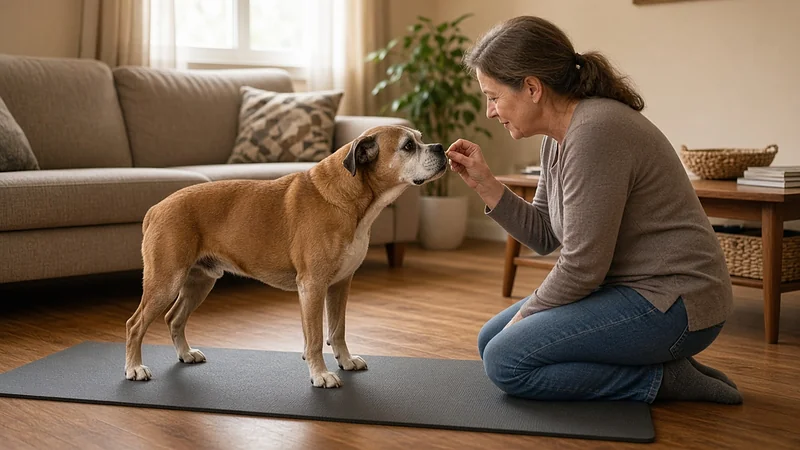
Ask your dog to sit squarely, then lure it to stand with a treat. Repeat a few times. This works the hind-leg muscles much like a squat. Zoetis also suggests down-to-stand for dogs ready for more.
Weight shifting
With the dog standing, gently push on the hips from one side so it shifts its weight to resist, then the other. This builds balance and the muscles that stabilize the hips. Zoetis also describes lifting one front paw briefly to put more weight on the back legs.
Paws up
Lure the dog to put its front paws on a low, stable step, so the back legs take more load. Zoetis lists this among its suggested exercises.
Backward walking
The dvm360 article lists backward walking, a few steps at a time, as a way to work the hind limbs and body awareness. Use a narrow space like a hallway so the dog walks straight.
Hills, cavaletti and walking surfaces
Zoetis suggests gentle hills and sand once the dog is ready. dvm360 lists incline walking and cavaletti, low poles the dog steps over to lift each foot. Start with poles flat on the ground.
Swimming
Zoetis suggests swimming, with a life vest. Water supports the body while the legs work. Many rehab clinics offer underwater treadmills with trained staff, which is safer for a weak dog than open water.
Signs to track at home
Keep a simple note on your phone each week. How many tries does it take your dog to stand up from its bed? How far does it walk before slowing? Does it sit down on walks, scuff its back nails, or hesitate at steps? Take a short video of your dog walking toward and away from you once a month in the same spot. These records help your vet see whether treatment and exercise are working, and they help you notice slow changes you'd otherwise miss.
Walks: shorter and more often
Both Zoetis and dvm360 favor short, frequent walks over one long one. Three ten-minute walks build more strength, with less soreness, than a single half hour that leaves the dog exhausted. Walk on grass or trails where you can. Let the dog sniff; it's mental exercise too. If your dog lags, sits down or wobbles near the end, the walk is too long.
Diet and weight
PetMD suggests a diet with good-quality protein can help slow muscle loss in older dogs, alongside low-impact exercise. Extra weight puts more strain on weak legs and sore joints, while a dog that's too thin has no reserves. Ask your vet what body condition to aim for and whether a senior or prescription diet suits your dog, particularly if there's kidney disease, where protein advice differs.
Keep the dog safe while it gets stronger
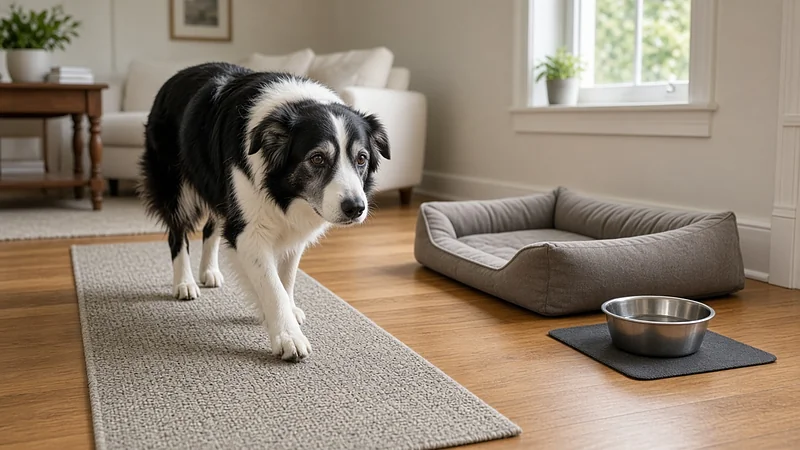
A weak dog on a slippery floor is likely to fall, and a fall can set back weeks of progress. A few changes make a big difference:
- Grip underfoot. Rugs on hardwood, and toenail grips or boots for traction.
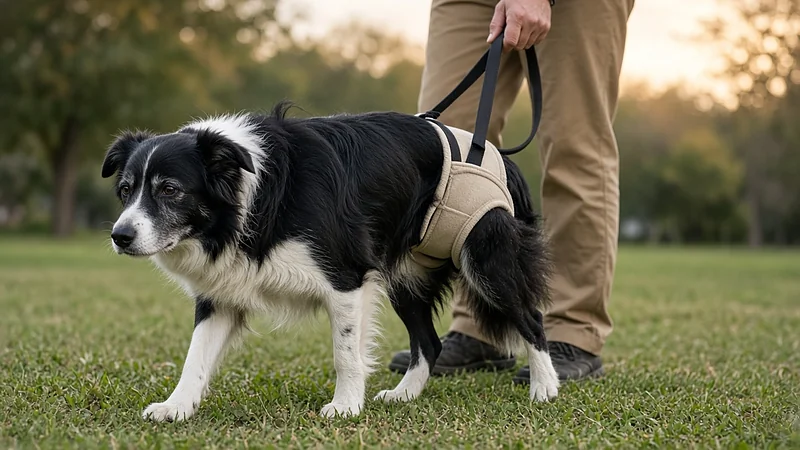
- Help on walks and stairs. A rear harness lets you take some weight off the hips.
- Gate the stairs when you're out.
- Ramps instead of jumping into the car and onto furniture.
- A supportive bed that's easy to get out of.
Aids that help
Rear support: Walkabout back end harness
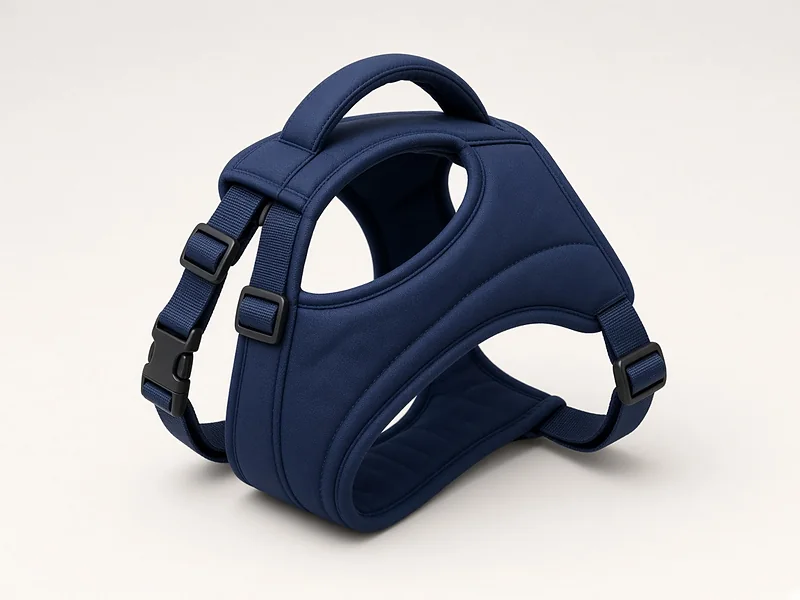
Walkabout Original Back End Harness
Rear-end harness that wraps the hind legs, top handle, made in USA; 7 sizes (XS–XL) chosen by abdomen and upper-thigh measurement
Pros
- Wraps the legs instead of the belly, so less abdominal pressure
- Easy to leave on for short outings
Cons
- Rear only
- Leg loops need correct sizing to avoid rubbing
A leg-wrap harness that lets you lift the hips on walks and stairs. Our Walkabout review covers sizing.
All-day support: Help 'Em Up harness
Help 'Em Up Harness
Two-piece full-body harness (front + hip lift), sizes for 10–225 lb, conventional and U-band (male) styles
Pros
- Lifts front, rear or both with separate handles
- Designed to be worn for long periods
- Male (U-band) and conventional versions
Cons
- Most expensive option here
- Sizing is fiddly; the maker suggests sizing the rear down for dogs with muscle loss
Front and rear handles on one harness meant to stay on, useful when the dog needs help many times a day. See our Help 'Em Up review.
Floor grip: runner rugs
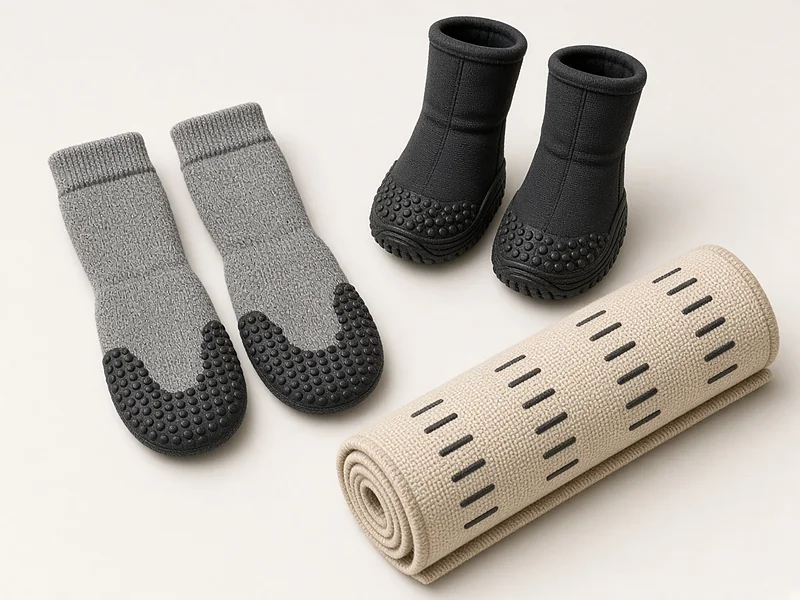
Kapaqua Rubber-Backed Custom-Length Runner Rug
22 in wide (other widths in the menu), custom length, 1/4 in low loop pile, rubber backing for hardwood, laminate, vinyl and tile; hand wash only per the current listing
Pros
- Cut to the exact length of your hallway or route, so there are fewer gaps
- Low 1/4 in pile is easy for dragging feet
- Rubber backing made for bare hard floors
Cons
- Not for use on carpet
- Current listing says hand wash only
- 22 in is narrow for a large dog that splays; check wider options
A rubber-backed runner on the main routes through the house helps a weak dog keep its feet. See our runner rug guide.
Paw grip: Dr. Buzby's ToeGrips
Dr. Buzby's ToeGrips
Rubber rings that slip over toenail tips; sized by nail; 20 per pack (16 weight-bearing nails plus 4 spares); last 1–3 months per the maker. Linked listing is Medium (the listing says Medium suits dogs with an ideal weight of 15–39 lb)
Pros
- Leaves paw pads free; nothing over the foot
- Developed by a veterinarian
Cons
- Fitting takes patience and correct sizing
- Can fall off or need replacing every 1–3 months
- Not suitable for every nail shape
Rubber grips on the toenails can help dogs that slip on hard floors. Read our ToeGrips review.
When muscle loss keeps getting worse
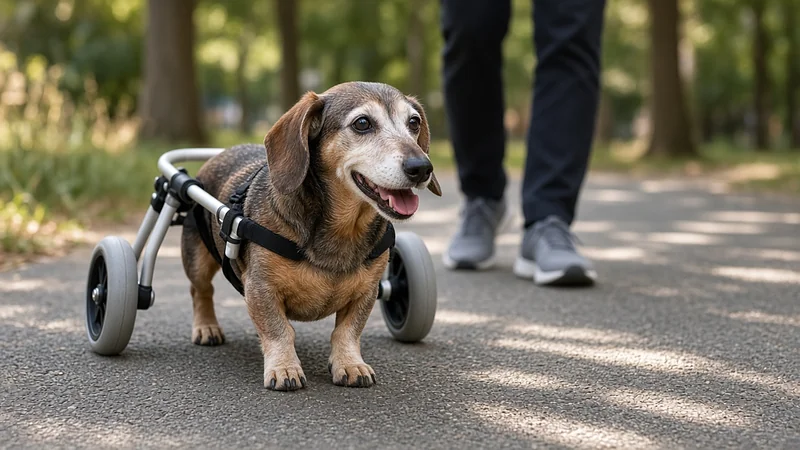
With arthritis and inactivity, muscle can often be rebuilt or held steady. With progressive nerve diseases like DM, weakness keeps advancing despite exercise. Exercise and physical therapy can still help keep the dog mobile for longer. When walking becomes too hard even with a harness, a rear wheelchair can keep the dog active outdoors. Your vet, or a certified canine rehabilitation therapist, can help you judge when that time comes.
A simple weekly plan
| Day | Activity (after vet clearance) |
|---|---|
| Every day | 2–3 short walks on grass; 5 sit-to-stands |
| Mon, Wed, Fri | Weight shifting and paws-up, a few reps each |
| Tue, Thu | Backward walking in a hallway; poles on the ground |
| Weekend | Gentle hill or a rehab swim if available |
| Rest | Skip a day if the dog is stiff or sore |
This is an example to discuss with your vet, not a prescription. Track progress by watching how easily your dog stands and how far it walks comfortably.
Related reading: our guides to home aids for hip dysplasia.
To keep a less active dog busy, try our low-impact enrichment ideas.
For dogs with knee or hip problems, see knee and hip braces: what helps.
FAQ
Can a senior dog rebuild muscle in its back legs?
Often, yes, if pain is controlled and the cause isn't progressive. Gentle, regular exercise and the right diet help. With nerve diseases like DM, the aim shifts to keeping the dog mobile for as long as possible.
Why does my dog have muscle in front but not in back?
PetMD notes the hind end often loses muscle first with age. Dogs also shift weight forward when the back legs hurt or weaken, so the front works harder.
What exercises strengthen a dog's back legs?
Sit-to-stand, down-to-stand, weight shifting, paws-up, backward walking, gentle hills and swimming, per Zoetis and dvm360. Ask your vet first.
Is muscle loss in old dogs always normal?
No. It can be linked to arthritis, spinal disease, kidney disease or cancer. See your vet.
Should a dog with weak back legs still go for walks?
Usually yes, in short, frequent sessions on good footing, with a harness if needed.
Prices change often, so we do not list them. Check the current price on Amazon.
Sources
- Zoetis Petcare, How to strengthen your dog's back legs.
- PetMD, Sarcopenia in dogs.
- dvm360, Canine fitness month: keeping senior dogs strong, stable, and engaged.
- VCA Animal Hospitals, Helping your dog with osteoarthritis.
- Product specifications from the linked Amazon listings, checked 2 November 2026.