As an Amazon Associate, SturdyPaws earns from qualifying purchases. This article contains affiliate links; buying through them costs you nothing extra. Read our affiliate disclosure.
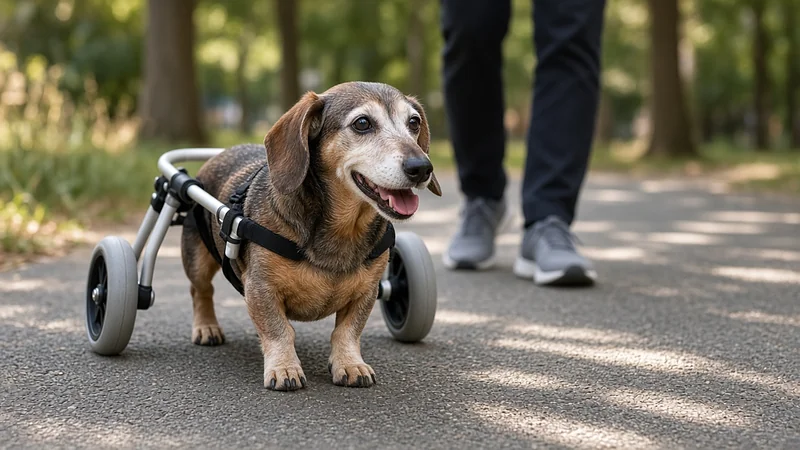
Few things are harder to watch than a dog whose front end is still keen while the back legs no longer carry it. Degenerative myelopathy, disc disease, severe arthritis and nerve damage can all leave a senior dog dragging or knuckling its hind feet. Many owners assume that means the end of walks. For a lot of dogs, it doesn't. A well-fitted rear-support wheelchair, often called a cart, carries the hind end while the dog walks with its front legs.
This guide covers when a wheelchair makes sense, what vets and rehab writers say about timing and safety, how to measure, and how the Walkin' Wheels sizes on Amazon compare. It is research-based, drawing on veterinary and rehabilitation sources and the maker's sizing information. We have not fitted these carts ourselves, and a wheelchair should always be chosen with your vet.
Key takeaways
- Talk to your vet first. The cause matters. After IVDD, a cart usually waits until crate rest is complete.
- Not a last resort. Rehab writers argue carts work best before the front legs are worn out from compensating.
- Size by weight and leg height. Walkin' Wheels sizes run Mini 2–10, Small 11–25, Medium 26–69 and Large 70–180 lb, then adjust to the dog.
- Supervise every minute. Carts can tip, and dogs shouldn't be left in one for long periods.
- Protect dragging paws. Stirrups lift the feet off the ground if the dog can't place them.
When does a senior dog need a wheelchair?
Best Friends Animal Society's wheelchair FAQ lists the common reasons: hip dysplasia, arthritis, paralysis, neurological and spinal problems, amputations, recovery from surgery and general limb weakness. It also stresses working with your vet, because some dogs need to build strength without a cart.
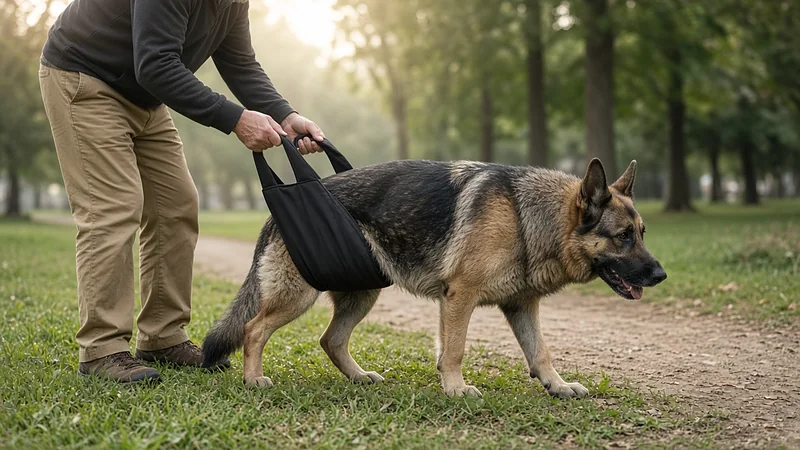
Degenerative myelopathy is a classic case. Cornell's Riney Canine Health Center explains that DM typically begins in dogs around eight years and older and progresses until most dogs can no longer walk, often within six to twelve months of diagnosis. There's no cure, but Cornell lists physical therapy, rugs, ramps, a support sling, booties for scuffed paws, and a wheelchair as ways to keep dogs mobile.
Signs that it may be time to ask your vet: the dog's back feet scuff or knuckle, it crosses its hind legs, it collapses on the back end after short distances, it can stand but can't walk far, or you are already supporting the hips with a sling on every walk.
Why not wait until the dog can't walk?
PetVet magazine's article on myths about cart-assisted dogs pushes back on the idea that a cart means giving up. It argues that carts are not a last resort, and that dogs who use one can keep their hind limbs active with the right support. It also notes a cost of waiting: as the back end weakens, the front legs take extra load, and waiting too long can leave the front limbs splayed and strained. A cart can keep a dog exercising, which matters for weight, mood and the muscle it still has.
That doesn't mean every weak dog should go straight into wheels. For dogs that can still walk with help, a rear support harness keeps the legs working. Strength exercises, covered in our guide to muscle loss in the back legs, may slow the decline. The cart comes in when walks become too short or too hard even with support.
IVDD: wait for your vet's go-ahead
Dodgerslist, the long-running IVDD owner resource, is firm on this. A dog recovering from a disc episode should not go into a cart until crate rest is over: about four to six weeks after surgery, and about eight weeks with conservative treatment, unless the vet says otherwise. It also warns that the cart must keep the back level and must not press on the spine, and that a poorly fitted cart can hold the back at an angle that strains the healing disc. Ask your vet or rehab therapist to check the fit.
Types of dog wheelchairs
- Rear-support carts carry the hind end. The front legs walk normally. This is the most common type and what this guide covers.
- Front-support carts are for dogs that have lost function in the front legs. They are less common and need a different design.
- Full-support or quad carts support all four legs, for dogs weak front and back. Some rear carts can be upgraded later.
Best Friends notes all three exist, and that the right one depends on which legs need help.
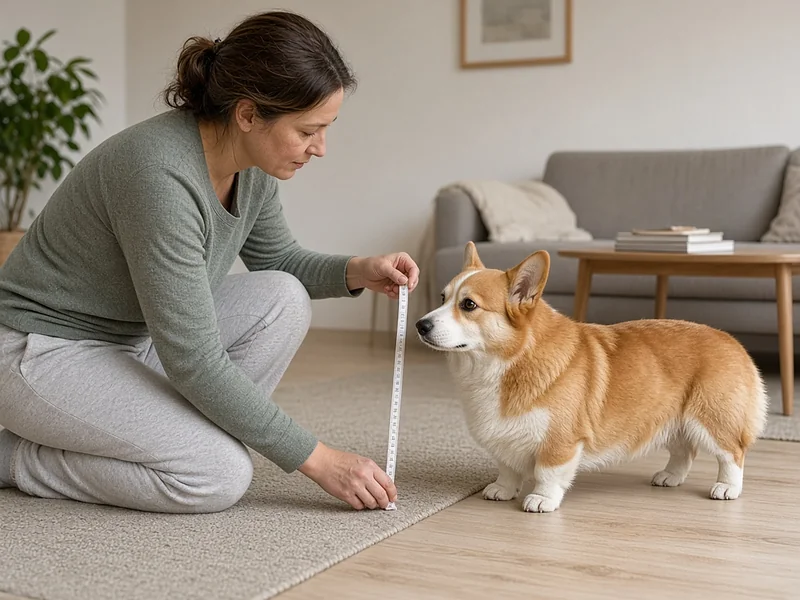
How to measure for a rear wheelchair
Walkin' Wheels sizes its carts by weight first, then adjusts the frame to the dog. Its help center lists four sizes: Mini for about 2–10 lb, Small 11–25 lb, Medium 26–69 lb and Large 70–180 lb. Within each size, snap buttons adjust height, length and width.
- Weigh the dog. Use a scale, not an estimate.
- Measure leg height. With the dog standing square on a flat floor, measure from the floor to the inside of the back leg where it meets the body. The cart's height setting depends on it.
- Note body length and width. The frame must clear the hips without rubbing.
- Check the listing variant. On Amazon, a size may be sold in leg-height variants. The Small listing we link, for example, is the variant titled 11–14 lb with 3–6 in leg height.
If your dog falls between sizes, or has a very long back, contact the maker before buying.
Walkin' Wheels sizes compared
| Product | Key specs | Link |
|---|---|---|
| Walkin' Wheels Small Dog Wheelchair | Rear-support cart; maker sizes Small for about 11–25 lb; linked listing variant is 11–14 lb with 3–6 in leg height. Adjustable aluminum frame, folds | Check price on Amazon (opens in a new tab) |
| Walkin' Wheels Medium Dog Wheelchair | Rear-support cart; maker sizes Medium for about 26–69 lb (listing title states 26–49 lb). Adjustable aluminum frame, folds flat | Check price on Amazon (opens in a new tab) |
| Walkin' Wheels Large Dog Wheelchair | Rear-support cart for about 70–180 lb dogs. Adjustable aluminum frame, folds | Check price on Amazon (opens in a new tab) |
Specs are from manufacturer and retailer listings and can change between versions; check the listing before you buy. We don't show prices because they change often; the button shows the current price on Amazon.
The picks
Small dogs: Walkin' Wheels Small
Walkin' Wheels Small Dog Wheelchair
Rear-support cart; maker sizes Small for about 11–25 lb; linked listing variant is 11–14 lb with 3–6 in leg height. Adjustable aluminum frame, folds
Pros
- Aluminum frame folds flat for the car
- Adjusts in height, length and width with snap buttons
- Washable parts; foam-filled rubber wheels
Cons
- Size by weight and leg height, not weight alone
- Needs a vet's OK first, especially after IVDD
- Supervised use only; dogs must not be left alone in it
The Small cart covers about 11–25 lb dogs in the maker's chart, which takes in many dachshunds, corgis and beagles. The linked listing is a specific variant for 11–14 lb and 3–6 in leg height, so check the listing variants for your dog's leg height. Small, long-backed breeds are frequent IVDD patients, so follow your vet's timing.
Medium dogs: Walkin' Wheels Medium
Walkin' Wheels Medium Dog Wheelchair
Rear-support cart; maker sizes Medium for about 26–69 lb (listing title states 26–49 lb). Adjustable aluminum frame, folds flat
Pros
- Aluminum frame folds flat for the car
- Adjusts in height, length and width with snap buttons
- Washable parts; foam-filled rubber wheels
Cons
- Size by weight and leg height, not weight alone
- Needs a vet's OK first, especially after IVDD
- Supervised use only; dogs must not be left alone in it
The Medium covers about 26–69 lb in the maker's chart, though the Amazon listing title mentions 26–49 lb, so confirm the variant. It folds flat for the car and has washable parts and foam-filled wheels. This is the size for many spaniels, border collies and smaller shepherds.
Large dogs: Walkin' Wheels Large
Walkin' Wheels Large Dog Wheelchair
Rear-support cart for about 70–180 lb dogs. Adjustable aluminum frame, folds
Pros
- Aluminum frame folds flat for the car
- Adjusts in height, length and width with snap buttons
- Washable parts; foam-filled rubber wheels
Cons
- Size by weight and leg height, not weight alone
- Needs a vet's OK first, especially after IVDD
- Supervised use only; dogs must not be left alone in it
The Large covers about 70–180 lb dogs, which includes most large breeds with DM, such as German shepherds and boxers. A big dog in a cart needs more room to turn. Practice in an open space first.
Getting started
- Assemble and adjust the cart with the dog standing, ideally with a helper.
- Check that the spine is level and the frame doesn't press on the spine, hips or genitals.
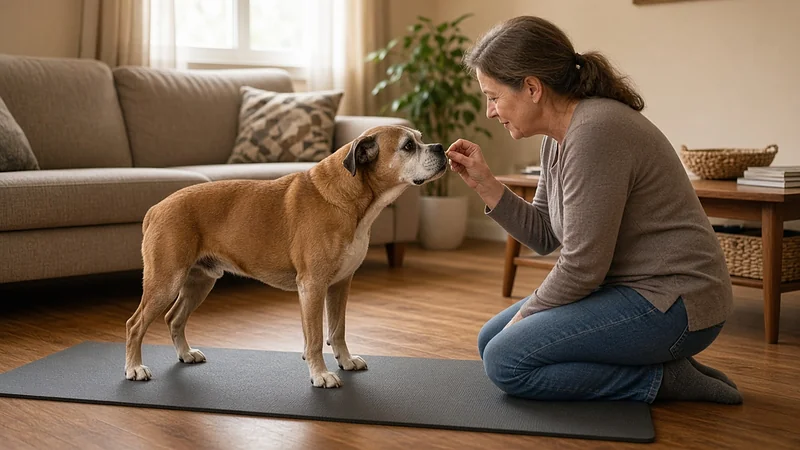
- Start indoors or on a lawn, with treats, for a few minutes.
- Use stirrups if the hind feet drag or knuckle. PetVet notes they protect the paws.
- Build time slowly, and watch for rubbing under the straps.
Many dogs move off within minutes; Best Friends says most adapt within days. A nervous dog may need several short sessions.
Safety rules
- Never leave the dog alone in the cart. Best Friends warns that carts can tip over, and a dog that tips may not be able to get up.
- Limit time in the cart. Dogs generally can't lie down in a rear cart. Take it off for rest, food and naps.
- Avoid stairs and steep ground. Use a ramp or lift the dog.
- Check the skin. Look daily for rubbing or sores where the straps sit.
- Keep the bladder in mind. Dogs with DM or spinal injury may have incontinence. Keep the area clean, and see our waterproof bed guide for rest time.
Life at home with a cart dog
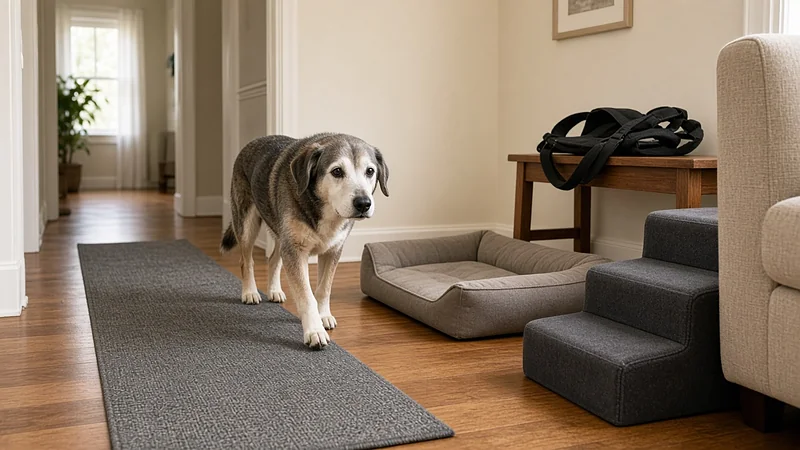
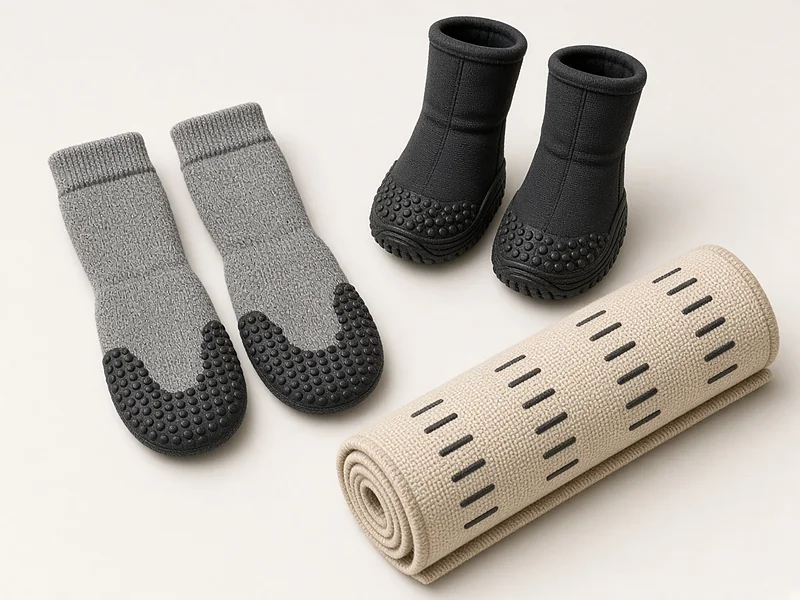
A cart is for walks and outdoor time. Indoors, most dogs do better without it, on non-slip rugs, with a rear sling for short trips. Cornell's DM advice lists rugs, ramps and slings for exactly this reason. Booties protect paws that scuff on the floor. A low-entry orthopedic bed makes rest easier, and turning a dog that can't shift itself helps prevent pressure sores; ask your vet how often.
For a complete overview of aids, see the senior dog mobility starter kit.
Is a cart right for your dog?
| Situation | Usually best |
|---|---|
| Walks with mild wobble | Rear harness plus strength exercises |
| Walks, but tires fast or knuckles | Ask your vet about a cart for walks |
| Can't bear weight behind | Rear cart with stirrups |
| IVDD, still on crate rest | No cart yet; follow your vet |
| Weak front and back | Ask about full-support carts |
Related reading: our guides to IVDD crate rest setup.
For small dogs that tire quickly, a stroller is another way to keep outings going.
FAQ
Can a dog pee and poop in a wheelchair?
Rear carts are designed to leave room for this. Keep the dog clean, and check the straps for soiling.
How long can a dog stay in a wheelchair?
Sources agree dogs shouldn't stay in one for long periods. Start with a few minutes and build up for walks, then take it off to rest.
Will a cart make my dog's legs weaker?
PetVet argues the opposite: carts keep dogs active and can let the hind legs keep moving. Your vet or rehab therapist can advise on your dog.
What size Walkin' Wheels do I need?
The maker sizes by weight, Mini 2–10, Small 11–25, Medium 26–69, Large 70–180 lb, then adjusts by leg height. Check the listing variant.
Can a dog with IVDD use a wheelchair?
Often, but not until crate rest is done and your vet agrees. Dodgerslist suggests about four to six weeks after surgery, eight weeks for conservative care.
Prices change often, so we do not list them. Check the current price on Amazon.
Sources
- Cornell Riney Canine Health Center, Degenerative myelopathy.
- PetVet Magazine, Spin the wheel: 4 myths about cart-assisted canines.
- Best Friends Animal Society, FAQs about dog wheelchairs.
- Dodgerslist, Wheelchairs.
- Walkin' Pets, Help center (sizing).
- Product specifications from the linked Amazon listings, checked 2 November 2026.