As an Amazon Associate, SturdyPaws earns from qualifying purchases. This article contains affiliate links; buying through them costs you nothing extra. Read our affiliate disclosure.
Hip dysplasia is one of the most common reasons a large dog starts to struggle getting up, slipping on floors or hesitating at the car door. Your vet manages the medical side: diagnosis, pain relief and, for some dogs, surgery. What happens at home the rest of the day matters too. Small changes to floors, beds, steps and routines can take a lot of strain off sore hips.
This guide gathers the home advice veterinary sources give for dogs with hip dysplasia and the arthritis that usually follows, and links each idea to a product type. We name specific products only where we checked the Amazon listing today. It is research-based; we have not tested these products on a dog with hip dysplasia ourselves.
Key takeaways
- Weight control is the biggest single home change. VCA says weight loss is strongly recommended for overweight dogs with hip dysplasia.
- Traction comes next. Rugs or runners on hard floors, short nails and grip on stairs.
- Swap jumping for ramps at the car, and avoid high-impact play.
- A thick, supportive bed that is easy to get off helps a large dog rise.
- A support harness helps on bad days, stairs and car trips.
What hip dysplasia does
In a dog with hip dysplasia, the ball and socket of the hip joint do not fit together properly. VCA describes it as a genetic disease affected by diet, environment, exercise, growth rate, muscle mass and hormones. It is most often seen in large breeds. Over time the loose joint wears, and arthritis develops.
VCA lists weakness and pain in the hind legs as the usual signs. Dogs may appear wobbly, be reluctant to rise from sitting or lying down, limp, or be reluctant to climb stairs. Although the problem starts in puppyhood, many dogs show few signs until they are older, after years of gradual change in the joint. That is why so many owners first notice it in a middle-aged or senior large dog.
The ACVS explains that some puppies can be screened for joint laxity early and treated surgically at a young age, and that weight management and controlled growth matter in large-breed puppies. For an adult dog already showing signs, treatment is usually a mix of pain relief, joint supplements your vet approves, controlled exercise, physical therapy and weight control, with surgery for some dogs.
1. Get and keep your dog lean
VCA's hip dysplasia page says that since excess weight puts undue stress on the hip joints, weight loss is strongly recommended in overweight dogs. Its osteoarthritis guidance agrees that keeping a lean body condition is one of the best ways to reduce stress on sore joints.
VCA's page on obesity adds practical points. Do not simply cut the amount of the current food, because that can leave the dog short of important nutrients over time. Work with your vet on a calorie-controlled diet, a set portion and a set meal frequency, and weigh the dog monthly so loss is neither too fast nor too slow. It also recommends adding physical rehabilitation to a weight-loss plan.
No product on this page will do as much for sore hips as a few pounds off a heavy dog.
2. Fix slippery floors
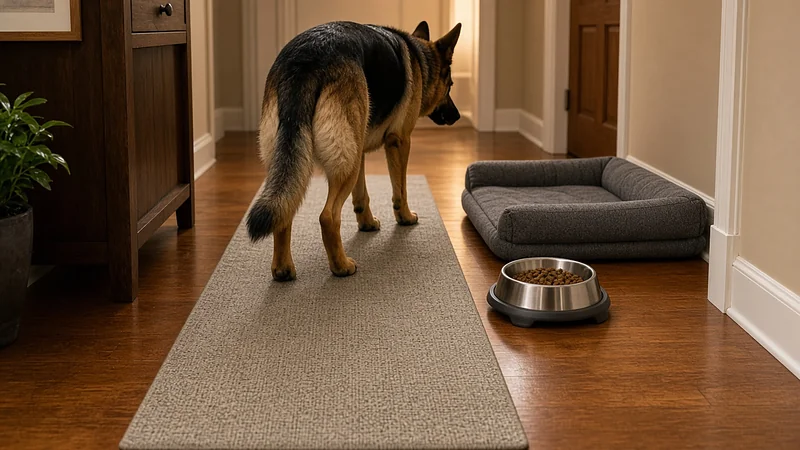
Hard floors are one of the toughest daily challenges for a large dog with bad hips. VCA's home-comfort guide explains that dogs with mobility problems walk cautiously on hardwood, laminate and tile with a short stride and hunched back, which leads to stiffness, sore muscles and less movement overall. Its suggestions are non-slip rugs and runners where the dog spends most time, with no raised edges to trip on.
VCA's osteoarthritis page lists yoga mats, rugs with non-skid backing, interlocking foam floor tiles, baby gates to keep the dog out of slick rooms, and lightweight traction boots for dogs that tolerate them.
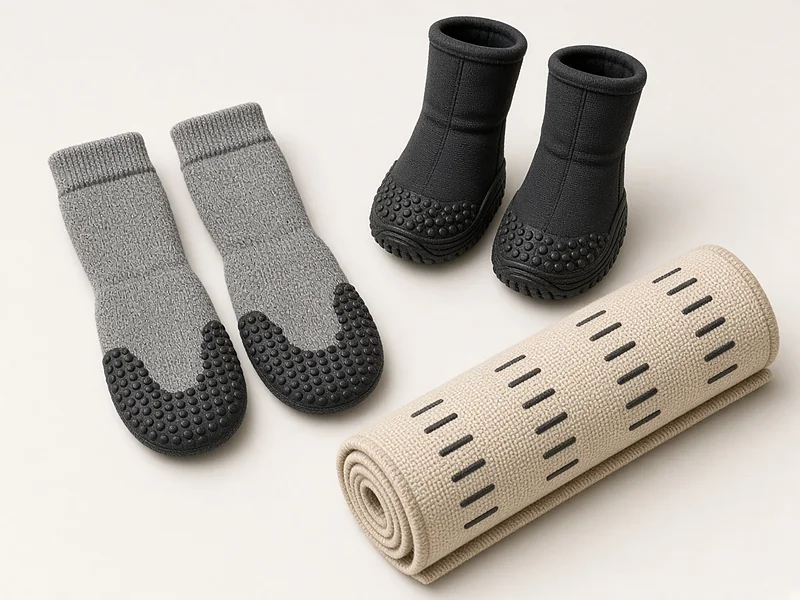
Kapaqua Rubber-Backed Custom-Length Runner Rug
22 in wide (other widths in the menu), custom length, 1/4 in low loop pile, rubber backing for hardwood, laminate, vinyl and tile; hand wash only per the current listing
Pros
- Cut to the exact length of your hallway or route, so there are fewer gaps
- Low 1/4 in pile is easy for dragging feet
- Rubber backing made for bare hard floors
Cons
- Not for use on carpet
- Current listing says hand wash only
- 22 in is narrow for a large dog that splays; check wider options
A long rubber-backed runner along the main route, such as from the bed to the water bowl and the back door, gives a large dog a path it can trust. For more ideas see our runner rug guide and slippery floors guide.
Keep nails short too. VCA says most dogs need a nail trim at least once a month, and trimming fur between the toes also improves grip.
3. Give the hips a supportive bed
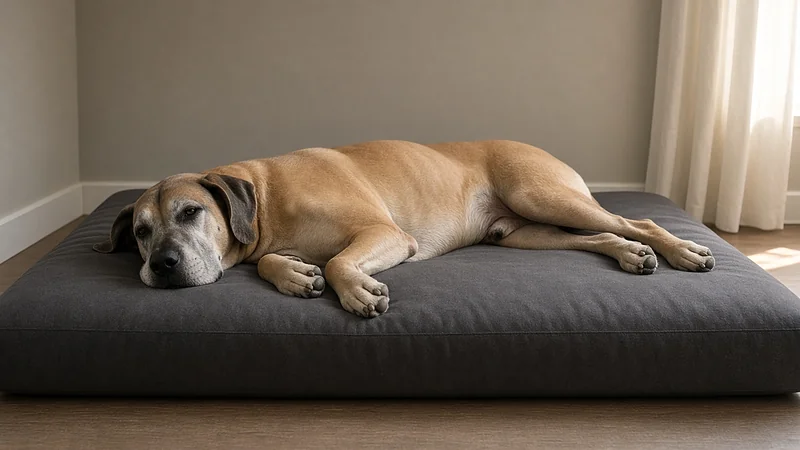
A large dog with hip dysplasia spends many hours lying down, and getting up is often the hardest moment of its day. VCA recommends an orthopedic or memory foam bed to reduce pressure on sore joints, and suggests beds the dog does not have to climb onto. For a heavy dog the bed needs enough depth that the hips do not sink through to the floor.
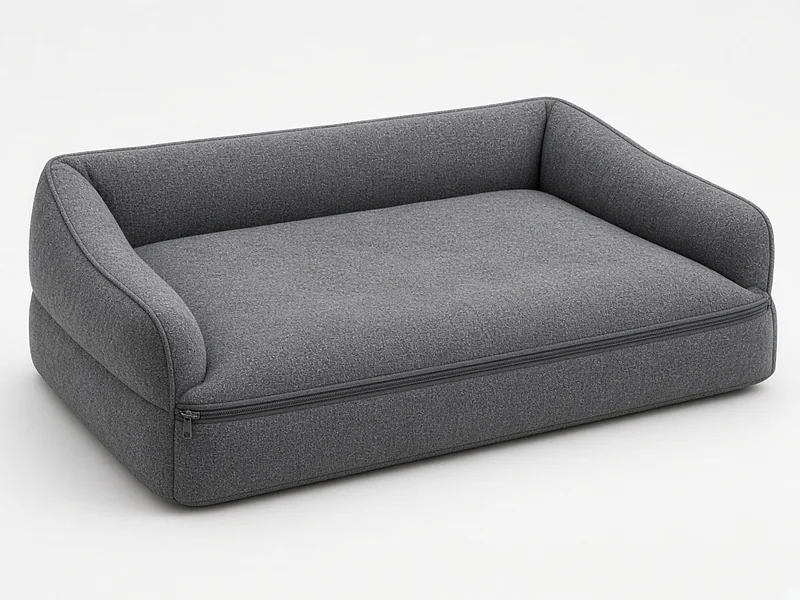
Big Barker 7" Pillow Top Orthopedic Dog Bed
7 in, three foam layers (2 in base, 3 in support, 2 in comfort); Large 48x30, XL 52x36, Giant 60x48 in; CertiPUR-US foam made in USA; 10-year no-flatten warranty (foam must keep 90% of shape)
Pros
- Thickest common option for very heavy dogs; sizes start at Large
- Clear written no-flatten warranty
- Low, flat profile is easy to step onto
Cons
- Highest relative cost in this guide
- Warranty excludes covers, chewing and accident damage
- Overkill for small and medium dogs
The Big Barker is made for large dogs, with three foam layers and sizes up to Giant. Our large-dog orthopedic bed guide compares it with other thick beds. Put the bed on a non-slip surface so it does not slide when the dog pushes up.
VCA also notes that cold, damp conditions may worsen stiffness, and that outdoor living is generally not recommended for dogs with arthritis. Keep the bed warm, dry and out of draughts.
4. Replace jumps with ramps
VCA's hip dysplasia guidance recommends avoiding high-impact activities such as jumping. For a large dog, the biggest daily jump is often into the car. VCA's osteoarthritis page says a ramp for vehicles can reduce stress on the back and leg joints, and that most dogs learn quickly to use one.
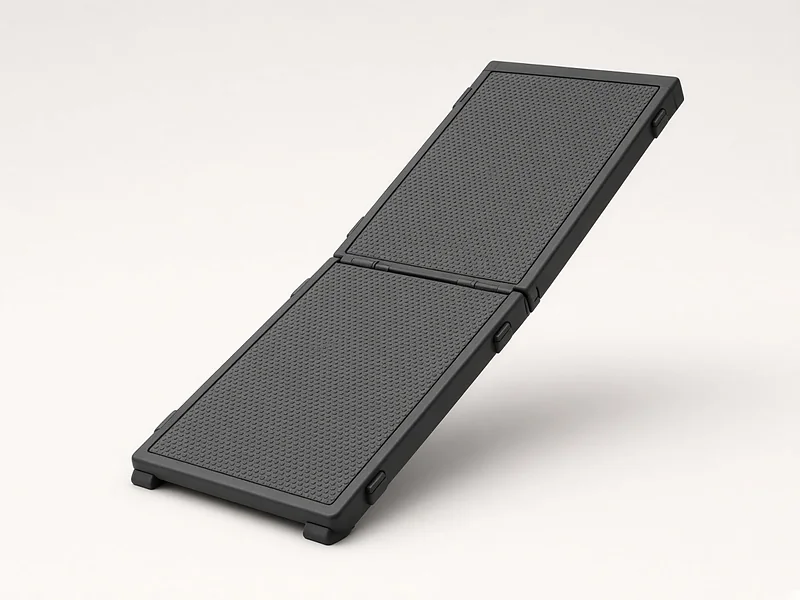
PetSafe Happy Ride Extra Long Telescoping Dog Ramp
47–87 in long, 20 in wide, aluminum, 18 lb, rated to 300 lb
Pros
- Longest common telescoping ramp: 87 in gives a gentler angle into tall SUVs and trucks
- 20 in walking width suits big or unsteady dogs
- Light for its length (18 lb)
Cons
- Long and bulky to stow in smaller cargo areas
- Pricier than folding ramps
- Some dogs need time to trust any ramp surface
An extra-long ramp gives a gentler slope into a high SUV boot. See our SUV ramp guide for measuring. Do the same indoors: if your vet is happy for the dog to use furniture, add a ramp or steps rather than letting it jump up and down.
5. Manage stairs
Dogs with hip dysplasia are often reluctant to climb stairs, and VCA suggests blocking stairs with a baby gate when nobody can supervise. When the dog does need to use them, give the stairs a non-slip surface and help with a harness. Our steep stairs guide covers technique.
6. Keep a support harness handy
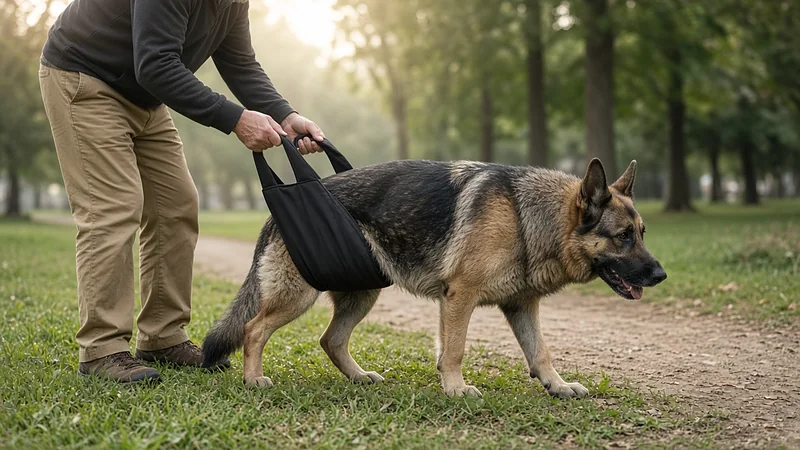
On bad days, after exercise or getting into the car, a harness with a rear handle lets you take some weight off the hips. VCA mentions harnesses designed to support a dog's weight with little strain on your back.
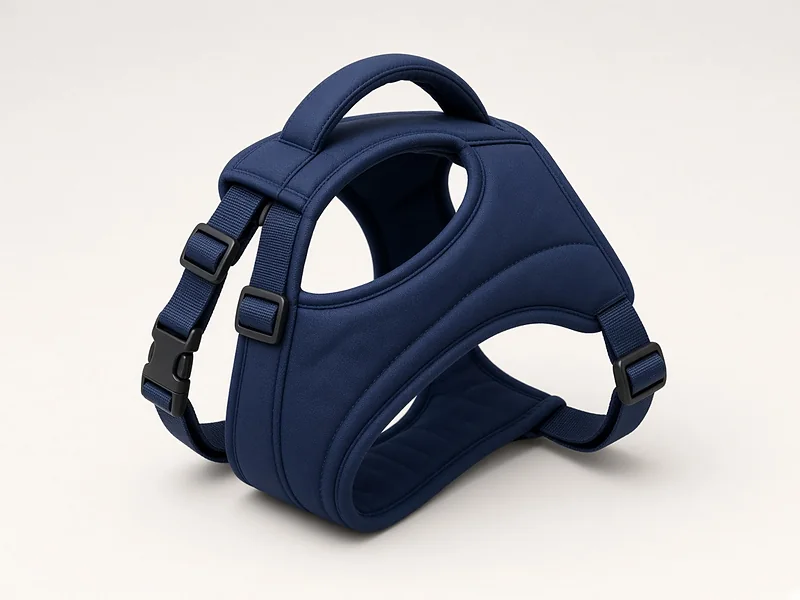
Help 'Em Up Harness
Two-piece full-body harness (front + hip lift), sizes for 10–225 lb, conventional and U-band (male) styles
Pros
- Lifts front, rear or both with separate handles
- Designed to be worn for long periods
- Male (U-band) and conventional versions
Cons
- Most expensive option here
- Sizing is fiddly; the maker suggests sizing the rear down for dogs with muscle loss
A two-piece harness gives you a handle over the hips and another at the shoulders. If the front legs are strong and only the back end needs help, a rear-only harness may be enough; see our rear support harness guide.
| Product | Key specs | Link |
|---|---|---|
| Kapaqua Rubber-Backed Custom-Length Runner Rug | 22 in wide (other widths in the menu), custom length, 1/4 in low loop pile, rubber backing for hardwood, laminate, vinyl and tile; hand wash only per the current listing | Check price on Amazon (opens in a new tab) |
| Big Barker 7" Pillow Top Orthopedic Dog Bed | 7 in, three foam layers (2 in base, 3 in support, 2 in comfort); Large 48x30, XL 52x36, Giant 60x48 in; CertiPUR-US foam made in USA; 10-year no-flatten warranty (foam must keep 90% of shape) | Check price on Amazon (opens in a new tab) |
| PetSafe Happy Ride Extra Long Telescoping Dog Ramp | 47–87 in long, 20 in wide, aluminum, 18 lb, rated to 300 lb | Check price on Amazon (opens in a new tab) |
| Help 'Em Up Harness | Two-piece full-body harness (front + hip lift), sizes for 10–225 lb, conventional and U-band (male) styles | Check price on Amazon (opens in a new tab) |
Specs are from manufacturer and retailer listings and can change between versions; check the listing before you buy. We don't show prices because they change often; the button shows the current price on Amazon.
7. Raise the bowls
VCA's osteoarthritis page suggests raised food and water bowls, placed between the dog's elbow and shoulder height, to reduce strain on the neck and back. Put them on a non-slip mat so the dog can stand square while eating.
8. Exercise: little and often
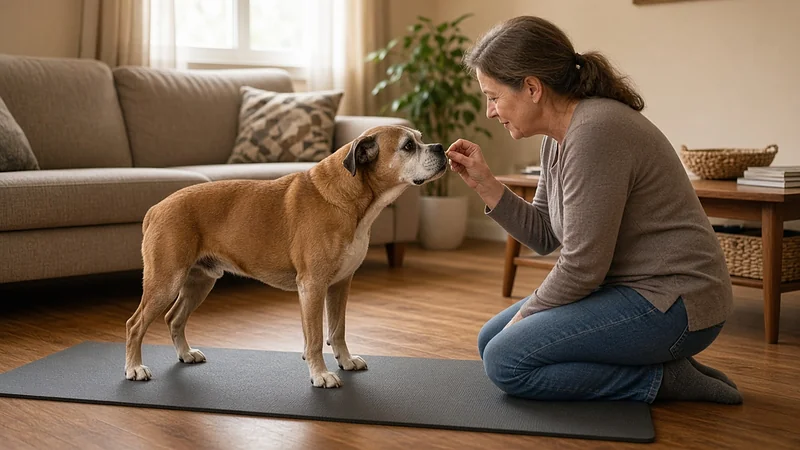
VCA recommends moderate daily exercise and avoiding high-impact activities to keep the dog mobile and strengthen the structures around the hip. It also says physical therapy is highly effective at improving quality of life and should be part of any treatment plan. In practice that usually means several shorter leash walks on even ground instead of one long run, no ball chasing with sharp turns and stops, and exercises a rehab therapist sets for your dog. Our guide to back-leg muscle loss explains why keeping muscle matters for hip support.
A room-by-room checklist
| Area | Change |
|---|---|
| Hallways and kitchen | Rubber-backed runners on the main routes |
| Sleeping spot | Thick orthopedic bed on a non-slip base, away from draughts |
| Feeding area | Raised bowls between elbow and shoulder height, on a mat |
| Stairs | Gate when unsupervised; grip on treads; harness for trips |
| Car | Long ramp instead of jumping |
| Furniture | Ramp or steps if allowed; otherwise block access |
| Grooming | Monthly nail trim and trimmed fur between toes |
Common mistakes
The most common is focusing on gadgets while the dog stays overweight. The second is long weekend walks after a quiet week, which leave a dysplastic dog sore for days. A third is a thin bed on a hard floor, so the dog's hips press through. And finally, assuming the dog is just slowing down with age. Reluctance to rise or climb stairs can be pain, and pain can be treated.
Related reading: our guides to raised dog bowls for joint pain and getting an old dog into an SUV without a ramp.
Wondering about glucosamine or fish oil? Read do joint supplements work for dogs.
Thinking about a hip brace? Read what the evidence says about knee and hip braces first.
FAQ
What is the best home aid for a dog with hip dysplasia?
Weight control comes first, according to VCA. After that, better traction, a supportive bed and ramps instead of jumps make the most difference.
Should a dog with hip dysplasia use stairs?
Limit them. Gate stairs when you cannot supervise, and help with a harness when the dog must use them.
Is exercise good for hip dysplasia?
Moderate daily exercise is, according to VCA, but avoid high-impact activities like jumping. Physical therapy is strongly recommended.
Do orthopedic beds help hip dysplasia?
VCA recommends orthopedic or memory foam beds to reduce pressure on sore joints. Large dogs need enough depth not to sink through.
Can hip dysplasia be prevented?
It is largely genetic, but VCA and the ACVS stress keeping large-breed puppies lean and not overfed during growth. Some puppies can be screened early.
Prices change often, so we do not list them. Check the current price on Amazon.
Sources
- VCA Animal Hospitals, Hip dysplasia in dogs.
- VCA Animal Hospitals, Helping your dog with osteoarthritis.
- VCA Animal Hospitals, Creating a comfortable home for your mobility-compromised dog.
- VCA Animal Hospitals, Obesity in dogs.
- American College of Veterinary Surgeons, Canine hip dysplasia.
- Product specifications from the linked Amazon listings, checked 2 November 2026.